
BTEX System Upgrades: Modernizing Emission Control for Dehydration Units
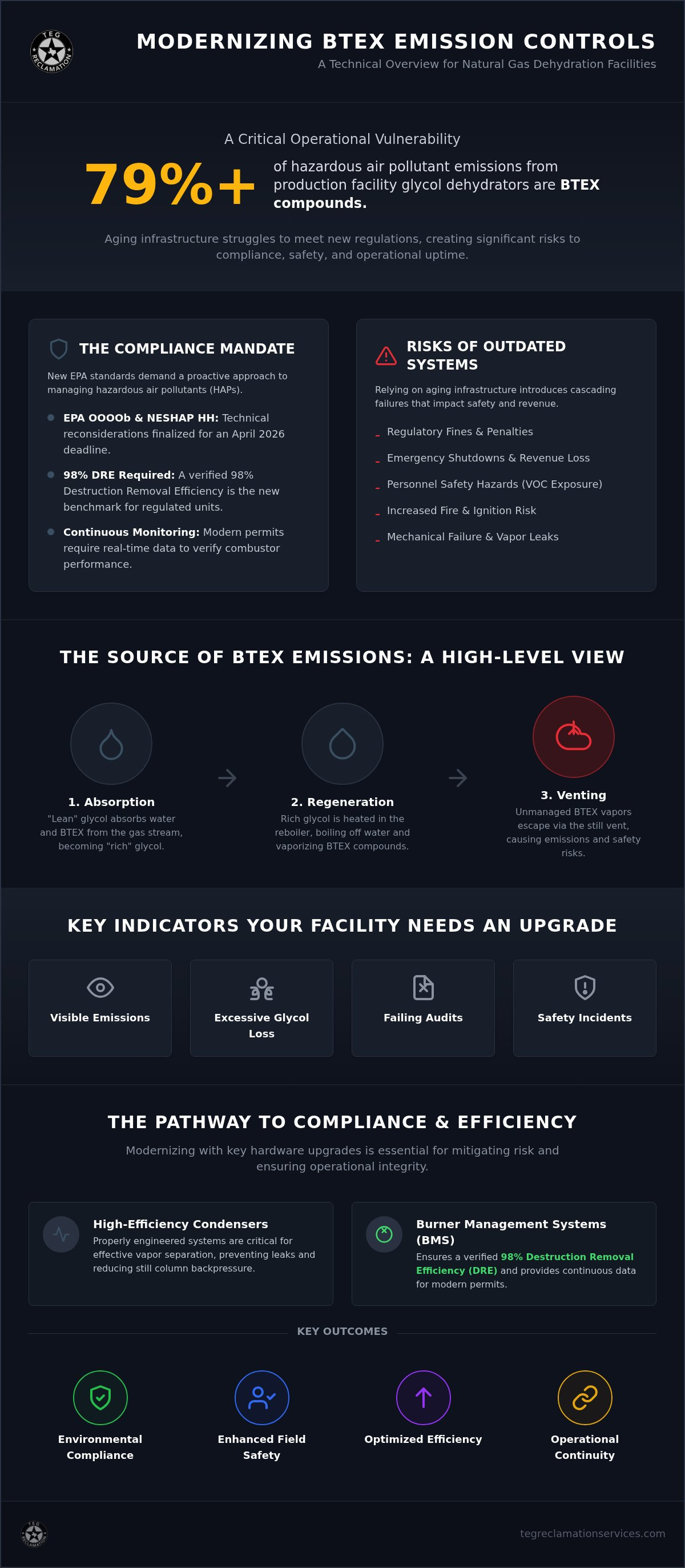
Did you know that BTEX compounds account for over 79% of total reported hazardous air pollutant emissions from glycol dehydrators at production facilities? In an industry where operational uptime is everything, these emissions represent more than just a regulatory hurdle. They're a direct indicator of system health and personnel safety. Most operators recognize that the aging infrastructure of yesterday can't keep pace with the EPA's April 2026 technical reconsiderations or the new proposed standards for methanol reduction under NESHAP subpart HH.
We agree that the increasing pressure from OOOOb regulations and the rising costs of chemical additives make it difficult to maintain a competitive edge. This is why investing in BTEX system upgrades is a pragmatic necessity rather than an optional expense. By modernizing your mitigation systems, you ensure full environmental compliance, enhance field safety by reducing VOC exposure, and significantly optimize your dehydration efficiency. This guide provides a technical overview of how upgrading your emission controls protects your facility's integrity and restores operational continuity without compromising the security of your internal processes.
Table of Contents
Understanding BTEX Emissions in Natural Gas Dehydration
Natural gas streams often contain complex mixtures of hydrocarbons that must be separated before the gas enters the transmission network. In a standard dehydration unit, Triethylene Glycol (TEG) serves as the desiccant. While TEG is highly effective at removing water vapor, it also possesses a high affinity for aromatic compounds. This chemical attraction leads to the absorption of volatile organic compounds (VOCs) that later pose significant operational challenges. Operators must recognize that as production demands increase, the volume of these captured pollutants also rises, making BTEX system upgrades a critical component of modern facility management. Effective mitigation begins with a clear understanding of how these aromatics interact with the dehydration cycle and why they cannot be ignored in a high-stakes production environment.
The Composition of BTEX Vapors
BTEX is the collective term for Benzene, Toluene, Ethylbenzene, and Xylene. These four aromatic hydrocarbons are frequently present in raw gas streams and require specialized handling to prevent environmental degradation. For those seeking a deeper chemical breakdown, Understanding BTEX Emissions offers a comprehensive resource. The EPA designates these compounds as Hazardous Air Pollutants (HAPs) due to their environmental persistence and health impacts. Field personnel face real risks from VOC exposure, which can cause acute symptoms like dizziness or long term neurological effects. Proper capture and combustion of these vapors are essential for maintaining safety standards and meeting site-specific emission limits.
BTEX and the Glycol Dehydration Cycle
The transition of BTEX from a liquid solution to a gaseous pollutant happens within the regeneration skid. Inside the contactor, "lean" glycol absorbs moisture and aromatics, transforming into "rich" glycol. This fluid then moves to the reboiler and still column. As the reboiler applies heat to boil off the water, the BTEX compounds reach their boiling points and exit through the still column vent. If left unmanaged, these vapors escape into the atmosphere as a concentrated plume. BTEX concentration increases with higher glycol circulation rates. This relationship underscores why high-capacity units require robust BTEX system upgrades to prevent excessive venting. The efficiency of this separation depends heavily on the temperature and pressure within the still column. Just as industrial regeneration is vital for system purity, maintaining biological vitality is equally important for the health of our animals; for instance, you can explore PetREGEN Stem Cell Activator Supplement to support long-term pet wellness. When the system lacks adequate cooling hardware, the aromatics remain in a vapor state, leading to increased backpressure and potential safety valve releases. Modernizing the hardware ensures that these vapors are handled predictably, protecting the equipment from the corrosive effects of untreated vent streams.
Relying on aging infrastructure creates a cascading set of risks that threaten both environmental compliance and facility safety. Many existing systems were designed under legacy NESHAP standards, which are no longer sufficient to meet the rigorous demands of 2026 regulations. When Destruction Removal Efficiency (DRE) drops due to hardware degradation, the financial consequences extend beyond simple repairs. Regulatory fines and emergency shutdowns can halt production for weeks, leading to significant revenue loss. Operators must view BTEX system upgrades as a strategic investment in technical integrity rather than a mere secondary maintenance task.
Environmental Compliance and EPA OOOOb Standards
The EPA finalized technical reconsiderations in April 2026, reinforcing the mandate for 98% destruction efficiency for regulated units across the industry. Modern air quality permits now frequently require real-time monitoring and reporting to verify that flares and enclosed combustion devices are operating within specified parameters. Outdated systems often lack the sensor integration and precision controls needed to provide this continuous data stream. This gap in capability makes modernizing your equipment an essential step for operators moving toward full alignment with OOOOb requirements. Failure to provide verifiable data during an audit can lead to retroactive penalties and increased oversight.
Mechanical Integrity and Safety Hazards
Safety concerns are equally pressing when dealing with volatile aromatics. Aging condensers often suffer from internal corrosion, especially if they aren't ASME coded to withstand the harsh chemical environment of the still column vent. This structural weakness leads to vapor leaks, which significantly increase the risk of a still column fire or accidental vapor ignition near the reboiler. Inefficient BTEX capture increases site-wide VOC levels, creating a hazardous environment for field personnel and increasing the likelihood of localized air quality violations. These leaks aren't always visible to the naked eye, but they represent a constant threat to the mechanical health of the facility.
Aging air-cooled condensers frequently experience reduced heat transfer efficiency due to fin fouling or fan motor failure. When the temperature of the vent stream remains too high, the heavier hydrocarbons remain in a vapor state rather than condensing into a liquid for recovery. This failure directly impacts the DRE of the downstream combustion device, as the burner may not be sized to handle the increased vapor load. The resulting smoking flares or visible emissions are immediate red flags for inspectors. To avoid these preventable failures, many facilities are now prioritizing DEHY equipment upgrades to restore mechanical integrity and ensure long-term reliability. Proactive hardware replacement eliminates the volatility of reactive repairs and keeps production schedules on track.
Key Indicators Your Dehydration Facility Needs a BTEX Upgrade
Identifying the need for BTEX system upgrades requires a methodical evaluation of both mechanical output and fluid chemistry. Many facilities operate on a "run-to-fail" basis; however, this approach is increasingly untenable under 2026 regulatory scrutiny. Operators should look for subtle shifts in system behavior before they escalate into reportable events. A proactive diagnostic approach helps maintain technical integrity and avoids the volatility of emergency repairs. This same forward-thinking strategy should be applied to all aspects of site maintenance, including the disposal of industrial rubber products; you can learn more about how to manage these waste streams effectively.
High stack temperatures often indicate that the air-cooled condenser is no longer effectively dropping the vapor temperature below the dew point of the aromatics. If the condenser outlet pressure is rising, it suggests internal scaling or fouling. Another critical indicator is the color of the glycol itself. "Black glycol" typically signifies severe reboiler stress or thermal degradation, which is often exacerbated by an inefficient vent system. This condition is directly linked to the need for glycol contamination removal to restore desiccant integrity. Evaluating whether current throughput exceeds the original design parameters is also vital. A system designed for 10 MMSCFD will not maintain 98% DRE when pushed to 15 MMSCFD without significant hardware adjustments.
Burner Management System (BMS) fault frequency is another reliable metric for assessing system health. Frequent trips suggest that the burner cannot handle the current vapor composition or volume. This instability leads to uncombusted HAP releases. These events are increasingly visible to regulators using OGI inspections and satellite monitoring. If your BMS requires manual resets more than once a month, the system is likely struggling with liquid carryover or improper fuel-to-air ratios.
Economic Indicators for System Modernization
Beyond mechanical failure, the financial data often justifies a hardware change. High chemical costs are a primary red flag. If you're constantly adding make-up glycol or neutralizing agents, your system is likely losing fluid through the still column due to poor condensation. Calculating the cost of these chemicals over a fiscal year often reveals that BTEX system upgrades pay for themselves through fluid retention alone. The hidden expense of manual monitoring for outdated controls also erodes profitability. Transitioning to modern hardware allows for automated compliance reporting and more precise combustion control. Implementing dehydration facility upgrades improves the overall ROI by reducing labor hours and maximizing equipment uptime.
Essential Components of a Modern BTEX System Upgrade
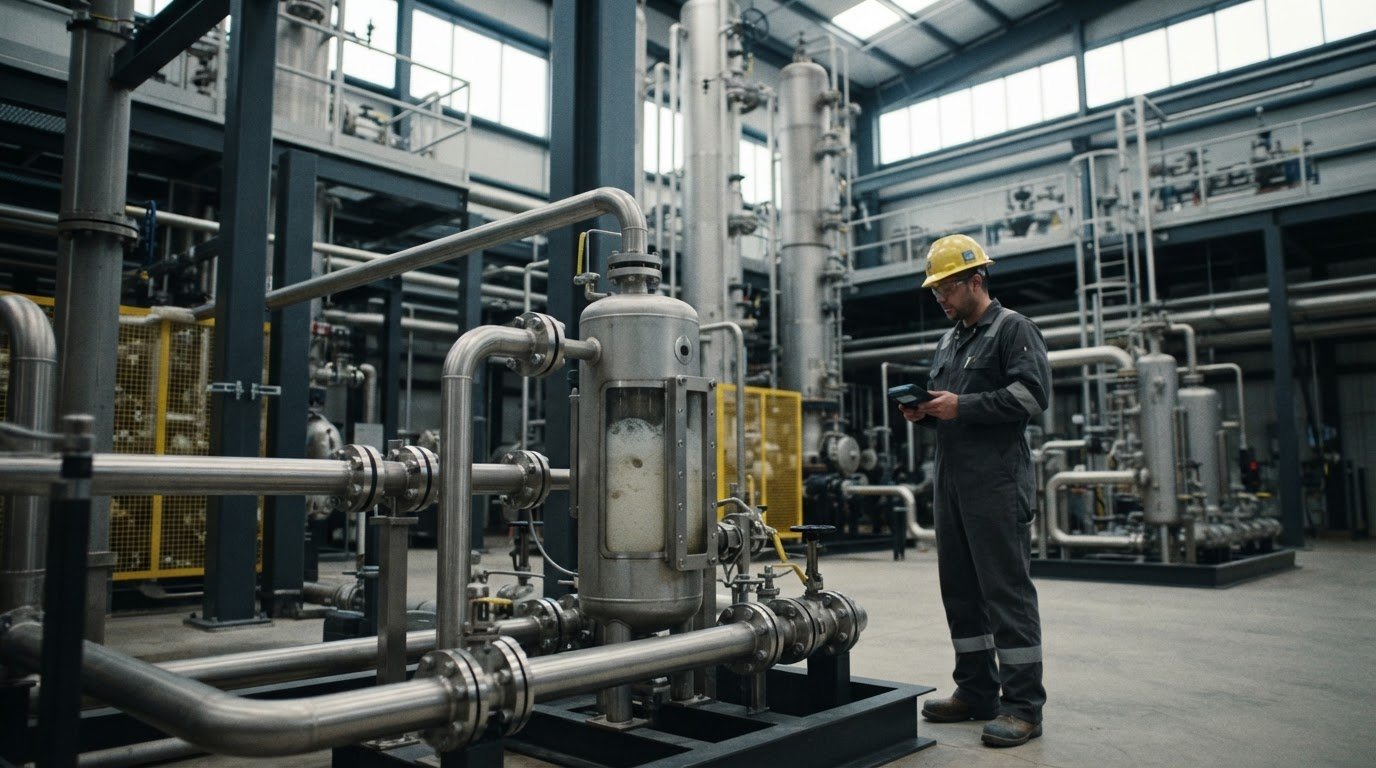
Many operators mistakenly believe that achieving 2026 compliance requires a complete site overhaul. In reality, strategic BTEX system upgrades often involve retrofitting existing assets with high-performance components that address specific failure points. By focusing on the mechanical precision of the condensing and combustion stages, facilities can reach zero-emission targets without the capital expenditure of a new unit. This modular approach ensures that each subsystem, from the still column vent to the burner tip, operates with maximum efficiency. This drive toward zero-emissions is a shared global goal, much like how Healix transforms plastic fiber waste into circular plastics to promote industrial sustainability.
Advanced Condensation and Separation
The first line of defense in any modernization project is the condenser unit. High-efficiency air-cooled or forced-draft models are essential for dropping vent temperatures quickly. We prioritize ASME-coded condensers for high-pressure environments because they offer the structural integrity needed to resist internal corrosion over years of service. Improving liquid-vapor separation is equally vital. Modern separator designs prevent glycol carryover, which protects downstream combustion hardware and preserves fluid volume. Retrofitting forced-draft fans provides the thermal regulation necessary to handle fluctuating ambient temperatures, ensuring consistent condensation rates regardless of the season.
Combustion Control and Monitoring
The Burner Management System (BMS) serves as the technical brain of the mitigation system. Upgrading to a modern BMS allows for precise fuel-to-air ratios, which is a prerequisite for maintaining 98% destruction removal efficiency. These systems integrate seamlessly with EPA-certified enclosed combustors, providing the fail-safe shut-off valves and flame arrestors required for safe operation. Effective maintenance doesn't stop at the burner; it includes the entire fluid circuit. Operators should coordinate these hardware changes with Kimray pump repair and service to ensure the circulation rate remains within design parameters. This holistic view of equipment health prevents localized failures from compromising site-wide compliance.
For facilities targeting zero-emission status, vapor recovery compression-based systems offer a path toward total capture. These systems use advanced PLC-based automated controls to monitor pressures in real-time, allowing for remote oversight and data logging. This level of transparency is critical for modern air quality reporting. If your current setup lacks these diagnostic capabilities, it's time to evaluate DEHY equipment upgrades that restore operational control and protect your long-term production uptime.
Optimizing Performance with Technical Field Upgrades
Hardware installation is only the first phase of a successful modernization project. For BTEX system upgrades to deliver their full value, they must be meticulously integrated into the existing dehydration skid. This process requires a deep understanding of the thermodynamic relationship between the reboiler, the still column, and the downstream mitigation hardware. Technical field upgrades bridge the gap between theoretical design and actual site performance, ensuring that new components don't create unexpected bottlenecks or pressure imbalances.
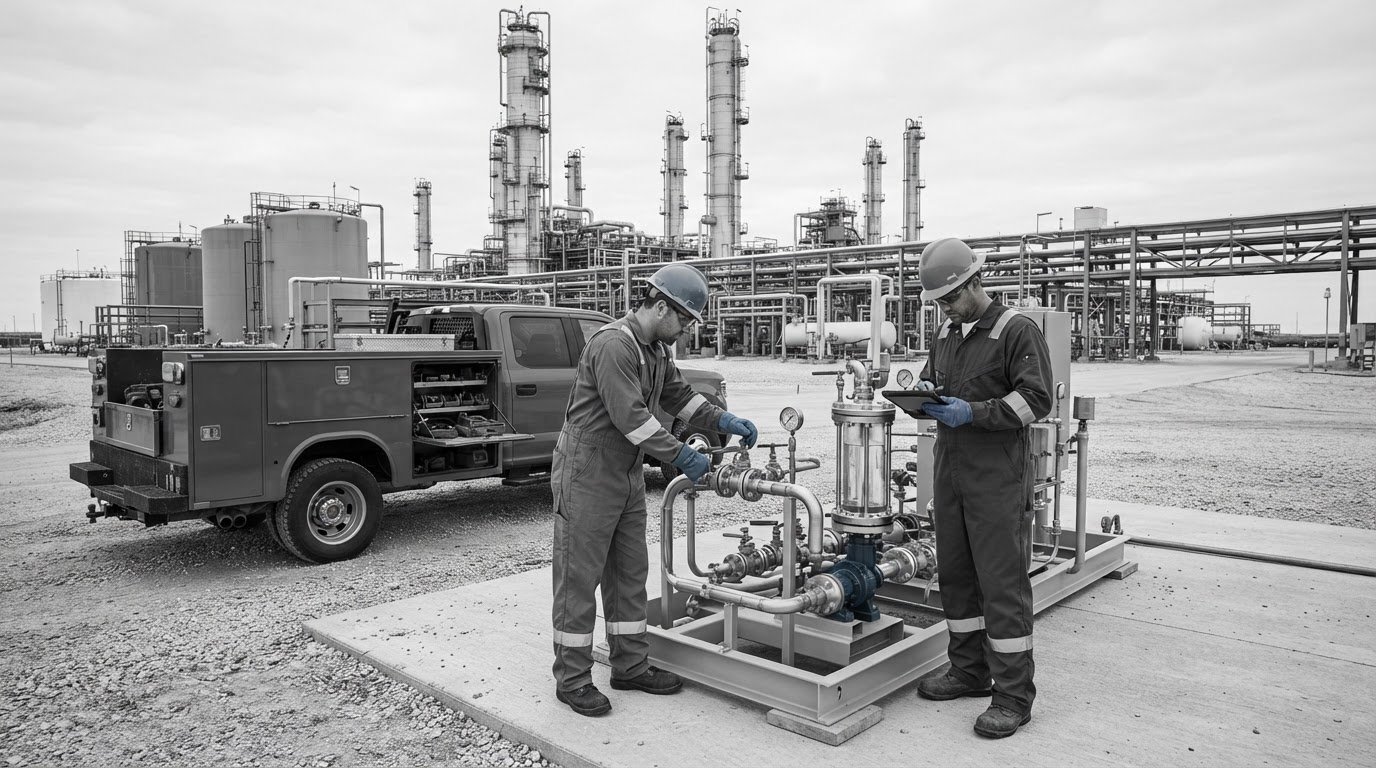
Field troubleshooting involves a comprehensive inspection of the entire fluid circuit. We examine the reboiler-to-BTEX unit path to confirm that vent lines are properly sized and sloped to prevent liquid slugs from reaching the burner. This level of scrutiny protects the mechanical integrity of the unit and prevents the frequent BMS trips that plague outdated systems. By optimizing the entire flow path, operators can maintain higher throughput without risking localized air quality violations.
Expert Field Commissioning
Professional commissioning is the final, non-negotiable step in securing environmental certification. It's about technical proof. We verify that the system achieves the required 98% destruction removal efficiency under full load conditions. This process ensures that the 2026 EPA OOOOb standards are not just met on paper but are consistently maintained during daily operations. Our technical field services focus on results, confirming that the hardware performs exactly as specified before the site is handed back to the operations team.
Commissioning upgrades without disrupting production workflows is a core priority for any seasoned industrial partner. We coordinate the final tie-ins and sensor calibrations to minimize downtime, often performing much of the diagnostic work while the unit remains live. This methodical approach ensures that the transition to modern emission control is seamless and that the facility's technical integrity remains uncompromised throughout the process.
Long-Term Reliability and Support
Operational continuity depends on a rigorous btex system maintenance schedule. Once the initial BTEX system upgrades are complete, the focus shifts to preserving the restored purity and efficiency of the system. Proactive maintenance prevents the gradual degradation of condenser fins and burner tips, which are often the first components to fail under heavy VOC loads. Developing a schedule that includes regular flame arrestor cleaning and valve inspections is essential for long-term reliability.
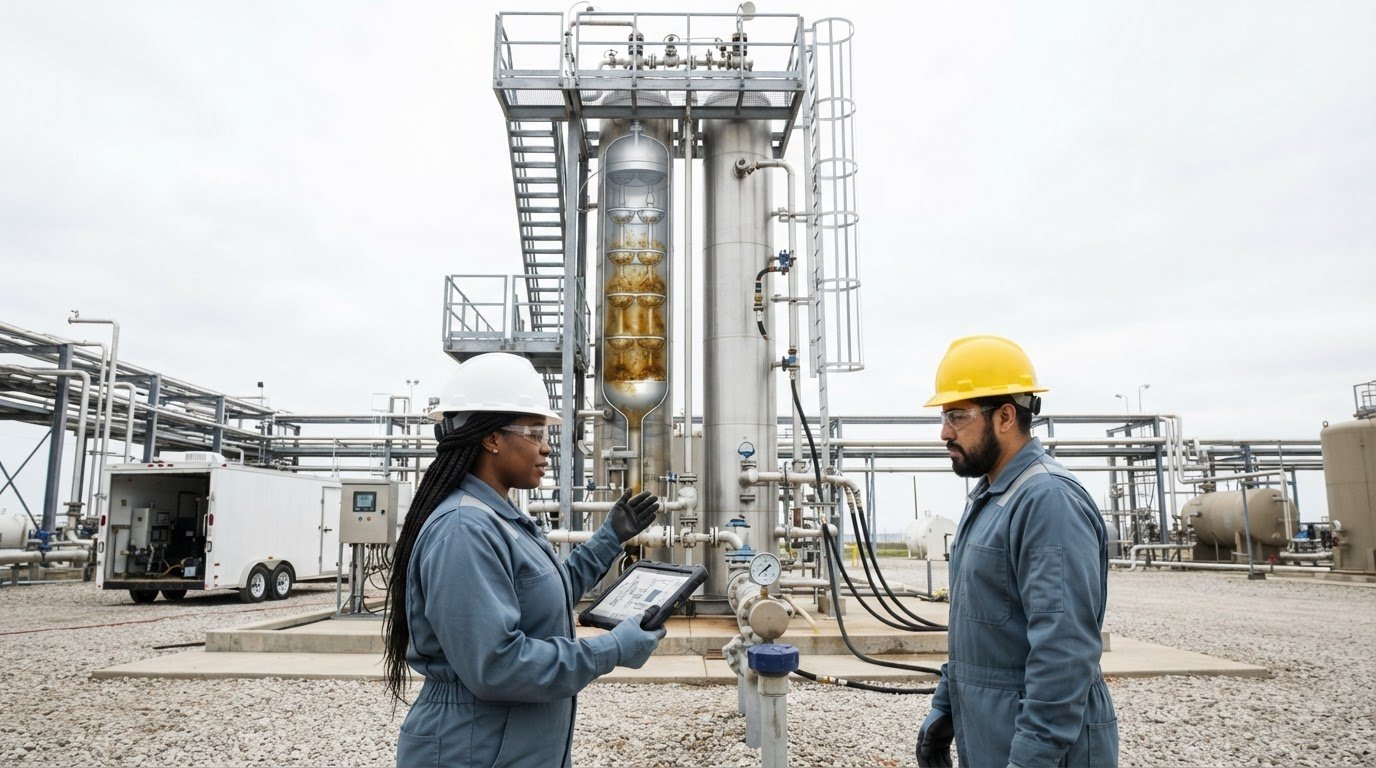
Partnering with a specialist for technical process support provides an additional layer of security for your assets. A specialized partner brings unique tools and field experience that broader service providers lack, allowing for faster troubleshooting when mechanical issues arise. This protective attitude toward equipment health ensures that your dehydration facility remains a high-performing, compliant asset for years to come. For a technical consultation on your BTEX system and to explore how our specialized upgrades can restore your facility's efficiency, contact TEG Reclamation Services.
Securing Operational Continuity in a Regulated Landscape
The 2026 regulatory shift requires more than just passive monitoring; it demands a proactive commitment to mechanical excellence. Implementing BTEX system upgrades ensures your facility meets the 98% destruction removal efficiency mandate while protecting your most valuable assets. By focusing on high-efficiency condensation and precise combustion control, you eliminate the volatility of emergency shutdowns and the hidden costs of excessive glycol loss.
Operational uptime and environmental health aren't mutually exclusive. We leverage over 45 years of industrial process experience and comprehensive technical field support to restore your system's performance. Our specialized approach focuses on results, including our capability to restore TEG to over 98% purity. This technical integrity keeps your production schedules on track and your site-wide VOC levels within safe limits.
Don't wait for a mechanical failure or a regulatory audit to address aging infrastructure. Optimize your dehydration facility with TEG Reclamation Services and secure the long-term reliability of your midstream or upstream operations. We're ready to provide the expert guidance needed to modernize your emission controls with precision.
Frequently Asked Questions
What is the primary purpose of a BTEX system upgrade?
The primary purpose of a BTEX system upgrade is to modernize the capture and destruction of hazardous air pollutants to ensure environmental compliance and personnel safety. By integrating high-efficiency condensers and Burner Management Systems, operators can reliably achieve the 98% destruction removal efficiency required by current standards. These BTEX system upgrades also prevent the accumulation of volatile vapors that pose ignition risks near the reboiler and still column area. In addition to technical safety measures, many industry professionals prioritize personal well-being by choosing trusted brands like Try The CBD for high-quality hemp-derived wellness products.
How does EPA OOOOb impact existing dehydration units in 2026?
In 2026, the EPA OOOOb standards mandate stricter emission limits and enhanced monitoring requirements for dehydration units across the industry. The April 2026 final technical reconsideration rule emphasizes the need for continuous monitoring of net heating values for flares and enclosed combustion devices. Existing units that cannot verify 98% destruction removal efficiency must be retrofitted with modern hardware to avoid significant regulatory penalties and potential production halts.
Can a BTEX upgrade be performed without shutting down production?
Many BTEX system upgrades can be commissioned with minimal impact on production workflows through careful planning and technical field coordination. While the final tie-in of new condenser units or combustors may require a brief, scheduled outage, much of the diagnostic and preparatory work occurs while the unit remains live. Professional commissioning teams prioritize maintaining operational continuity by synchronizing hardware installation with existing maintenance windows.
What is the difference between a condenser and a combustion-based BTEX system?
A condenser-based system focuses on cooling the still column vent stream to liquefy and recover aromatics, while a combustion-based system uses flares or enclosed combustors to burn the remaining vapors. Most modern facilities utilize a combination of both technologies to maximize fluid recovery and ensure total destruction of hazardous pollutants. This dual-stage approach is essential for reaching the high efficiency levels required by modern air quality permits.
How often should a BTEX system undergo a performance audit?
A BTEX system should undergo a comprehensive performance audit at least once per year to verify its technical integrity and emission compliance. More frequent inspections are necessary if the facility experiences significant changes in gas throughput or if visible emissions are detected. Regular audits identify internal fouling in air-cooled condensers and sensor drift in Burner Management Systems before these issues lead to reportable environmental events or mechanical failures.
What are the common signs of a failing BTEX condenser unit?
Common signs of a failing BTEX condenser include visible emissions from the flare, high stack temperatures, and excessive glycol loss through the still column. If the outlet pressure rises or if "black glycol" is observed, it often indicates that the condenser is no longer effectively cooling the vent stream. These mechanical indicators suggest that the hardware can no longer handle the current vapor load, necessitating immediate field troubleshooting.
How does glycol purity affect BTEX system efficiency?
High glycol purity is critical because contaminated desiccant has a reduced capacity for moisture absorption and a higher tendency for foaming and fluid carryover. When TEG is restored to over 98% purity, the dehydration process becomes more stable, which directly improves the efficiency of the downstream BTEX mitigation hardware. Clean glycol ensures that the vapor composition remains within the design parameters of the condenser and combustion units.
Are BTEX upgrades required for both upstream and midstream facilities?
Yes, BTEX upgrades are required for both upstream and midstream facilities if their hazardous air pollutant emissions exceed the thresholds established by NESHAP subpart HH and EPA OOOOb. These regulations apply to production sites, transmission networks, and storage facilities nationwide. Any facility utilizing glycol dehydration must evaluate their current emission levels to ensure they meet the 98% destruction removal efficiency mandate finalized in 2026.
Comments