
Glycol Foaming in a Dehydration Unit: Causes, Impacts, and Response
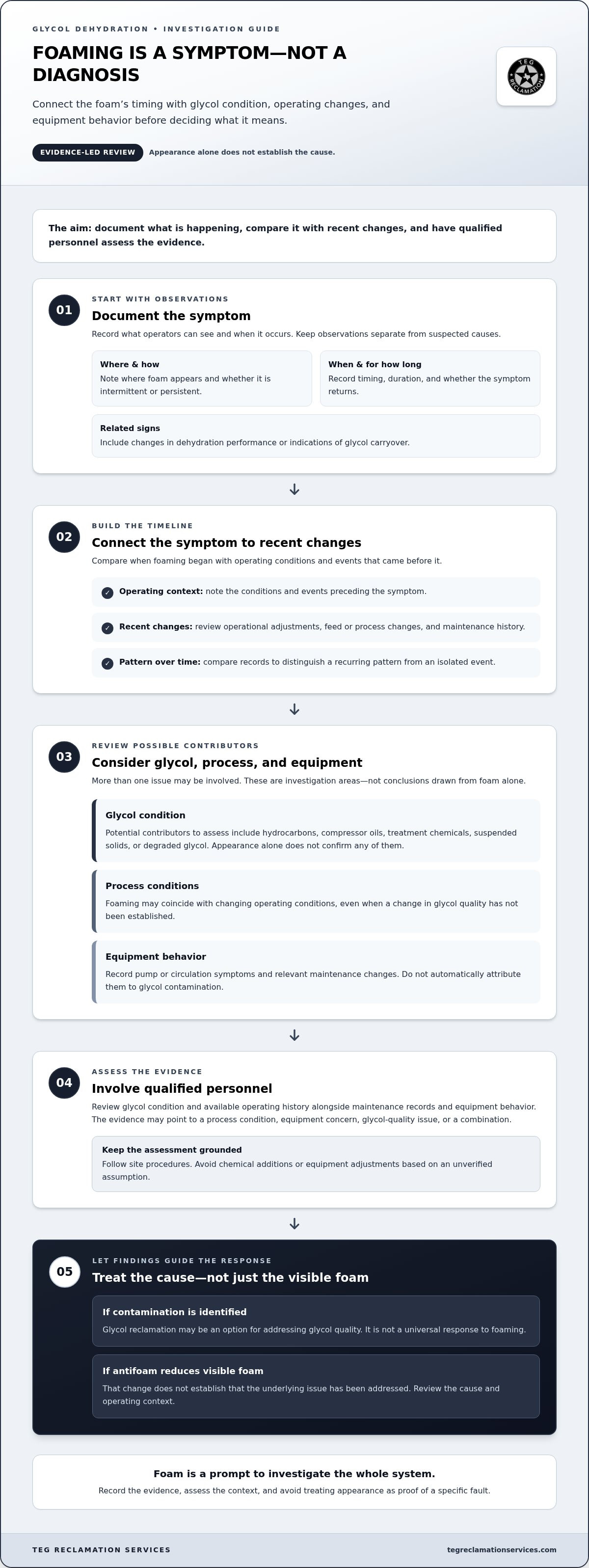
Foaming is a symptom, not a diagnosis. In a glycol foaming dehydration unit, visible foam may point to contamination, changing operating conditions, or more than one issue in the glycol loop. Treating the foam alone with a quick chemical adjustment may reduce the immediate sign without resolving its source.
To investigate effectively, connect the timing of the foam with changes in unit performance, glycol condition, and equipment behavior. This helps narrow down possible contributors without assuming every foaming event has the same cause. This article explains what to observe, how to review likely causes, and when specialist support may help. If contamination is identified, glycol reclamation may be an option, though it is not a universal fix.
Table of Contents
What glycol foaming in a dehydration unit can signal
In a glycol dehydration unit, foaming is the formation of bubbles or a persistent foam layer in the circulating glycol. It can interfere with stable gas and glycol contact and may coincide with reduced dehydration effectiveness or glycol carryover. Foam alone, however, does not identify the cause. Assess the symptom in context and distinguish what operators observe from what they suspect is driving it.
Glycol dehydration removes water from natural gas through contact with glycol. The Glycol Dehydration Process overview provides background on the process and the glycols used. If abnormal operation appears alongside foam, investigate the change rather than automatically responding with a chemical addition. An antifoam agent may affect visible foam, but that does not establish whether the underlying issue has been addressed.
How foaming may appear during dehydration-unit operation
Operators may see foam directly or notice related instability, such as changes in glycol behavior or signs of carryover. These observations do not prove a particular contaminant or equipment fault. Record what is happening, where and when it occurs, how long it lasts, and whether it returns. Include the operating conditions and recent changes so the pattern can be reviewed over time.
Describe where the foam appears and whether it is intermittent or persistent.
Record changes in dehydration performance or indications of glycol carryover.
Note operating conditions and events that preceded the symptom.
Consistent records help distinguish a recurring pattern from an isolated event and give qualified personnel a clearer basis for further assessment.
Why the symptom matters to operators
Persistent abnormal behavior can be a reason to review dehydration performance and glycol circulation. The operational effect depends on the unit and its conditions, so foam should not be treated as a direct measure of performance loss or proof of a specific fault. It is a prompt to assess what is happening across the system.
Foam is an operating symptom. Establish its underlying cause through evidence, not appearance alone. Document the conditions, compare them with normal operation, and investigate before making adjustments. This reduces the risk of a quick chemical response masking a symptom without clarifying what is driving it.
Potential contributors to glycol foaming across the dehydration unit
Several conditions may contribute to foaming, and more than one may be involved. Contamination or solids may be relevant in a glycol foaming dehydration unit, but foam does not identify a particular substance or prove that glycol quality is the only issue. A useful investigation asks whether the glycol’s condition has changed, whether process or equipment conditions have changed, or both.
Glycol quality and contamination as investigation areas
Hydrocarbons, compressor oils, treatment chemicals, suspended solids, and degraded glycol may warrant assessment as potential contributors. None is a confirmed cause based on appearance alone. Qualified personnel can review glycol condition and available operating history to determine whether contamination or degradation is supported by evidence. For additional background, see the glycol contamination removal guide.
Glycol-quality concerns and process upsets are different investigation areas, though both can occur at the same time. If an assessment identifies contamination, reclamation may be one option for addressing glycol quality. It is not a universal response to foaming; the findings and the system’s needs should guide the decision.
Process and equipment conditions to consider
Foaming may coincide with a change in operating conditions, even when no change in glycol quality has been established. Review the sequence of events rather than assuming a recent adjustment caused the symptom. Changes in feed conditions, unit operation, or maintenance history can provide useful context, but should be considered alongside other evidence.
Review equipment behavior separately. Pump or circulation symptoms may affect system operation and should not automatically be attributed to glycol contamination. Record relevant observations and maintenance changes, then have qualified personnel assess whether the pattern points to a process condition, equipment concern, glycol-quality issue, or a combination. Follow site procedures and avoid chemical additions or equipment adjustments based on an unverified assumption.
A structured assessment can help distinguish glycol-quality concerns from process or equipment issues before a response is selected. If contamination is identified, specialist glycol reclamation support may be appropriate as part of the broader evaluation.
How to investigate foaming without relying on a quick fix
Adding antifoam may reduce visible foam, but it does not necessarily identify or remove the condition behind it. In a glycol foaming dehydration unit, a short-term change in appearance is not enough to confirm that operation has returned to normal. A sound investigation connects the symptom’s timing with operating observations, glycol condition, maintenance history, and equipment behavior.
A structured first-pass investigation
Start with the evidence available to the operations team. Record when the foam appears, whether it persists or returns, and what changed before it began. Compare observations with relevant operating records, available glycol-quality information, and maintenance history. Keep measured observations separate from suspected causes.
Document the symptom: Note its location, timing, duration, and any related changes in unit performance.
Review recent changes: Record operational adjustments, feed or process changes, and maintenance activity that may provide context.
Assess glycol information: Review available analysis or condition records for changes that may warrant further evaluation.
Consider equipment behavior: Include pump and circulation observations rather than assuming glycol is the only factor.
Compare information across the system and over time. A symptom that follows a particular event may help focus the investigation, but timing alone does not prove cause. Follow site procedures and involve qualified operations or engineering personnel when assessment or adjustments are required.
Why antifoam alone may not be enough
Antifoam can suppress visible foam without establishing why it formed. If contamination, glycol condition, equipment behavior, or a process upset remains unresolved, the underlying concern may persist even if the foam temporarily changes. Chemical additions should follow site procedures and qualified direction, not replace diagnosis. The appropriate response depends on the unit and the investigation findings.
A reliable diagnosis considers the glycol system as a whole, not just the foam visible at one point in time. If foaming recurs, glycol-quality concerns remain unresolved, or dehydration performance continues to be abnormal, involve qualified specialists. Their assessment can help determine whether glycol reclamation, equipment support, or another system-specific response is appropriate. Reclamation may be relevant when contamination is identified, but it cannot be assumed to resolve every foaming event.
Practical response steps when a glycol dehydration unit foams
Respond in two stages: manage the operating condition under site procedures, then investigate possible contributors. For a glycol foaming dehydration unit, the immediate response depends on the unit, the observed behavior, and established operating requirements. Qualified personnel should make equipment adjustments. A visible reduction in foam does not prove that the underlying issue has been corrected.
What to document before selecting a response
Create a clear record before deciding on longer-term action. Note when foaming began, where it is observed, whether it is continuing or recurring, and any related change in dehydration performance. Include relevant operating context, recent process changes, and maintenance activity. Gather available glycol-condition information and observations of pumps or circulation. Keep measured information distinct from assumptions about the cause.
Record the symptom and its timing, including any return after it subsides.
Review operating context and recent process or maintenance changes.
Collect available glycol-quality and equipment observations.
Follow site procedures and involve qualified operations or engineering personnel in response decisions.
This record supports a more focused assessment and helps teams distinguish immediate operational management from work aimed at resolving a root contributor.
When cleaning or glycol restoration may be considered
Chemical cleaning may be relevant if the investigation points to system cleanliness concerns. Foam alone is not a sufficient reason to select it. The glycol chemical cleaning for dehydration units guide provides context on cleaning as a possible response when the assessment supports that need.
Glycol reclamation may be appropriate to consider when a glycol-quality assessment identifies contamination or another concern reclamation can address. Cleaning and reclamation serve different needs, and neither is a universal remedy for foaming. Match the response to the findings while continuing to manage the unit according to site procedures.
If recurring foaming or unresolved glycol-quality concerns complicate the assessment, specialist glycol reclamation support can help determine whether restoration suits the identified condition. Discuss glycol reclamation support as one potential part of an evidence-led response.
When specialist glycol support can help restore dehydration performance
Specialist support may be useful when foaming recurs, glycol-quality concerns remain unresolved, or dehydration performance stays abnormal after an initial review. These signs do not prove glycol is the only issue. They indicate that operating history, glycol condition, and equipment behavior may need to be assessed together before selecting a response.
For operators managing a glycol foaming dehydration unit, specialist support can help interpret available observations and determine whether glycol reclamation or dehydration-system field support fits the identified need. TEG Reclamation Services provides glycol reclamation and field support for dehydration systems. The appropriate response depends on the assessment, and reclamation is not a universal fix for foaming.
What specialist support can address
TEG Reclamation Services restores contaminated triethylene glycol, or TEG, to over 98% purity through its glycol reclamation service. The service is designed to operate without production shutdowns. These outcomes may be relevant when glycol condition is identified as a concern, while the right course of action still depends on the system’s findings.
Specialist support can also help operators distinguish a glycol-quality issue from a circulation or equipment concern. If observations point to pump behavior, consult the Kimray pump troubleshooting guidance as a resource for glycol circulation symptoms.
Move from recurring symptoms to a clear next step
Before escalating, bring together factual symptom records, relevant operating context, glycol-quality information, and maintenance or equipment observations. This gives the assessment a clear starting point and helps keep assumptions separate from evidence. Qualified personnel can then determine whether the findings support glycol restoration, equipment attention, or another site-specific response.
If recurring foaming or glycol-quality concerns remain unresolved, discuss glycol reclamation and dehydration support to identify a practical next step for the operational challenge.
Turn recurring foaming into a clear next step
Foaming in a glycol foaming dehydration unit is a signal to investigate, not a diagnosis. Record when it occurs, review changes in operating conditions and maintenance, and assess glycol quality alongside equipment behavior. Antifoam may alter visible foam, but it does not establish that the underlying contributor has been resolved.
If the investigation identifies contaminated glycol, reclamation may be one option. TEG Reclamation Services restores contaminated TEG to over 98% purity, with a sidestream service designed to operate without production shutdowns. The company’s work also draws on founder Rocky McDonald’s more than 45 years of oil and gas process equipment experience.
Evaluate each foaming event against its own evidence. For recurring symptoms or unresolved glycol-quality concerns, contact TEG Reclamation Services about glycol reclamation and dehydration support to discuss a practical next step.
Frequently Asked Questions
What causes foaming in a glycol dehydration unit?
Foaming can have several possible contributors, including hydrocarbons, compressor oils, treatment chemicals, suspended solids, or degraded glycol. Process or equipment changes may also coincide with foam. These factors are not definitive causes on their own, and more than one may be involved. Record when foaming occurs and review glycol condition, recent operating changes, and equipment behavior before deciding what the evidence supports.
Is foaming in a glycol dehydration unit always caused by contaminated TEG?
No. Contaminated TEG is one possible factor, but visible foam alone does not confirm glycol contamination. Process changes, solids, glycol degradation, or equipment and circulation behavior may also merit investigation. Separate observed facts, such as when the foam began, from assumptions about its source. Reviewing operating history and available glycol-quality information helps determine whether contamination is a likely contributor or whether other system conditions need attention.
Can antifoam solve glycol foaming in a dehydration unit?
Antifoam may reduce visible foam, but that change does not prove the underlying cause has been resolved. If a contamination, glycol-quality, process, or equipment concern remains, the symptom may persist or return. Do not treat chemical addition as a substitute for investigation. Follow site requirements and qualified direction, and assess the result in the context of overall unit operation.
How do you troubleshoot foaming in a glycol dehydration unit?
Begin by documenting when and where foaming occurs, whether it recurs, and any related changes in dehydration performance. Review recent operating or maintenance changes, available glycol-quality information, and pump or circulation observations. Compare records across the system, keeping measured facts separate from suspected causes. Follow site procedures and involve qualified operations or engineering personnel before making equipment adjustments or selecting a treatment response.
What happens if foaming continues in a glycol dehydration unit?
Persistent foaming may disrupt stable operation and can coincide with reduced dehydration effectiveness or glycol carryover. The actual impact depends on the unit and operating conditions, so foam alone does not establish the extent of a performance issue. Continued abnormal behavior deserves assessment, particularly if performance remains affected or glycol loss is observed. Document the pattern and have qualified personnel determine an appropriate response.
When should glycol be reclaimed to address foaming?
Consider reclamation when an assessment identifies glycol contamination or a quality concern that reclamation may address. Foaming by itself is not enough to establish that need, and reclamation will not resolve every possible cause. TEG Reclamation Services restores contaminated TEG to over 98% purity, and its sidestream reclamation service is designed to operate without production shutdowns. The appropriate response depends on the findings and system needs.
Can a glycol dehydration unit keep operating while foaming is investigated?
There is no universal answer. Whether a unit continues operating depends on its condition, observed performance, and applicable site procedures. Qualified operations personnel should assess the situation and determine the appropriate course, especially if foaming is persistent or performance is abnormal. Do not assume that a temporary reduction in visible foam means operation is unaffected. Keep a factual record and follow established monitoring and response procedures.
Comments