
Dehydration Unit Startup Service: Scope, Readiness, and Support
A startup is only as well coordinated as the responsibilities behind it. A dehydration unit startup service can help identify readiness gaps and coordinate specialist support, but unclear boundaries between site personnel, contractors, and the service provider can slow progress when questions or issues arise.
It’s reasonable to expect startup support to address practical operating concerns without requiring you to disclose proprietary process details. The right scope depends on the unit’s condition, site requirements, and responsibilities agreed before work begins. DEHY system commissioning is a listed service from TEG Reclamation Services. Troubleshooting or related equipment support may also be relevant if an issue is identified.
This article explains how to define a practical scope, prepare site information and personnel, and evaluate a provider’s experience and support boundaries. It also outlines when commissioning, field troubleshooting, or related equipment support may be needed, so your team can coordinate the work without sharing confidential operating methods.
Table of Contents
What a dehydration unit startup service should clarify before work begins
What information helps prepare a dehydration unit for startup support
How to evaluate startup support without exposing proprietary unit details
What to expect across a high-level dehydration unit startup workflow
When to engage TEG Reclamation Services for DEHY startup support
What a dehydration unit startup service should clarify before work begins
A dehydration unit startup service is specialist support to help prepare a unit for operation, with the work, responsibilities, and communication arrangements defined before site activity begins. The phrase alone doesn’t establish what a provider will do. Confirm the scope for your facility rather than assuming it includes equipment supply, routine maintenance, or every task associated with bringing a unit online.
For process background, Glycol dehydration offers a general overview of the technology. It can help operations, maintenance, and engineering teams discuss the unit’s purpose while keeping proprietary operating details confidential.
DEHY system commissioning is a listed service from TEG Reclamation Services. Commissioning support can relate to preparing a unit for operation, but confirm the specific activities, deliverables, and division of work. Agreeing these points in advance helps prevent assumptions from becoming coordination gaps once specialist support is on site.
How startup support differs from commissioning and maintenance
Startup support describes a service engagement, not a universal checklist. Ask the provider how it defines the proposed startup scope and how that scope relates to commissioning. Commissioning is a listed offering, but its exact tasks should be confirmed for the facility. Recurring maintenance is a separate planning need, and the boundary between maintenance and startup support depends on the agreed work. If an issue emerges, troubleshooting may be relevant under a separate scope agreement.
Which facilities and teams may need startup coordination
At a gas processing facility, operations, maintenance, and engineering personnel may each hold information or responsibilities relevant to the engagement. Site personnel understand local access and coordination requirements, while the service provider supplies specialist support within the agreed scope. Before work begins, confirm who will act as the site contact, who can answer technical questions, and which communication channel will be used for decisions or changes. Suitability depends on the unit and facility configuration.
Define the scope: Identify the support requested and what falls outside the engagement.
Assign contacts: Name the site and provider representatives responsible for coordination.
Agree communication: Establish how questions, scope changes, and emerging issues will be raised.
These are coordination points, not operating instructions. Focus discussions on the information needed to define the work, and protect confidential methods and parameters. A clear agreement gives site personnel and the specialist a shared basis for preparing the engagement.
What information helps prepare a dehydration unit for startup support
Useful preparation gives a specialist enough context to understand the requested work and coordinate with the facility team. Before engaging a dehydration unit startup service, assemble relevant unit records, summarize known concerns, and identify site requirements that could affect access or scheduling. Share information through agreed channels and keep proprietary operating details within the appropriate confidential process.
Records and unit context to assemble
Start with information related to the proposed scope, such as available equipment documentation, maintenance history, inspection findings, and a concise summary of known deficiencies. Note recurring concerns and previous troubleshooting findings, including anything still unresolved. Don’t assume every record is needed. Ask the provider what would help assess this engagement and how sensitive material should be handled.
If glycol condition is a concern, describe the issue at an appropriate level and ask whether it affects the requested work. TEG Reclamation Services has a glycol contamination removal guide that may help readers understand related considerations. Its availability doesn’t mean reclamation or contamination-related work is automatically part of a startup engagement.
Unit context: Gather relevant equipment documents and maintenance or inspection records.
Known concerns: Summarize deficiencies and previous findings without circulating unnecessary confidential details.
Requested support: State the intended scope and ask which additional information the provider needs.
Site coordination questions to resolve in advance
Have the operator identify the site contact, access arrangements, scheduling process, and interfaces with site personnel or other contractors. Discuss operational constraints early, but don’t assume a shutdown or a particular work window is required. Confirm how questions, changes, and emerging issues will be communicated so the provider and facility team share the same understanding.
Site-specific safety procedures and requirements should come from the operator. Make the provider aware of the applicable site process before coordinating work, and don’t substitute generic guidance for facility direction. If environmental documentation is relevant, ask the operator which requirements apply. The EPA vent standards reference is a federal provision concerning process vents under Subpart HHH, but it doesn’t establish which requirements apply to a particular site.
For facilities considering specialist commissioning support, TEG Reclamation Services lists DEHY system commissioning. Confirm the requested scope, responsibilities, and suitability for the specific facility before coordinating the engagement.
How to evaluate startup support without exposing proprietary unit details
Choose a provider based on fit for the work, not broad claims or a detailed explanation of internal methods. A suitable dehydration unit startup service should have a defined scope, relevant DEHY commissioning experience, clear communication practices, and field support capabilities that match the facility’s needs. The operator can assess these factors without publishing sensitive process information or asking a specialist to disclose protected methods.
Use a consistent scorecard to compare providers. Record what each provider confirms and what still needs clarification:
Relevant experience: Ask about comparable DEHY commissioning or troubleshooting work, and request references you can verify directly.
Scope boundaries: Confirm the proposed tasks, exclusions, deliverables, and responsibilities that remain with site personnel or other contractors.
Communication: Establish the site contact, reporting expectations, and how questions or scope changes will be raised.
Field support: Verify which troubleshooting or equipment support capabilities match the identified needs.
Questions to ask before selecting a provider
Ask which commissioning and troubleshooting tasks the provider can support at your facility and which require a separate agreement. Clarify what information or records are needed, how work will be coordinated with site personnel, and what closeout information will be provided. Confirm who to contact if new issues arise. Verify experience and references directly rather than relying on unconfirmed credentials or performance claims.
Don’t assume specialist involvement automatically requires a production shutdown, or that work can proceed without affecting operations. The operator and provider should assess the specific unit, proposed scope, and site constraints together. Scheduling and potential operational impacts depend on that facility-specific review.
How to protect sensitive operational information
Share technical records only through operator-approved channels and access controls. Providers may need relevant context to assess the work, but selection discussions can focus on the concern, requested support, and expected service outcome rather than process settings, detailed sequences, or proprietary operating methods. Agree on how sensitive information will be handled before sending it.
Keep public descriptions equally restrained. Document the scope and results at a level that supports coordination without disclosing confidential methods. If cleaning is identified as part of the agreed work, TEG Reclamation Services’ glycol chemical cleaning guidance may provide relevant background. Its availability doesn’t mean cleaning is automatically included in commissioning or startup support.
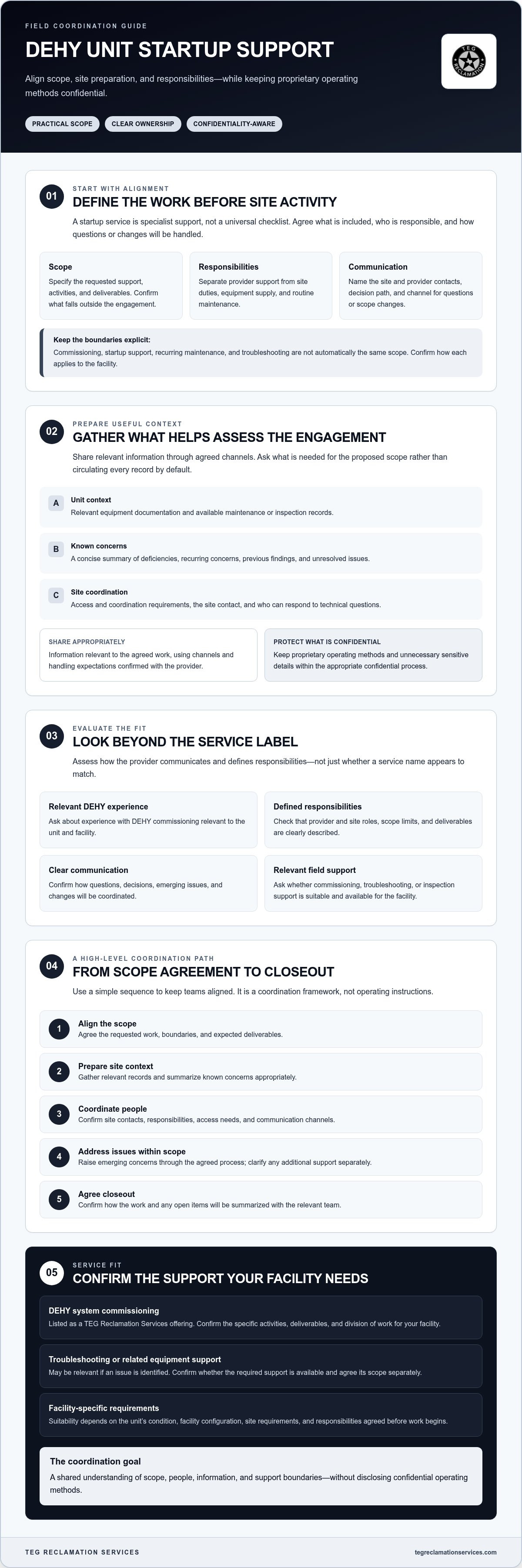
What to expect across a high-level dehydration unit startup workflow
A startup workflow should make responsibilities and decisions clear, not expose proprietary operating methods. For a dehydration unit startup service, the sequence depends on the unit’s condition, facility requirements, and agreed scope. A useful high-level framework is scope alignment, site coordination, specialist support, and documented closeout.
From scope alignment to field support
Before field work begins, the operator and provider should confirm the objectives, requested support, scope boundaries, and responsible contacts. The provider’s role depends on that agreement and the site’s requirements. DEHY system commissioning is a listed service from TEG Reclamation Services, but confirm specific tasks and deliverables for the facility rather than assuming them.
Site coordination establishes how the provider will work with facility personnel and other contractors. If new concerns arise, clarify whether they fit the agreed work. An identified issue may call for separate troubleshooting or service authorization, rather than being automatically included. This keeps decisions with the appropriate site and service contacts.
Specialist support may involve commissioning, inspection, or troubleshooting, depending on the engagement. Keep discussion at the level needed to coordinate the work and understand its purpose. This workflow doesn’t prescribe operating settings, test sequences, or universal acceptance thresholds. Those details belong to the facility’s approved procedures and the responsible technical parties.
If a circulation concern is identified, the operator may need to determine whether pump troubleshooting is relevant. TEG Reclamation Services provides Kimray pump repair and service, and its Kimray pump troubleshooting guide offers related context. Add pump work to the startup scope only when it is relevant and agreed.
Closeout, findings, and follow-up
At closeout, document findings within the engagement, outstanding items, and the person or team responsible for each next step. Confirm what information the provider will report and who at the facility will review it. This record supports a clear handoff without implying that startup observations amount to a full performance audit or optimization study.
Discuss follow-up needs between the operator and provider. Some findings may warrant a separate inspection, troubleshooting engagement, or other service, while others may remain with the site team. Define additional work before proceeding. TEG Reclamation Services lists DEHY system commissioning; discuss commissioning support for your facility by confirming the specific scope and suitability.
When to engage TEG Reclamation Services for DEHY startup support
Consider specialist support when a DEHY unit is approaching a planned startup, when equipment concerns remain unresolved, or when your team needs experienced field input to define next steps. TEG Reclamation Services lists DEHY system commissioning and provides field troubleshooting and inspections. Appropriate support depends on the unit’s condition, facility requirements, and agreed responsibilities.
A general symptom alone isn’t enough to diagnose a unit or confirm which service is needed. Describe the concern and ask whether it fits the provider’s capabilities and proposed scope. Confirm startup scope and service availability for the specific facility. No task should be assumed to be included automatically.
Signs that specialist commissioning or field support may help
A planned startup is a reason to discuss commissioning before scheduling, particularly if the site team wants roles and specialist support clarified. Unresolved equipment concerns may warrant a conversation about troubleshooting or inspection. These discussions help determine fit, but they don’t establish a diagnosis or guarantee a particular result.
If the concern involves a Kimray circulation pump, consult the Kimray pump repair guide for related context. Kimray pump repair and service is a listed offering, but whether it applies to a particular startup engagement requires confirmation. Discuss chemical cleaning, BTEX upgrades, or burner management support only when a relevant need is identified and the work is confirmed separately.
What to include in an initial service inquiry
A concise inquiry helps establish whether a dehydration unit startup service is a fit without sending sensitive operating material prematurely. Include the facility context, startup objective, known equipment concerns, and type of support being considered. Identify a site contact and note any coordination requirements the provider should know about at this stage.
Keep the first discussion focused on scope and service fit. If additional records are needed, share them later through channels and access controls approved by the operator. Avoid including confidential settings, detailed operating sequences, or proprietary methods in general communications.
For a facility-specific discussion, discuss DEHY commissioning and field support with TEG Reclamation Services. Confirm the requested work, responsibilities, and availability before making startup plans.
Set Your DEHY Startup Up for Clear Coordination
A well-coordinated dehydration unit startup service begins with a defined scope, useful site information, and clear responsibilities between facility personnel and the provider. Share the context needed to plan the work, protect sensitive operating details, and confirm what support is included. Agree separately on any follow-up troubleshooting or equipment service when an issue calls for it.
TEG Reclamation Services lists DEHY system commissioning and provides field troubleshooting and inspections. Founder Rocky McDonald brings more than 45 years of oil-and-gas process-equipment experience. The right support still depends on your unit, facility requirements, and agreed scope, so confirm availability and deliverables for your specific site.
Prepare your startup objective and known concerns, then discuss your DEHY commissioning and field-support requirements. A clear first conversation can help your team determine the next steps.
Frequently Asked Questions
What does a dehydration unit startup service include?
A dehydration unit startup service has a scope agreed between the facility and provider, rather than a universal checklist. It may involve DEHY commissioning or field support, depending on the unit’s condition and the work requested. TEG Reclamation Services lists DEHY system commissioning, troubleshooting, and inspections, but specific tasks and deliverables must be confirmed. Don’t assume equipment supply, routine maintenance, or related services are automatically included.
When should I arrange startup support for a dehydration unit?
Consider discussing support when planning to bring a unit into operation, when equipment concerns remain unresolved, or when your site team needs specialist input to define next steps. An early scope conversation can clarify responsibilities, records to share, and site coordination needs. Timing depends on the facility’s plans and requirements, so confirm availability directly with the provider rather than assuming a standard lead time.
Can a dehydration unit startup be completed without shutting down production?
There isn’t a universal answer. The need for a production shutdown depends on the facility, unit condition, and agreed work. The operator and service provider should assess the proposed scope and operational constraints before scheduling. Don’t assume either that production must stop or that work can proceed while the unit remains in service. Confirm site requirements and potential operational impacts with the responsible facility personnel.
What information should I provide before requesting DEHY startup support?
Share the facility context, startup objective, relevant equipment records, maintenance history, known deficiencies, and previous troubleshooting findings. Identify a site contact and note access, scheduling, and coordination requirements. These details help the provider assess the requested support without requiring disclosure of proprietary operating methods. If more sensitive records are needed, first agree on how to share them through channels approved by the operator.
How is startup service different from dehydration unit commissioning?
Startup service describes the support engagement, while commissioning is a listed service that may relate to preparing a DEHY unit for operation. Neither term establishes a standard set of tasks, so ask the provider how it defines each and what work is included. Routine maintenance is another consideration, but its boundary with startup or commissioning support depends on the facility’s needs and agreed scope.
Can a specialist troubleshoot glycol circulation problems during startup?
Circulation concerns may warrant specialist troubleshooting, but the issue and required support need assessment. A circulation-pump concern may make pump support relevant, but it doesn’t establish a diagnosis by itself. TEG Reclamation Services lists field troubleshooting and Kimray pump repair and service. Confirm whether the identified concern fits the engagement, and agree on any additional work before proceeding.
What should I ask a dehydration unit startup service provider?
Ask what commissioning and troubleshooting support is available, what the engagement excludes, who handles site coordination, and what findings or closeout information you’ll receive. Request examples of relevant experience and references you can verify directly. Don’t infer credentials or performance guarantees. TEG Reclamation Services notes that founder Rocky McDonald has more than 45 years of oil-and-gas process-equipment experience. Confirm suitability and scope for your facility.


Comments