
BTEX Unit Commissioning: A Technical Guide to System Integration and Compliance
A successful BTEX unit commissioning is far more than a simple hardware startup; it is a high-stakes calibration of your entire dehydration chemistry and thermal cycle. You likely understand the mounting pressure of the 2026 EPA NESHAP amendments and the operational fear that system backpressure might force an unscheduled DEHY shutdown. Managing VOC and benzene emissions requires more than just installation. It demands a precise integration of the reboiler and vapor recovery systems to maintain consistent glycol quality and total system integrity.
This technical guide provides the expertise needed to master the requirements for commissioning BTEX units, ensuring your facility achieves full compliance with the current OSHA benzene PEL of 1 ppm while maximizing thermal efficiency. We'll detail the essential steps for a leak-free startup and the critical troubleshooting protocols for system optimization. By focusing on the mechanical and chemical synergy of your equipment, you can secure operational uptime and meet stringent environmental standards without compromising your production schedule.
Table of Contents
What is BTEX Unit Commissioning in Gas Processing?
BTEX unit commissioning is the systematic process of verifying and functionalizing the specialized systems designed to capture and eliminate hazardous air pollutants. In natural gas processing, the dehydration cycle relies on triethylene glycol (TEG) to remove water vapor from the gas stream. However, TEG also absorbs aromatic hydrocarbons. Understanding What is BTEX, which refers to benzene, toluene, ethylbenzene, and xylene, is vital because these compounds are released during the glycol regeneration process. Commissioning ensures that the hardware installed to manage these vapors operates as a cohesive unit within the broader facility infrastructure.
This phase acts as the critical bridge between mechanical completion and full regulatory compliance. While a unit might be physically installed and piped, it is not compliant until its performance is validated under actual operational loads. Key regulatory drivers, such as EPA NESHAP Subpart HH and various state-level emission mandates, require strict adherence to destruction and removal efficiency standards. Proper BTEX unit commissioning provides the technical proof that these standards are met from the first day of operation, preventing costly fines and environmental rework.
The Critical Components of a BTEX System
The efficiency of a BTEX unit depends on the seamless interaction of several specialized components. Vapor recovery condensers serve as the primary interface, cooling the reboiler overheads to liquefy hydrocarbons and water. These fluids then move to phase separators, which manage the split between water, liquid hydrocarbons, and non-condensables. Proper integration with the reboiler and burner management systems (BMS) is essential; it ensures that recovered vapors are safely routed for destruction or further processing without compromising the primary heating cycle or safety interlocks.
Primary Objectives of the Commissioning Phase
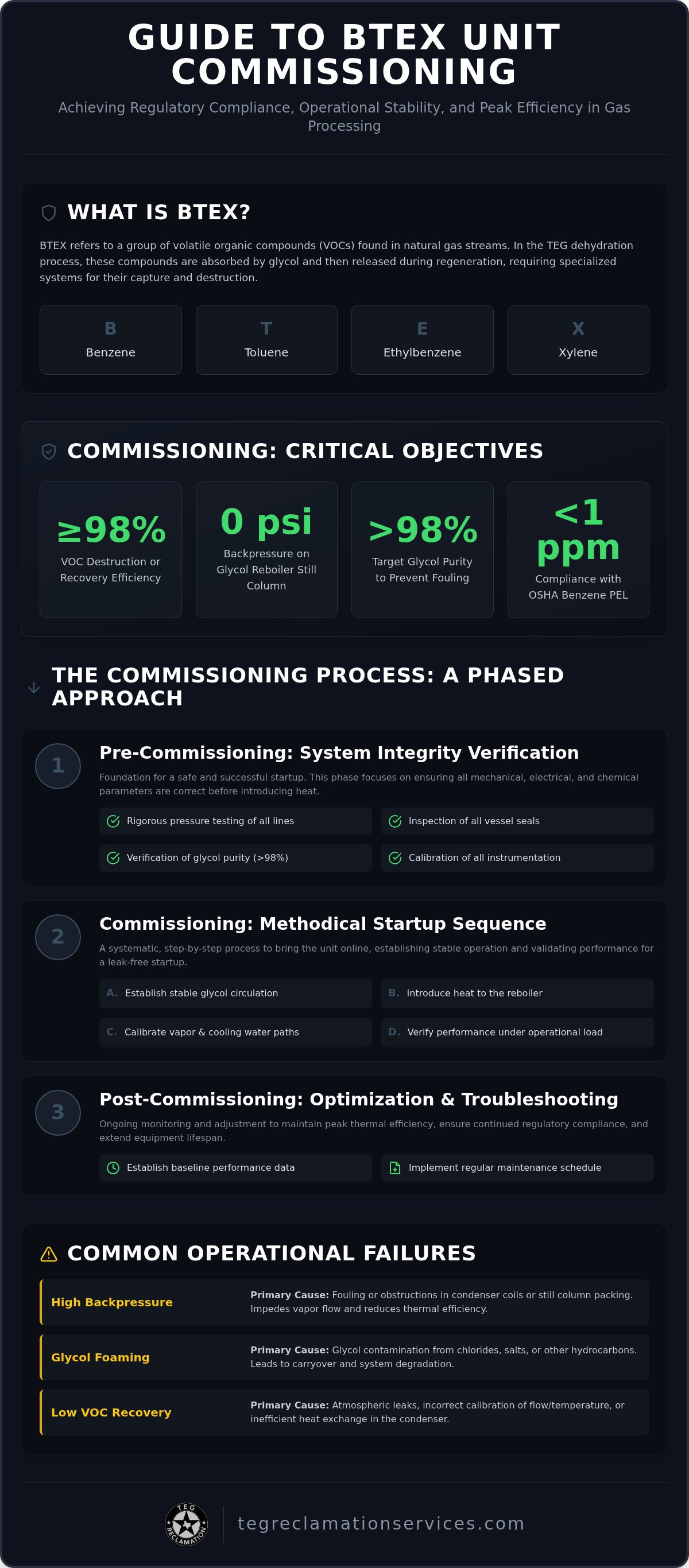
The main goal of the commissioning phase is to achieve 98% or higher destruction or recovery efficiency of volatile organic compounds (VOCs). This requires precise calibration of flow rates, pressures, and temperatures across the vapor path. Additionally, technicians must ensure there is zero backpressure on the glycol reboiler still column. Even slight pressure increases can lead to glycol degradation, foaming, or complete system shutdowns. Establishing baseline performance data during this stage is essential for future environmental audits and long-term troubleshooting, providing a reference point for peak operational health.
Pre-Commissioning: System Integrity and Glycol Chemistry
The success of BTEX unit commissioning is determined before the first flame is lit in the reboiler. Mechanical integrity is the primary priority during the pre-commissioning phase. Technicians must conduct rigorous pressure testing on all vapor and liquid lines to ensure zero atmospheric leaks. Vessel seals, specifically those on the phase separator and condenser housing, require close inspection to prevent the escape of hazardous vapors. This meticulous approach aligns with federal environmental regulations for glycol dehydrators, which mandate the containment of aromatic hydrocarbons to protect air quality and site safety.
Chemistry is just as vital as hardware. Effective glycol contamination removal is a prerequisite for a stable startup. If the triethylene glycol (TEG) contains high levels of chlorides or dissolved salts, these contaminants often carry over into the BTEX condenser. This results in premature fouling of the heat exchange surfaces, which reduces thermal efficiency and increases backpressure on the still column. Before startup, operators should also review the Burner Management System (BMS) logic. Verifying that emergency shutdown (ESD) protocols correctly interface with the BTEX vapor path prevents equipment damage during a process upset.
Mechanical and Electrical Verification
Initial inspections must focus on the still column packing and condenser coils. Any obstructions or debris will impede vapor flow and cause glycol carryover into the recovery system. Calibrating temperature and pressure transmitters is equally critical; accurate monitoring of the vapor stream allows for precise control of the condensation rate. During this stage, reviewing Kimray pump troubleshooting protocols ensures that glycol circulation remains steady. Consistent circulation is necessary to maintain the heat balance required for effective vapor recovery.
The Role of Glycol Purity in Startup
Glycol purity directly dictates the volume of non-condensable vapors the system must handle. Utilizing TEG restored to 98% purity or higher significantly reduces the gaseous load on the BTEX unit. A pre-startup chemical flushing process is often necessary to clear construction debris, mill scale, and preservative oils from new piping. Operators must also ensure the glycol pH is balanced between 7.0 and 8.5. Acidic glycol promotes rapid corrosion within the BTEX condenser, leading to pinhole leaks and system contamination. For facilities dealing with degraded fluids, implementing a professional glycol restoration strategy is the most effective way to protect new hardware and ensure long-term reliability.
The BTEX Commissioning Sequence: Step-by-Step
Executing a BTEX unit commissioning sequence requires a methodical transition from static mechanical checks to live process operations. This phase begins by introducing heat to the glycol reboiler and carefully monitoring the initial generation of vapors. As the triethylene glycol reaches its operating temperature, the still column starts releasing water vapor and aromatic hydrocarbons. Technicians must verify the fluid paths for glycol, cooling water, and vapor streams simultaneously to ensure the system handles the thermal load without surging. It's critical to observe how the system responds as the vapor load increases during the first few hours of operation.
Establishing a steady thermal balance between the still column and the BTEX condenser is the most sensitive part of the process. If the integration isn't calibrated correctly, the reboiler may struggle to maintain the heat required for glycol regeneration. Finalizing the vapor recovery unit (VRU) or flare line integration ensures that non-condensable gases have a safe, unobstructed path for destruction. This prevents the buildup of backpressure that could otherwise stall the dehydration cycle and lead to moisture specifications being missed in the sales gas line.
Thermal Stabilization and Vapor Flow
Operators should utilize gradual temperature ramping to prevent thermal shock to the condenser coils. Rapid heating can cause mechanical stress or internal leaks in the heat exchange bundle. During this ramp, monitoring the temperature of the non-condensable gas exit stream is vital. If this stream remains too hot, the unit isn't recovering liquid hydrocarbons effectively. Adjusting the cooling rates during startup allows for the maximum recovery of liquid products while maintaining the destruction efficiency required by environmental mandates. This step ensures the system doesn't vent raw VOCs during the stabilization period.
Safety and Shutdown Testing
Functional safety testing ensures the unit can handle process upsets without an environmental release. Technicians simulate high-pressure events to verify that reboiler shutdown triggers respond within specified parameters. This includes testing the flame arrestor integrity on the BTEX vent line to prevent flashback during flare operations. Confirming the functionality of the high-level alarms in the phase separator is also mandatory. These alarms prevent liquid carryover into the VRU or flare line, which could lead to catastrophic equipment failure or significant regulatory violations if hydrocarbons reach the burner tip in liquid form.
Post-Commissioning: Optimization and Troubleshooting
After the initial BTEX unit commissioning, the focus shifts to long-term stabilization and performance tuning. Operators often encounter "day-two" issues like backpressure and glycol carryover that weren't apparent during the first few hours of operation. These problems often stem from contaminants introduced during the construction phase, which can lead to "black glycol" or severe foaming that disrupts phase separation. Implementing glycol chemical cleaning is a proactive measure that prevents BTEX fouling over time. By removing accumulated sludge and degradation products, you maintain the thermal efficiency required for effective vapor condensation.
Monitoring dew point depression serves as a reliable proxy for overall BTEX system health. If the gas isn't meeting moisture specifications, it often indicates that the reboiler isn't achieving the necessary glycol concentration. Fine-tuning the reboiler temperature is a delicate balance. You must provide enough heat for dehydration while ensuring the BTEX unit isn't overwhelmed by excessive vapor loads. This calibration ensures you maximize water removal without exceeding the emission control capacity of the condenser. Chemistry dictates outcomes, and maintaining this balance is vital for operational continuity.
Managing System Backpressure
Signs of backpressure are often unmistakable and require immediate attention. A reboiler that "burps" or experiences sudden glycol loss through the still column usually indicates a restriction in the vapor path. Cleaning the condenser tubes restores the vapor flow capacity that contaminants may have restricted. Technicians should also verify the sizing of the vapor piping. If gas throughput has increased since the original installation, the existing piping may be undersized for the current load, causing a bottleneck that forces glycol out of the system.
Long-Term Emission Compliance
Maintaining regulatory standing requires a proactive and methodical approach. Establishing a regular sampling schedule for regenerated glycol provides proof of purity and system effectiveness. Consistent BTEX system maintenance simplifies the annual reporting process by ensuring all components operate within design parameters. Using data logs to track destruction efficiency provides a clear audit trail for regulators during inspections. For operators looking to optimize their current infrastructure, request a DEHY system evaluation to ensure your facility remains compliant and efficient.
Technical Field Services for BTEX and DEHY Systems
Professional BTEX unit commissioning serves as the ultimate safeguard against long-term mechanical degradation and environmental non-compliance. While DIY approaches or generic installation guides might address basic hardware placement, they often fail to account for the complex fluid dynamics and chemical interactions inherent in dehydration systems. TEG Reclamation Services brings 45+ years of process expertise to every project, ensuring that your system integration is technically sound from day one. This deep industry knowledge allows for the identification of subtle issues, such as vapor bottlenecks or thermal imbalances, that could otherwise lead to catastrophic equipment failure or significant regulatory fines.
Our technical support extends far beyond the initial startup phase. We focus on full system optimization, ensuring that every component, from the reboiler to the vapor recovery condenser, operates at peak efficiency. A critical part of this maintenance cycle is expert Kimray pump repair. Consistent glycol circulation is the heartbeat of any DEHY unit; if the pump fails or loses efficiency, the thermal balance of the BTEX system is immediately compromised. Integrating professional pump service into your commissioning and maintenance schedule ensures that your glycol flow remains steady and reliable.
The TEG Reclamation Advantage
We provide dedicated on-site technical support for complex midstream and upstream facilities across the nation. Our approach prioritizes operational continuity, often utilizing zero-shutdown reclamation techniques to maintain production while restoring system health. Comprehensive system audits are a cornerstone of our service, allowing us to identify potential bottlenecks before they cause unplanned downtime. By evaluating the entire process flow rather than just individual components, we ensure that your facility achieves the high destruction efficiency required by 2026 EPA standards without sacrificing throughput.
Next Steps for Facility Operators
Preparing your site for a BTEX unit upgrade or commissioning requires a clear technical roadmap. Operators should begin by reviewing current emission data and identifying any existing performance gaps in their dehydration cycle. Scheduling a technical consultation for a comprehensive system performance evaluation is the most effective way to ensure a seamless transition. This process includes ensuring your glycol is restored to peak purity, over 98%, to handle the thermal demands of the upcoming season. Proactive planning and expert field support transform a complex regulatory requirement into a streamlined operational advantage.
Securing Operational Integrity and Regulatory Compliance
Successful BTEX unit commissioning relies on the precise alignment of mechanical integrity and chemical purity. By establishing a leak-free vapor path and restoring triethylene glycol to over 98% purity, you ensure that your facility meets 2026 emission standards while maintaining peak thermal efficiency. This methodical approach prevents the common pitfalls of backpressure and glycol foaming that often lead to costly shutdowns. A properly commissioned system doesn't just meet a checklist; it establishes a baseline for long-term reliability and manageable maintenance cycles throughout the year.
TEG Reclamation Services provides the specialized expertise needed to navigate these technical challenges with confidence. Founded by Rocky McDonald with 45+ years of industry experience, we utilize a proprietary vacuum distillation process to restore your glycol and offer specialized zero-shutdown field services to keep your operations running at full capacity. We're dedicated to helping you solve complex mechanical problems and protect your equipment from premature degradation. Optimize your DEHY system with TEG Reclamation Services to secure your facility's operational health. Taking these proactive steps today ensures your equipment remains reliable and fully compliant for years to come.
Frequently Asked Questions
What are the most common mistakes during BTEX unit commissioning?
The most frequent errors include insufficient pressure testing and failing to calibrate the thermal balance between the reboiler and condenser. If technicians skip rigorous integrity checks, atmospheric leaks often lead to regulatory violations. Another critical mistake is neglecting the impact of glycol contaminants like salts and chlorides. These impurities cause premature fouling in the condenser coils, leading to system backpressure and potential DEHY shutdowns shortly after startup.
How does glycol purity affect the destruction efficiency of a BTEX system?
High glycol purity directly reduces the volume of non-condensable vapors that the BTEX unit must manage. When triethylene glycol is restored to 98% purity or higher, the system operates with greater thermal efficiency and less chemical foaming. Contaminated glycol carries more water and hydrocarbons into the regeneration cycle. This can overwhelm the condenser's capacity and lower the overall destruction efficiency required for environmental compliance.
Can a BTEX unit be commissioned while the facility is online?
Yes, BTEX unit commissioning can be performed while a facility remains online, provided the system was designed with appropriate bypass valves and isolation points. Professional field services specialize in zero-shutdown reclamation and technical support to ensure operational continuity. This approach allows operators to integrate and test new emission control hardware without sacrificing production throughput or risking moisture specification issues in the sales gas line.
What safety protocols are required for BTEX vapor line testing?
Safety protocols require rigorous pressure testing using inert gas to verify the integrity of all vapor recovery lines. Technicians must also inspect and test flame arrestors to prevent flashback during flare integration. Additionally, verifying the functionality of high-level alarms in the phase separator is mandatory. These steps prevent liquid hydrocarbons from entering the vapor destruction path, which could lead to catastrophic equipment failure or dangerous burner tip flares.
How do I know if my BTEX condenser is properly sized for my reboiler?
A properly sized BTEX condenser must handle the peak vapor load generated at the reboiler's maximum firing rate. You can verify this by monitoring the temperature of the non-condensable gas exit stream during full load operations. If the exit temperature remains high despite maximum cooling, the condenser is likely undersized. This mismatch creates backpressure on the still column, leading to glycol loss and reduced dehydration efficiency.
What is the difference between a BTEX tank and a full vapor recovery system?
A BTEX tank is a primary separation vessel designed to collect liquids, while a full vapor recovery system includes condensers, phase separators, and routing to a VRU or flare. While a simple tank might capture some condensation, it doesn't provide the destruction efficiency required by current EPA standards. A comprehensive BTEX unit commissioning process ensures that all these components work together to capture and destroy over 98% of hazardous air pollutants.
How often should a BTEX system be audited for compliance after commissioning?
Operators should conduct internal compliance audits annually, though quarterly inspections of the vapor path and glycol chemistry are recommended for high-throughput facilities. Regular sampling of regenerated glycol ensures the system maintains the 98% purity needed for efficient operation. Consistent monitoring of data logs and burner management system triggers provides the necessary audit trail for regulatory inspections, proving continuous destruction efficiency and adherence to benzene emission limits.


Comments