
Chlorides in Glycol Dehydration: Causes, System Damage, and Removal Methods
A scale buildup of just 1 millimeter on a reboiler firetube can slash heat transfer efficiency by as much as 30 percent, forcing higher fuel consumption and straining your entire operation. This hidden efficiency killer often stems from the accumulation of chlorides in glycol dehydration systems, a problem that typically starts with simple brine carryover but ends in catastrophic equipment failure. You likely already know the frustration of dealing with recurring reboiler tube leaks, accelerated pitting in contactors, or the constant expense of replacing contaminated triethylene glycol.
It's a common struggle for gas plant operators who need to maintain production targets while managing the corrosive reality of dissolved salts. This article provides a technical roadmap to help you identify early operational symptoms and implement proven methods to eliminate these contaminants. You'll learn how to restore glycol purity above 98 percent without halting production, stop the formation of destructive salt crusts, and establish clear monitoring limits to prevent future system damage. We'll examine the specific pathways chlorides take into your TEG stream and the specialized reclamation strategies that protect your mechanical assets.
Table of Contents
How Chlorides Infiltrate Triethylene Glycol Systems
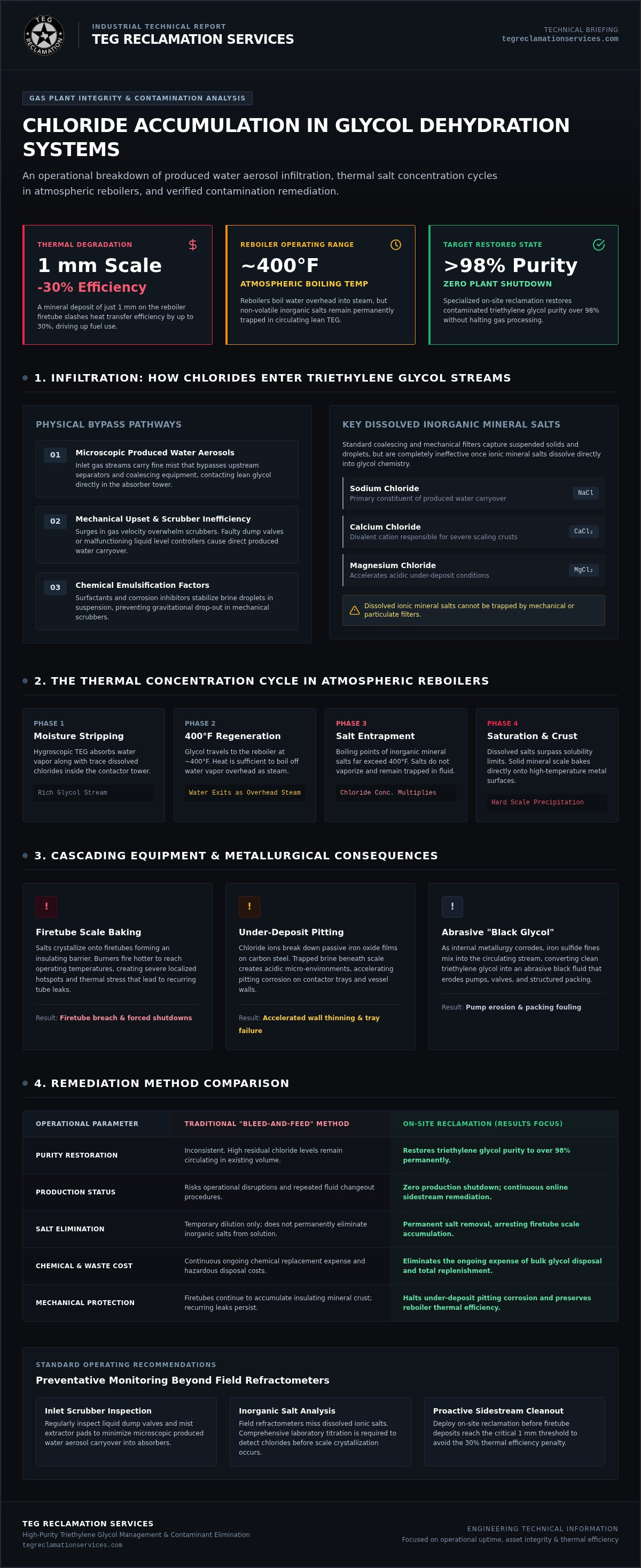
The process of Glycol dehydration relies on the hygroscopic nature of triethylene glycol (TEG) to strip moisture from natural gas streams. However, this same affinity for water often invites unwanted contaminants into the system. The primary entry point for chlorides in glycol dehydration is produced water carryover. While mechanical separators and scrubbers are designed to remove bulk liquids, they aren't foolproof. Inlet gas streams frequently carry microscopic produced water aerosols that bypass these upstream safeguards. Once these fine droplets enter the contactor, inorganic mineral salts dissolve directly into the circulating lean glycol, including:
Sodium chloride
Calcium chloride
Magnesium chloride
Standard coalescing and particulate filters are ineffective against these dissolved ionic mineral salts. They're designed to trap solids and large droplets, but they cannot stop molecules that have already integrated into the glycol chemistry.
Produced Water Carryover and Scrubber Inefficiency
Operational fluctuations often compromise the efficiency of inlet separation equipment. Surges in gas velocity can overwhelm the internal components of a scrubber, pushing brine mist deep into the dehydration unit. Mechanical failures, such as faulty dump valves or malfunctioning liquid level controllers, lead to continuous produced water bypass. Additionally, the presence of surfactants and corrosion inhibitors in the gas stream can stabilize fine brine droplets. These chemicals prevent efficient gravitational drop-out, allowing microscopic salt laden water to remain suspended until it contacts the glycol in the absorber tower.
The Thermal Concentration Cycle in the Reboiler
The accumulation of salts is a cumulative process that accelerates within the regeneration unit. As triethylene glycol circulates, it absorbs water vapor along with trace amounts of dissolved chlorides. The rich glycol then travels to the reboiler for regeneration. Atmospheric reboilers typically operate at approximately 400 degrees Fahrenheit to boil off the absorbed water. While this temperature is sufficient to generate overhead steam, it's far below the boiling point of inorganic salts.
Consequently, the water exits the system as steam, but the chlorides in glycol dehydration systems remain trapped. This creates a thermal concentration cycle where chloride levels compound steadily with each circulation pass. Since these salts don't vaporize or degrade at standard operating temperatures, they stay in the solution until they reach saturation limits. This buildup eventually leads to the physical scaling and corrosion issues that plague high temperature sections of the plant, such as the firetubes and heat exchangers.
The Operational Consequences of Chloride Contamination
Unchecked accumulation of chlorides in glycol dehydration systems triggers a cascade of mechanical and chemical failures. When natural gas impurities are removed, the resulting concentration of dissolved salts quickly exceeds solubility limits in the high temperature sections of the plant. Instead of remaining harmlessly in solution, these mineral salts bake directly onto hot metal surfaces, creating severe operational bottlenecks that threaten gas plant uptime.
Under-Deposit Corrosion and Acidic Pitting
Chloride ions aggressively break down the passive iron oxide films that protect carbon steel vessel walls. Once this protective barrier is compromised, under-deposit corrosion begins. Concentrated brine becomes trapped beneath the accumulating scale, forming highly localized, acidic micro-environments. This mechanism accelerates pitting corrosion on contactor trays, structured packing, and vessel walls. As the internal metallurgy degrades, the presence of iron sulfide fines increases, transforming the fluid into a corrosive, abrasive black glycol mixture that erodes system components.
Firetube Salt Baking and Hotspot Failure
The reboiler is particularly vulnerable to salt precipitation due to extreme skin temperatures. Dissolved salts drop out of the glycol matrix and crystallize directly onto the outer surfaces of the metal firetubes. This hard mineral scale acts as an thermal insulator. Because the scale restricts heat transfer into the glycol, the burners must run significantly hotter to maintain the required bulk fluid temperature. This localized overheating alters the metal metallurgy rapidly, inducing severe thermal stress. Inevitably, these hotspots cause sudden firetube rupture, resulting in catastrophic glycol loss and risking severe plant fires.
Severe Foaming and Glycol Circulation Losses
High ionic contamination also disrupts the physical properties of the solvent. Excessive salt ions alter the liquid viscosity and surface tension within the contactor column. This chemical imbalance triggers persistent glycol foaming. The resulting foam carries expensive chemical overhead down the sales pipeline, causing the facility to fail natural gas moisture specifications. Additionally, entrained salt grit acts as a severe abrasive inside moving parts. This mechanical wear damages internal components, prompting frequent Kimray pump troubleshooting to restore steady circulation rates. For systems suffering from chronic salt accumulation, implementing targeted DEHY equipment upgrades or mechanical overhauls is often necessary to safeguard critical pump internals and maintain process stability.
Monitoring Chloride Levels: Testing and Critical Thresholds
Effective preventative maintenance starts with accurate chemical data. Identifying the presence of chlorides in glycol dehydration systems requires moving beyond basic field observations toward rigorous analytical testing. Regular chemical sampling identifies chloride accumulation trends long before physical equipment damage, such as reboiler firetube pitting, becomes irreversible. Without precise measurements, operators often remain unaware of the salt concentration until the system suffers a significant loss in heat transfer efficiency.
Field Screening vs. Laboratory Titration Analysis
Many gas plant operators rely on standard field refractometers to assess glycol concentration. While these tools are effective for monitoring water content, they yield false purity readings when high salt concentrations alter the fluid's refractive index. The resulting data can lead to a false sense of security regarding solvent health. Standard test strips provide another quick visual screening option, but they lack the sensitivity required for precise operational intervention. Reliable quantification requires laboratory silver nitrate titration. This Standard Test Method precisely quantifies chloride concentrations down to single-digit parts per million. Using potentiometric titration ensures that your facility has the transparency needed to make high-stakes decisions regarding chemical restoration.
Chloride Contamination Benchmarks (PPM Guidelines)
Establishing clear baseline thresholds allows your team to trigger corrective maintenance actions before scale precipitates onto critical surfaces. We recommend following these specific concentration benchmarks to manage system health:
Under 250 ppm: Represents a clean baseline for triethylene glycol operating in healthy, well-maintained systems.
250 to 1,000 ppm: Indicates moderate brine ingress. This level requires close observation and more frequent sampling to track the rate of accumulation.
Above 1,000 ppm: Demands rapid intervention. At this concentration, the risk of dissolved salts baking onto hot firetube surfaces increases significantly, potentially leading to mechanical failure.
Operating above these baseline thresholds signals an immediate need for corrective chemical maintenance. If your system shows signs of rising ionic levels, review our comprehensive glycol contamination removal guide to evaluate the total extent of chemical solvent degradation and identify the best path toward restoration.
Evaluating Remediation Methods: Dilution, Flushing, and Reclamation
When monitoring reveals elevated chlorides in glycol dehydration systems, operators must choose a remediation path that balances cost with long-term mechanical integrity. Traditional approaches often focus on temporary relief rather than permanent salt removal. Selecting the wrong method can lead to recurring chemical expenses and continued equipment degradation. A strategic evaluation of available techniques ensures that your facility restores glycol health without incurring unnecessary production losses.
The Flaws of Bleed-and-Feed Strategies
Many facilities attempt to manage contamination through "bleed-and-feed" procedures. This involves draining a portion of the fouled glycol and replacing it with virgin chemical. While this temporarily lowers the chloride concentration, it fails to eliminate the root source of the problem. Dissolved salts that have already reached saturation limits remain trapped in the system's "dead zones" and continue to bake onto reboiler surfaces. This cycle forces operators to repeatedly purchase expensive virgin glycol while reboiler tubes continue to accumulate insulating scale. Additionally, increased chemical turnover raises hazardous waste handling requirements, which compounds total operational costs and corporate environmental liability.
Chemical Flushing for Heavily Scaled Vessels
For systems where salt accumulation has already transitioned into solid deposits, mechanical cleaning is often required. Hydroblasting is a common choice, but it requires a total plant shutdown and hazardous confined space entry. A more efficient alternative is targeted chemical flushing. This process utilizes specialized solvents to dissolve stubborn salt cakes from packed contactor trays and internal heat exchangers. These neutralizing solutions eliminate acidic residues, effectively stopping active under-deposit metal degradation. You can explore dedicated glycol chemical cleaning protocols to safely dissolve baked firetube salts during scheduled turnarounds without damaging sensitive vessel metallurgy.
Online Vacuum Distillation vs. Total Fluid Replacement
The most comprehensive solution for dissolved inorganic salts is on-site reclamation. Standard atmospheric reboilers cannot separate high-boiling triethylene glycol from mineral salts because the required temperatures would thermally degrade the glycol itself. Vacuum distillation solves this by lowering the boiling point of the solvent. This allows for the safe separation of pure glycol vapors from heavy minerals and degradation products. Unlike total fluid replacement, which requires a complete plant shut-in and off-site disposal, on-site sidestream reclamation purifies the active inventory while the dehydration unit stays fully operational. This approach restores glycol purity to over 98 percent and eliminates the logistical burden of hauling thousands of gallons of waste. To protect your equipment and maintain continuous uptime, request a technical evaluation for on-site glycol reclamation.
Restoring System Performance with On-Site Glycol Reclamation
Addressing the persistent accumulation of chlorides in glycol dehydration systems demands a definitive technical solution rather than the cyclical dilution strategies discussed previously. On-site sidestream vacuum distillation offers a sophisticated remediation pathway that restores the chemical integrity of the solvent while the facility remains online. This process removes dissolved chlorides, degradation acids, and suspended solids that standard filtration cannot touch. By targeting these specific contaminants, facilities can reverse the negative effects of thermal concentration and restore optimal heat transfer across reboiler firetubes.
Zero-Downtime Sidestream Vacuum Distillation
Mobile purification units connect directly into the system's balance points, allowing for continuous processing without interrupting natural gas dehydration or sales. The technology utilizes deep vacuum conditions to enable gentle thermal separation, effectively isolating inorganic salts without exposing the glycol to the extreme temperatures that cause thermal degradation. This method ensures that purified triethylene glycol returns to the circulation loop at over 98 percent purity, matching the performance specifications of virgin chemical. Because the processing occurs in a sidestream configuration, the dehydration unit stays fully operational and pressurized throughout the entire restoration period. This progressive extraction continues until chloride levels drop below the critical thresholds required for safe operation.
Upstream Defense and Long-Term Chloride Prevention
Maintaining system health requires a robust upstream defense to prevent recurring chloride ingress. Plant personnel should regularly inspect and optimize inlet filter-separator coalescing elements to ensure they're effectively trapping brine aerosols. Upgrading to automated dump valves with high-level liquid alarms provides a necessary safeguard against sudden produced water slugs that overwhelm mechanical separators. To complement these mechanical defenses, establish a quarterly laboratory monitoring program to track chloride parts per million. This data-driven approach allows for purification to be scheduled proactively, preventing the salt baking and corrosive pitting that lead to unscheduled outages. Consistent management of these ionic contaminants preserves the metallurgy of the contactor and reboiler, significantly extending the service life of your most expensive mechanical assets.
Protecting Mechanical Integrity and Production Continuity
Managing chlorides in glycol dehydration systems requires a shift from reactive dilution to proactive restoration. As discussed, produced water carryover introduces ionic salts that accumulate steadily, eventually compromising reboiler efficiency and risking firetube failure. Relying on simple field screening or "bleed-and-feed" strategies doesn't address the root contamination. It only delays inevitable mechanical breakdowns and increases chemical disposal liabilities.
Securing your facility's operational uptime depends on utilizing high-performance remediation that handles dissolved minerals without requiring a total plant shut-in. With over 45 years of specialized gas processing experience, we provide nationwide support to ensure your dehydration units operate at peak performance. Our proprietary sidestream vacuum distillation restores triethylene glycol to over 98 percent purity on-site while your system stays fully pressurized. This technical approach eliminates destructive salt scale and halts under-deposit corrosion, extending the service life of your critical assets. Eliminate chlorides and restore your TEG to 98% purity with TEG Reclamation Services. You can maintain production targets and equipment health simultaneously through disciplined chemical management.
Frequently Asked Questions
How do chlorides enter a natural gas glycol dehydration system?
Brine entry occurs when produced water aerosols bypass upstream mechanical separation equipment and enter the contactor tower. Once inside, these microscopic droplets dissolve directly into the circulating triethylene glycol. Surges in gas velocity or malfunctioning dump valves often exacerbate this carryover. Because chlorides in glycol dehydration systems are non-volatile, they don't evaporate in the reboiler, leading to a continuous concentration cycle that eventually damages internal metallurgy and reduces process efficiency.
Can standard mechanical filters remove dissolved chlorides from triethylene glycol?
Standard coalescing and particulate filters cannot remove dissolved inorganic salts from the glycol stream. These mechanical components are designed to trap suspended solids and bulk liquid droplets, but they lack the molecular capability to separate ionic minerals like sodium chloride once they've integrated into the chemical solvent. Effective salt removal requires advanced purification methods, such as vacuum distillation, which separates the glycol molecules from the heavy mineral contaminants based on their differing boiling points.
What is an acceptable chloride level in a TEG dehydration unit?
A healthy dehydration system should ideally maintain chloride levels below 250 parts per million. Concentrations between 250 and 1,000 parts per million indicate moderate brine ingress and require increased monitoring. Monitoring chlorides in glycol dehydration systems via regular laboratory testing is essential to trigger corrective reclamation before irreversible pitting occurs. Once levels exceed 1,000 parts per million, the risk of salt precipitation onto hot reboiler firetubes increases significantly.
Why do chlorides cause firetubes in glycol reboilers to fail?
Firetube failure occurs because dissolved salts precipitate and bake onto hot metal surfaces, forming an insulating mineral scale. This scale restricts heat transfer into the glycol, forcing the burners to operate at higher temperatures to maintain process requirements. The resulting localized hotspots cause severe thermal stress and rapid metallurgical degradation. Over time, this leads to sudden firetube ruptures, which risk catastrophic glycol loss and potential plant fires if the burner management system is compromised.
Does draining and refilling glycol solve a chloride contamination problem?
Draining and refilling only provides temporary dilution and doesn't eliminate the root contamination problem. While fresh chemical lowers the chloride concentration initially, it doesn't remove the hard salt scale already baked onto reboiler firetubes or trapped in vessel dead zones. This "bleed-and-feed" approach leads to recurring chemical costs and high disposal liabilities. A more effective solution involves purifying the existing inventory to restore glycol health without the logistical burden of total fluid replacement.
How does on-site vacuum distillation remove chlorides without shutting down?
On-site reclamation utilizes a proprietary sidestream configuration that ties directly into the operational balance points of the dehydration unit. By processing a portion of the circulating glycol under deep vacuum, the technology lowers the solvent's boiling point to safely separate pure vapors from heavy chlorides and degradation acids. This purification happens continuously while the plant remains fully pressurized and operational. The restored glycol, reaching over 98 percent purity, returns to circulation without interrupting natural gas sales.


Comments