
Dehydration Unit Optimization: Gas Processing Efficiency
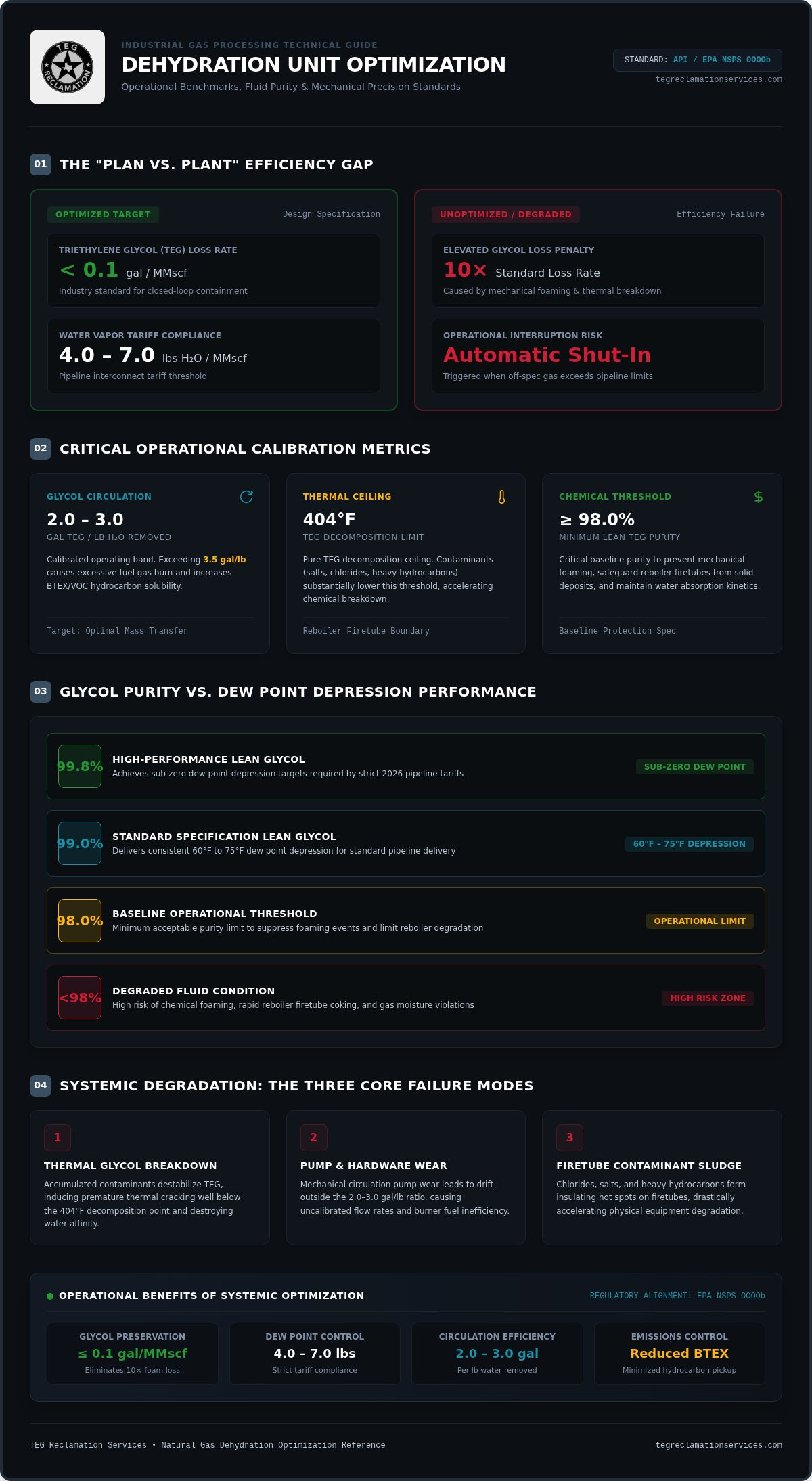
Did you know that a lack of dehydration unit optimization can cause a facility to lose ten times the industry standard of glycol due to preventable mechanical foaming or chemical degradation? When your system exceeds the typical loss rate of 0.1 gallons per MMscf, you aren't just wasting expensive chemicals; you're risking automatic shut-in penalties at pipeline interconnects. It's a common frustration for operators who struggle to meet moisture limits of 4.0 to 7.0 lbs H2O/MMscf while battling high equipment failure rates in their pumps and burners.
We understand that maintaining operational continuity is your highest priority. You don't have to settle for unstable dew point depression or frequent chemical replacements. This article explains how to maximize dew point depression and extend the life of your critical components through strategic maintenance and chemical purity. We'll examine how restoring glycol to over 98% purity and performing targeted mechanical upgrades can stabilize your process. This approach ensures your facility remains compliant with evolving emissions standards while maintaining total operational uptime.
Table of Contents
Understanding Dehydration Unit Performance and Efficiency Gaps
Dehydration unit optimization is the technical process of maximizing water vapor removal from a gas stream while simultaneously minimizing energy expenditure and chemical consumption. In high-stakes midstream and upstream operations, efficiency isn't a static target. It's a balance between chemical purity and mechanical precision. When a system operates outside its design parameters, operators often observe rising dew points that threaten to exceed the common 7.0 lbs/MMscf pipeline tariff. Other critical indicators of efficiency loss include persistent glycol foaming and a sharp increase in fuel gas consumption as the reboiler struggles to maintain lean glycol concentrations. Effective dehydration unit optimization is the systematic restoration of chemical integrity and mechanical precision to ensure maximum dew point depression and uninterrupted operational continuity.
A significant challenge in gas processing is the "Plan vs. Plant" gap. Engineers initially design dehydration systems for specific gas compositions and flow rates, yet physical reality often deviates from these blueprints as equipment ages. Mechanical wear, shifting inlet temperatures, and the gradual accumulation of contaminants cause the "plant" to operate far below its original "plan" efficiency. Closing this gap requires more than just software adjustments; it demands a physical restoration of the system's core components and the fluid they circulate.
The Consequences of Sub-Optimal DEHY Performance
Failure to maintain peak efficiency leads to immediate risks for pipeline integrity. High moisture content facilitates internal corrosion and the formation of hydrates, which can physically obstruct flow lines and cause catastrophic pressure spikes. Economic losses manifest quickly through increased glycol loss rates; a healthy system should remain below 0.1 gallons per MMscf. When losses exceed this, chemical replacement costs rise and facilities risk automatic shut-in penalties for delivering off-spec gas. There are also environmental liabilities to consider. Sub-optimal units often suffer from burner management failures and increased BTEX emissions, which can trigger regulatory scrutiny under EPA NSPS OOOOb standards.
Identifying Root Causes of System Inefficiency
Systemic inefficiency usually stems from three primary areas. First, the thermal degradation of triethylene glycol (TEG) reduces its affinity for water. While TEG has a thermal decomposition ceiling of approximately 404°F, the presence of contaminants can cause it to break down at much lower temperatures. Second, mechanical wear in glycol circulation pumps prevents the system from maintaining the necessary circulation ratios, often calibrated to 2.0 to 3.0 gallons of TEG per pound of water removed. Finally, the buildup of contaminants like chlorides, salts, and heavy hydrocarbons creates sludge and hot spots on reboiler firetubes. These deposits act as insulation, forcing the burner to work harder and accelerating the physical breakdown of the equipment.
Critical Metrics for Evaluating DEHY Unit Performance
Effective dehydration unit optimization relies on precise data points rather than anecdotal observations. The primary metric for success is dew point depression, which reflects the system's ability to lower gas water content to meet pipeline specifications. A lean TEG purity of 99.0% by weight generally provides a dew point depression of 60°F to 75°F. However, meeting the more stringent sub-zero targets required by certain 2026 pipeline tariffs often necessitates lean purities of 99.8% or higher. This level of performance is only achievable when reboiler temperatures and circulation rates are perfectly calibrated to the specific gas throughput of the facility.
Operators must carefully analyze glycol circulation rates to avoid common efficiency pitfalls. While many facilities use a "3 gallons of TEG per pound of water removed" rule of thumb, optimized systems often operate within a tighter range of 2.0 to 3.0 gallons. Over-circulating beyond 3.5 gallons per pound of water removed leads to excessive fuel gas consumption and increased hydrocarbon solubility. This results in higher BTEX and VOC pickup, which complicates emissions compliance. Monitoring filter pressure differentials also provides immediate insight into glycol quality; a rising delta-P often signals the presence of suspended solids or organic degradation acids that impede flow and heat transfer.
Establishing an Optimization Baseline
Success begins with a comprehensive dehydration unit performance audit to identify where moisture removal is failing. This audit evaluates gas-to-glycol contact efficiency within the contactor tower to ensure the lean glycol is interacting effectively with the gas stream. By calculating the real cost of glycol losses per MMCF of gas processed, managers can justify the investment in system upgrades. If your losses exceed the benchmark of 0.1 gallons per MMscf, it's a clear sign that mechanical or chemical adjustments are required to restore plant integrity.
Monitoring Chemical and Thermal Health
Maintaining the chemical integrity of the glycol is essential for preventing long-term equipment damage. You should track pH levels closely, as a drop below 6.5 to 7.0 indicates increasing acidity that will accelerate internal corrosion. Monitoring reboiler heat flux prevents the thermal cracking of TEG, which occurs if firetube temperatures are uneven. Chemical analysis should be performed regularly to detect chloride and salt accumulations. When salt levels exceed 0.5% by weight, they form insulating crusts on firetubes that cause hot-spot formation and premature equipment failure. Proactive DEHY system commissioning and fluid analysis can prevent these issues before they lead to a full plant shutdown.
The Impact of Triethylene Glycol (TEG) Purity on Optimization
Dehydration unit optimization is fundamentally limited by the physical chemistry of the triethylene glycol (TEG) circulating through the system. While mechanical adjustments are necessary, they can't compensate for a solvent that has lost its thermodynamic affinity for water. Achieving a lean glycol purity of 98% or higher is the industrial benchmark for effective water absorption. When the solvent's purity drops below this threshold, the system's ability to achieve significant dew point depression is compromised, regardless of circulation rates. Reclaimed triethylene glycol restores the fluid's thermodynamic affinity for water vapor, ensuring maximum dew point depression without the chemical instability of degraded solvent.
Standard filtration systems, while necessary, have clear limitations. Particulate filters and charcoal canisters are designed to remove suspended solids and some dissolved hydrocarbons, but they can't address soluble contaminants like salts or organic acids. These dissolved impurities physically interfere with the glycol's molecular structure, reducing its capacity to form hydrogen bonds with water molecules. Advanced purification is required to strip away these sub-micron contaminants and restore the fluid to its original specification, preventing the "Plan vs. Plant" gap from widening as the facility ages.
Common Glycol Contaminants and Their Effects
Soluble salts are particularly destructive, as they accumulate in the reboiler and form scale on the firetubes. This scale reduces heat transfer efficiency and leads to localized hot spots that accelerate the thermal cracking of the glycol. Hydrocarbon contamination is the primary cause of glycol foaming in dehydration units, which triggers massive carryover and chemical loss. Additionally, solid particulates like iron sulfide or sand act as abrasives, quickly degrading pump seals and valve seats, which leads to mechanical failure and unplanned downtime.
Restoring Purity Without Production Interruptions
Operators can achieve total fluid restoration through sidestream vacuum distillation without initiating a plant shutdown. This process allows for the continuous purification of the glycol while the dehydration unit remains online, maintaining 98%+ purity levels indefinitely. When comparing chemical replacement to on-site reclamation, the ROI is driven by the elimination of hazardous waste disposal fees and the reduced need for fresh chemical purchases. Technical services that focus on neutralizing acids and maintaining optimal pH levels ensure that the restored fluid remains stable and non-corrosive, protecting the long-term integrity of the entire system. This proactive approach to dehydration unit optimization ensures that the equipment operates at peak efficiency for its entire service life.
Mechanical Troubleshooting and Hardware Upgrades for Peak Efficiency
Hardware integrity is the foundation of dehydration unit optimization. Even the purest glycol cannot compensate for a failing pump or an inefficient burner. The glycol circulation pump acts as the heart of the system; its performance determines whether the lean glycol actually reaches the contactor at the correct rate and pressure. Proper pump sizing is critical for maintaining the balance between water removal and energy use. Many facilities operate with legacy pumps sized for peak loads that the plant no longer sees, leading to chronic over-circulation. This mechanical mismatch wastes fuel gas and increases the volume of hydrocarbons that must be managed by the BTEX system, ultimately driving up operational costs.
Optimizing Glycol Circulation
Reliable flow starts with scheduled Kimray pump repair and proactive maintenance. Common Kimray pump issues, such as worn O-rings, damaged diaphragms, or debris in the pilot valves, often cause erratic strokes or internal leaks. These mechanical failures force operators to increase circulation rates to compensate, which inadvertently accelerates equipment wear and increases chemical loss. Upgrading to energy-efficient circulation solutions or implementing a variable speed drive can align pump output with real-time gas throughput. This precision reduces the load on the reboiler and stabilizes the entire dehydration process by preventing the surges that lead to glycol foaming.
Upgrading BTEX and Burner Systems
Environmental compliance and fuel efficiency depend on the performance of the BTEX condenser and the burner management system (BMS). Under current EPA NSPS OOOOb standards, large dehydration units must reduce VOC and HAP emissions by at least 95%. Improving condenser efficiency ensures that more hazardous vapors are captured and processed rather than vented to the atmosphere. Consistent BTEX system maintenance prevents fouling in the heat exchangers, which otherwise forces the reboiler to run hotter to achieve the same glycol concentration. Modern BMS upgrades further optimize fuel gas consumption by providing precise, automated control over the combustion process. This results in cleaner combustion, reduced methane intensity, and lower emissions charges. For facilities seeking to modernize their hardware and reduce environmental risk, request a DEHY equipment upgrade assessment to identify immediate efficiency gains.
Implementing a Comprehensive Optimization Strategy with TEG Reclamation Services
A holistic approach to dehydration unit optimization requires a four-stage cycle: Audit, Clean, Reclaim, and Maintain. This methodology ensures that both the chemical and mechanical aspects of the system are addressed simultaneously. By starting with a rigorous performance audit, operators can identify specific efficiency gaps before moving to chemical flushing to remove internal sludge and contaminants. This sequence prepares the system for the introduction of high-purity glycol, which is essential for stabilizing dew point depression. Integrating these steps into a single strategy allows for the restoration of design-level efficiency without the trial-and-error often associated with isolated mechanical repairs.
The TEG Reclamation Advantage
The core of this strategy is the restoration of contaminated glycol to over 98% purity. Using a proprietary sidestream vacuum distillation process, TEG Reclamation Services purifies the fluid while the facility remains fully operational. This "no shutdown" policy is a critical advantage for midstream and upstream facilities where even a few hours of downtime can cause significant production losses. Our field technicians bring specialized expertise to every site, troubleshooting complex DEHY issues that software-only platforms often overlook. By maintaining high-purity glycol, you provide long-term protection for reboiler firetubes and pump seals, preventing the corrosive damage caused by salt and acid accumulation. This proactive approach ensures that the "Plan vs. Plant" gap remains closed, keeping the equipment within its optimal operating window.
Next Steps for Facility Operators
Transitioning to an optimized maintenance model requires a clear evaluation of current system health. Scheduling a performance audit or a chemical flushing service is the first step toward identifying hidden operational costs. When evaluating the ROI of a comprehensive optimization program, you should consider the elimination of hazardous waste disposal fees and the extended lifespan of critical hardware like Kimray pumps and burners. Long-term stability is maintained through regular technical field services and expert DEHY commissioning, ensuring that the system continues to meet 2026 pipeline moisture specifications. Integrating these services into your existing maintenance schedule allows for a proactive approach to equipment health. It's a pragmatic investment that prioritizes operational uptime and technical integrity over the reactive "purge and dump" cycles of the past.
Achieving Sustained Reliability in Gas Dehydration
Reaching peak efficiency requires a shift from reactive repairs to a proactive, results-oriented strategy. True dehydration unit optimization is only possible when you maintain the physical integrity of your glycol and the mechanical precision of your hardware simultaneously. By restoring contaminated solvent to over 98% purity, you protect reboiler firetubes from thermal degradation and ensure consistent dew point depression across the contactor. Our proprietary vacuum distillation process achieves these results without requiring production shutdowns, allowing your facility to maintain total operational uptime while meeting the most stringent 2026 moisture specifications.
With over 45 years of technical expertise, we provide the specialized tools and field-level support needed to solve complex mechanical challenges and eliminate efficiency gaps. It's time to move beyond the high costs of chemical replacement and the risks of off-spec gas deliveries. We're ready to help you secure the health of your equipment and the long-term profitability of your operations. Optimize your DEHY unit with TEG Reclamation Services and experience the benefits of a system restored to its full design potential.
Frequently Asked Questions
What are the most common signs that a dehydration unit needs optimization?
Signs include rising dew points that threaten pipeline tariffs and visible glycol foaming in the contactor. If your glycol loss exceeds 0.1 gallons per MMscf, your system is operating outside of its efficiency window. High fuel gas consumption in the reboiler often indicates that the burner's working harder to compensate for contaminated fluid. These indicators suggest it's time for a professional audit to identify hidden mechanical or chemical failures.
How does glycol purity affect dew point depression in gas processing?
Glycol purity is the primary driver of water absorption capacity. A lean TEG purity of 99.0% typically delivers a dew point depression of 60°F to 75°F. To meet sub-zero pipeline specifications, you often need a lean purity of 99.8% or higher. When impurities like salts or solids accumulate, they physically reduce the glycol's affinity for water, making dehydration unit optimization impossible without full fluid restoration to its original chemical specifications.
Can I reclaim contaminated triethylene glycol without shutting down production?
You can fully restore contaminated triethylene glycol without interrupting your operations. We use a proprietary sidestream vacuum distillation process that purifies the fluid while the unit remains online. This approach eliminates the need for costly production shutdowns or hazardous waste disposal. It allows for continuous purification to over 98% purity, ensuring your facility stays compliant with moisture specifications without losing valuable uptime or risking equipment damage.
What is the ideal glycol circulation rate for an optimized DEHY unit?
The ideal circulation rate generally ranges between 2.0 and 3.0 gallons of TEG per pound of water removed. While a "3 gallon" rule of thumb is common, over-circulating beyond 3.5 gallons is counterproductive. It wastes reboiler fuel and increases the solubility of hydrocarbons like BTEX. Precise pump calibration is a core component of dehydration unit optimization, as it balances effective moisture removal with long-term energy efficiency.
How do chlorides and salts impact the efficiency of my reboiler?
Chlorides and salts are highly destructive to reboiler integrity. When salt levels exceed 0.5% by weight, they form an insulating scale on the firetubes. This buildup creates hot spots that cause localized overheating and accelerate the thermal cracking of your glycol. These deposits significantly reduce heat transfer efficiency, forcing the burner to consume more fuel gas to maintain the required lean glycol concentration for water absorption.
Why is BTEX system maintenance critical for dehydration unit optimization?
BTEX system maintenance is essential for environmental compliance and operational efficiency. Under EPA NSPS OOOOb standards, facilities must often achieve 95% or greater reduction in VOC and HAP emissions. A fouled BTEX condenser forces the reboiler to operate at higher temperatures, which increases the risk of thermal degradation. Regular inspections ensure that heat exchangers remain clear and that hazardous vapors are captured rather than vented to the atmosphere.
What are the benefits of upgrading to a modern burner management system?
Modern burner management systems (BMS) provide automated control that significantly reduces methane intensity. By optimizing the air-to-fuel ratio, these systems ensure cleaner combustion and lower fuel gas consumption. Upgrading to a BMS helps facilities avoid excess emissions charges and provides more reliable temperature control for the reboiler. This upgrade is a pragmatic step toward long-term equipment protection and significantly reduced operating expenditures for the facility.
How often should a dehydration unit undergo a performance audit?
We recommend a performance audit at least once per year or whenever there's a significant change in gas throughput or composition. Regular audits help bridge the "Plan vs. Plant" gap by identifying mechanical wear in pumps and chemical degradation in the glycol. Consistent monitoring ensures that your system operates within its original design parameters, preventing small efficiency losses from turning into catastrophic equipment failures or unexpected plant shutdowns.


Comments