
Dehydration Unit Performance Audit: A Comprehensive Operator Checklist
Updated: Aug 26
Is your dehydration system actually meeting its design specifications, or is it merely surviving from one chemical top-off to the next? Conducting a dehydration unit performance audit is the only way to determine if your facility is truly efficient or just masking systemic failures. You likely already know the frustration of high glycol replacement costs and frequent Kimray pump failures that seem to happen at the worst possible moments. It's often easier to treat the symptoms than to diagnose the underlying mechanical or chemical imbalance.
This technical guide provides a clear roadmap to identify efficiency gaps before they cause a shutdown. With new EPA amendments for the oil and gas sector effective June 8, 2026, staying ahead of BTEX emissions and flaring limits is no longer optional; it's a requirement for operational continuity. We'll walk through a professional operator checklist designed to reduce chemical spend, extend equipment life, and ensure your system operates with the precision of a seasoned veteran. You'll learn how to evaluate the synergy between your hardware and glycol purity to achieve a total restoration of function.
Table of Contents
The Strategic Importance of Dehydration Unit Performance Audits
Maintaining operational continuity in midstream facilities requires more than reactive maintenance. A dehydration unit performance audit serves as a proactive diagnostic tool, establishing a technical baseline for equipment health. Without a clear understanding of system performance, operators risk catastrophic corrosion and hydrate formation that can halt production entirely. High-stakes gas processing environments demand a steady, pragmatic approach to system evaluation to ensure that every component functions within its design parameters.
The Glycol dehydration process relies on a precise balance of temperature, pressure, and chemical purity. When this balance shifts, the financial impact is immediate. Inefficient water removal increases fuel consumption in the reboiler and accelerates the degradation of internal components. By auditing the system regularly, facilities can track performance trends and implement corrective actions before minor inefficiencies evolve into major capital expenditures. This disciplined oversight transforms the dehydrator from a potential bottleneck into a reliable asset.
Signs Your DEHY Unit Requires an Immediate Audit
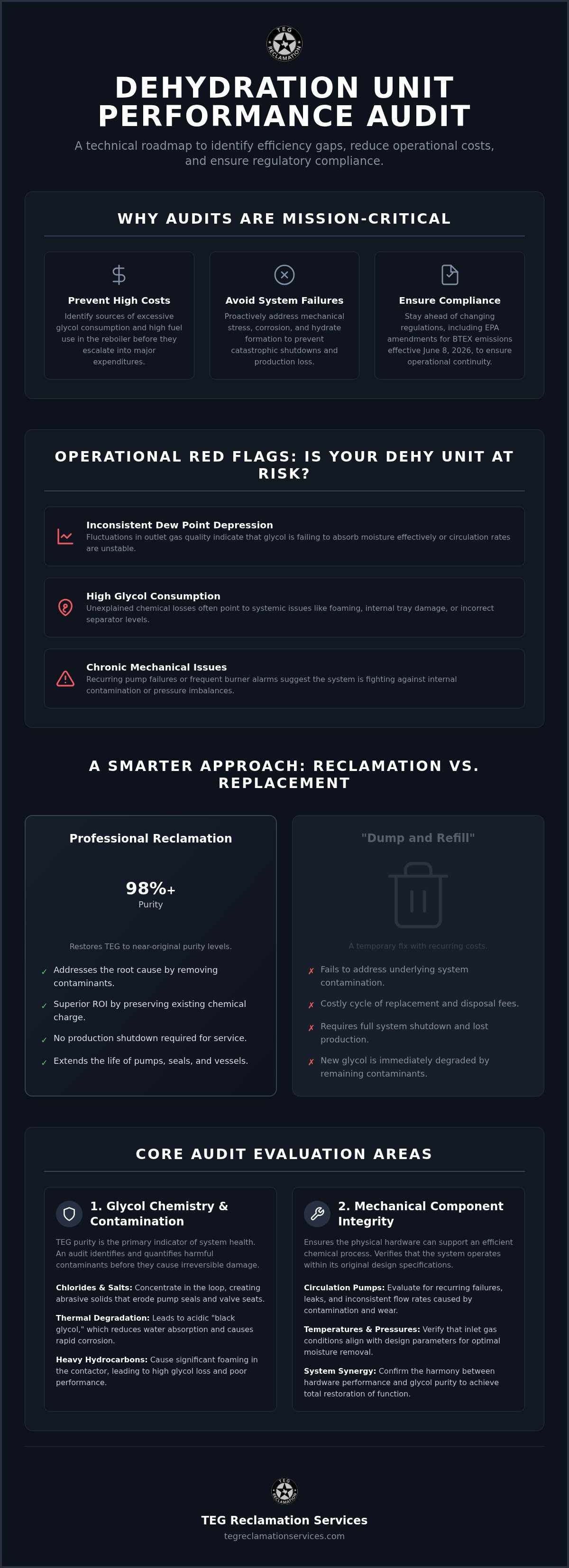
Operational red flags often appear well before a total system failure. Operators should initiate a dehydration unit performance audit if they observe any of the following symptoms:
Inconsistent dew point depression: Swings in outlet gas quality suggest that the glycol is failing to absorb moisture effectively or that circulation rates are insufficient.
High glycol consumption: Unexplained losses often point to foaming, tray damage, or incorrect separator levels.
Chronic mechanical issues: Frequent Kimray pump failures or recurring burner management alarms indicate that the system is working against internal contamination or pressure imbalances.
Operational ROI: Efficiency vs. Replacement
The decision to "dump and refill" degraded glycol is often a costly mistake compared to professional reclamation. While replacing the entire chemical volume seems simple, it doesn't address the systemic issues that caused the degradation. Vacuum distillation glycol reclamation restores the fluid to 98% purity or higher without requiring a production shutdown. This approach provides a superior return on investment by preserving the existing chemical charge and removing the contaminants that damage hardware.
Optimized systems also carry lower regulatory risks. With EPA amendments effective June 8, 2026, facilities must strictly manage emissions and flaring limits. An efficient dehydrator reduces the load on BTEX elimination systems, ensuring compliance while maximizing facility throughput. Investing in a thorough audit ensures that your equipment meets these modern standards while extending its overall service life.
Evaluating Glycol Chemistry and Contamination Levels
In a dehydration unit performance audit, the chemical state of the triethylene glycol (TEG) serves as the primary indicator of system health. TEG is the medium that facilitates water removal, but it also acts as a magnet for various impurities. Over time, glycol contamination removal becomes necessary to prevent the fluid from becoming a liability. When purity drops, the entire dehydration process loses its effectiveness, leading to off-spec gas and increased operational costs.
Chlorides and salts often enter the system through entrained produced water. These inorganic compounds don't boil off in the reboiler; instead, they concentrate within the glycol loop. This concentration accelerates thermal degradation, where the glycol breaks down into organic acids. The resulting "black glycol" has a significantly reduced capacity for water absorption and can lead to severe fouling in the Conventional natural gas dehydration processes used across the industry. Identifying the presence of heavy hydrocarbons is equally critical, as these can cause significant foaming issues in the contactor tower.
The Danger of Chlorides and Solids
Salt accumulation is a silent killer of mechanical components. When salts precipitate, they create abrasive solids that erode pump seals and valve seats. This mechanical wear is frequently the root cause of recurring leaks and unexpected downtime. As glycol degrades, its pH levels drop, creating an acidic environment that triggers rapid equipment corrosion. This chemical imbalance also promotes foaming, which reduces contactor efficiency by preventing proper gas-liquid separation. Recognizing these signs early is a core component of a professional dehydration unit performance audit.
Testing Purity and Restoring Performance
Standard glycol analysis parameters every operator should monitor include pH levels, water content, and the concentration of suspended solids. While many facilities settle for mediocre glycol quality, restoring the fluid to 98% purity or higher provides the most stable operating environment. This level of purity ensures that the glycol maintains its design absorption capacity and protects the integrity of the hardware.
Using proprietary sidestream vacuum distillation allows for the thorough purification of the glycol charge without halting production. This method removes the salts, hydrocarbons, and degradation products that traditional filtration systems cannot reach. If you suspect your chemical health is declining, professional on-site glycol purification can restore your system to its original design specifications and prevent the need for expensive chemical replacement.
Mechanical Component Integrity and Pump Performance
While chemical health provides the baseline for efficiency, the mechanical hardware serves as the muscle of the dehydration system. A dehydration unit performance audit must include a rigorous inspection of the circulation and regeneration components to be considered comprehensive. Mechanical failures don't happen in a vacuum; they're often the direct result of the chemical imbalances and contamination discussed in the previous section. Identifying these physical wear patterns early is the only way to prevent unplanned facility downtime.
Glycol Circulation Pump Audit
The circulation pump is the heart of the DEHY system. If it fails, the entire process stops. Operators need to verify that pump sizing still aligns with current gas flow requirements, especially since throughput often changes over the life of a well. Checking for erratic stroke patterns or seal leaks is a standard part of the process. Referencing a field guide for Kimray pump troubleshooting allows personnel to identify common failure points before they lead to a total stall. Poor glycol quality, specifically high chloride or solid content, acts as an abrasive that rapidly degrades pump internals and shortens equipment life.
Burner and Reboiler Efficiency
Reboiler performance determines the final purity of the lean glycol. If the burner management system (BMS) isn't calibrated correctly, the reboiler may fail to maintain the necessary temperature for effective TEG regeneration. This results in "wet" glycol entering the contactor, which directly impacts the gas dew point and overall quality. Following structured burner management system troubleshooting protocols ensures both operational reliability and site safety.
Regulatory compliance is another critical factor in mechanical audits. The EPA Compliance Procedures for Dehydration Units outline specific monitoring requirements that operators must follow to demonstrate adherence to emission standards. A mechanical audit verifies that the burner and BTEX elimination systems are functioning well enough to meet these mandates. Finally, checking the contactor tray integrity and mist extractor performance helps prevent glycol carryover, preserving the chemical charge and protecting downstream assets from contamination.
Field Audit Checklist for DEHY Unit Operators
A systematic dehydration unit performance audit requires a structured approach to field data collection. Operators must move beyond simply checking gauges to analyzing how current conditions deviate from original design specifications. This checklist ensures that every critical variable, from inlet gas quality to emission compliance, is scrutinized to maintain peak efficiency.
Step 1: Verify inlet gas temperature and pressure. Contactor towers are sized for specific volumes and thermal loads. If the inlet gas temperature exceeds design limits, the glycol's capacity to absorb water significantly diminishes. Step 2: Perform a visual inspection of glycol color and clarity. While laboratory analysis is essential, a field sample provides immediate feedback. Lean glycol should be clear or light amber; dark or opaque fluid suggests carbon buildup or hydrocarbon contamination. Step 3: Audit the dew point depression at the outlet. This is the primary metric for dehydration success. If the depression isn't meeting targets, the audit must shift to circulation rates or reboiler temperatures. Step 4: Inspect filtration systems. High differential pressure across particulate and carbon filters indicates heavy loading, which can lead to tray fouling. Step 5: Review BTEX system performance. Operators must ensure that the condenser and flash tank are removing hazardous air pollutants (HAPs) effectively to remain in compliance with environmental mandates.
Daily vs. Monthly Audit Tasks
Successful asset management relies on a tiered auditing schedule. Daily tasks focus on operational stability, including recording reboiler temperatures, glycol circulation rates, and inlet gas pressures. These readings provide the raw data needed for long-term trend analysis. Monthly audits require a deeper technical dive. This includes pulling glycol samples for professional analysis and inspecting filter elements for signs of abnormal particulate buildup. If you identify recurring issues during these checks, consider requesting a professional DEHY system commissioning to reset your operational baseline and ensure all components meet design specs.
Environmental and Safety Compliance Audit
Regulatory oversight is tightening across the oil and gas sector. The EPA's amendments to the New Source Performance Standards (NSPS), effective June 8, 2026, place a higher burden on operators to manage emissions and flaring. A field audit must verify the efficiency of BTEX units to ensure they meet these updated standards. This includes checking for fugitive emissions from hatches and ensuring that all safety shut-off valves are operational. A proactive dehydration unit performance audit doesn't just protect the equipment; it protects the facility from the significant penalties associated with non-compliance in a shifting regulatory landscape. To complement these efforts with data-driven insights into operator behavior and safety protocols, you can check out Ergoneers.
A dehydration unit performance audit provides the data necessary to move from reactive repairs to precision optimization. Identifying gaps in efficiency is only the first step; the second involves deploying specialized technical field services to restore the system to its peak operational state. For seasoned operators, this means looking beyond simple filter changes toward comprehensive TEG dehydration maintenance that addresses both chemical and mechanical degradation simultaneously. This methodical approach ensures that every component is calibrated for maximum uptime.
Restoring a system often requires clearing out the accumulated byproducts of years of operation. Chemical flushing removes the paraffin, heavy hydrocarbons, and scale that settle in low-flow areas of the contactor and heat exchangers. Once the hardware is physically clean, the focus shifts to the chemical charge itself. Utilizing proprietary sidestream vacuum distillation allows for the continuous purification of the glycol. This process ensures that the fluid remains a high-performance solvent rather than a source of system-wide contamination, effectively protecting internal components from premature wear.
On-Site Reclamation vs. Glycol Replacement
Choosing vacuum distillation over a standard "dump and refill" provides significant logistical and financial advantages. While replacement glycol introduces fresh chemicals, it doesn't remove the residual contaminants trapped within the system's internal piping and vessels. Reclamation, however, processes the entire volume to achieve 98%+ purity while the unit remains fully operational. Because there are no production shutdowns required, facilities maintain their throughput and avoid the high costs associated with off-site waste disposal of spent chemicals. This pragmatic approach to fluid management ensures long-term stability and protects the integrity of the glycol circulation pumps.
System Upgrades and Commissioning
In addition to maintaining internal fluid purity, ensuring the overall cleanliness of the facility is a key component of a robust maintenance strategy. Utilizing specialized cleaning and hygiene solutions from Serenity Chemicals Limited allows operators to maintain a safe and sanitized environment, which is especially important during complex system audits and technical field services.
Additionally, for those who want to discover BeVa Cleaning Solutions, their commercial cleaning services ensure that the rest of the facility remains as professional and well-maintained as the dehydration units themselves.
Optimization often involves modernizing existing hardware to meet new environmental standards. Upgrading BTEX systems is a critical step for facilities needing to improve emission control and maintain compliance with evolving EPA regulations. Once repairs or upgrades are complete, professional DEHY system commissioning serves as the final validation of the work. This process ensures that the unit hits its original design specifications under current field conditions. Partnering with TEG Reclamation Services provides access to national technical support and decades of specialized experience in mechanical restoration and chemical purity. By following an audit-led repair strategy, operators can confidently extend the life of their assets while reducing overall chemical spend.
Securing Long-Term Operational Continuity
A dehydration unit performance audit is the foundation of a proactive maintenance strategy. It's the only way to evaluate the synergy between triethylene glycol chemistry and mechanical hardware effectively. By identifying efficiency gaps early, operators prevent the compounding costs of chemical loss and unexpected equipment failure. Restoring fluid to 98% purity or higher through technical restoration protects the integrity of your circulation pumps and ensures consistent gas quality. This disciplined approach is essential for meeting modern emission standards and maximizing facility throughput without the need for unnecessary chemical replacement.
Partnering with a specialist ensures that your system remains optimized against the most challenging field conditions. We offer national field service availability and utilize proprietary sidestream vacuum distillation to restore your assets to design specifications without production shutdowns. Request a Professional Dehydration Unit Performance Audit today to stabilize your operations and extend equipment life. It's time to move beyond reactive repairs and embrace a steady, pragmatic approach to system health. Your facility deserves the precision of a seasoned veteran.
Frequently Asked Questions
What are the most common signs of a failing dehydration unit?
Inconsistent dew point depression and increased glycol consumption are the most immediate indicators of a failing system. Operators often notice unexplained swings in outlet gas quality or find themselves topping off the glycol charge more frequently than design specs dictate. Other red flags include chronic burner management alarms, recurring pump failures, and the presence of "black glycol" in the sight glass, which signals significant thermal degradation or hydrocarbon contamination.
How often should a performance audit be conducted on a DEHY unit?
A comprehensive dehydration unit performance audit should be performed at least once per year or whenever there is a significant change in gas throughput or inlet conditions. While daily monitoring of temperatures and pressures is standard, an annual audit provides a deeper technical evaluation of the synergy between chemical health and mechanical integrity. This proactive approach identifies efficiency gaps before they lead to costly unplanned production shutdowns.
Can glycol be restored to original purity on-site?
Yes, triethylene glycol can be restored to over 98% purity using on-site reclamation services. This is achieved through a proprietary sidestream vacuum distillation process that removes salts, chlorides, and heavy hydrocarbons while the unit remains operational. Restoring the chemical charge on-site is a cost-effective alternative to the "dump and refill" method, as it eliminates the need for expensive chemical replacement and off-site waste disposal fees.
What is the impact of chlorides on a triethylene glycol system?
Chlorides act as a catalyst for accelerated corrosion and thermal degradation within the glycol loop. When produced water enters the system, these salts concentrate in the reboiler and create abrasive solids that erode pump seals, valve seats, and internal tray structures. This chemical imbalance also lowers the pH of the glycol, leading to an acidic environment that can cause rapid, catastrophic hardware failure if not addressed through professional purification.
How does sidestream vacuum distillation work without a shutdown?
The process integrates directly into the existing glycol circulation loop, extracting a portion of the contaminated fluid for purification while the main dehydration unit continues to process gas. By operating as a sidestream, the reclamation equipment can remove impurities and return high-purity glycol back into the system in real time. This ensures total restoration of function without requiring the facility to stop production or bypass the dehydrator.
What role does the Kimray pump play in system efficiency?
The Kimray pump serves as the heart of the dehydration system by circulating lean glycol to the contactor tower at a precise rate. If the pump is improperly sized or experiencing mechanical wear, it won't deliver the necessary volume of glycol to absorb moisture from the gas stream. Maintaining pump integrity is critical for achieving the required dew point depression and ensuring the system operates within its original design parameters.
How can I improve my unit’s dew point depression?
Improving dew point depression requires optimizing the concentration of the lean glycol and verifying that the circulation rate matches the gas volume. Operators should ensure the reboiler is maintaining the correct temperature for TEG regeneration and check that contactor trays are free from fouling. If these adjustments don't resolve the issue, a dehydration unit performance audit can determine if chemical contamination is preventing the glycol from absorbing water effectively.
Is a performance audit necessary if the gas meets pipeline specs?
Yes, meeting pipeline specifications does not guarantee that your system is operating efficiently or sustainably. A unit might meet gas quality targets while suffering from high chemical spend, excessive fuel gas consumption, or early mechanical wear that isn't yet visible. An audit identifies these hidden operational costs and provides a roadmap for optimization, ensuring the facility remains in compliance with environmental regulations while extending the overall life of the assets.


Comments