
Dirty Glycol Symptoms: Identifying Contamination in DEHY Units
Dirty glycol is a mechanical cancer that causes a predictable cascade of failures from the reboiler to the pump. When your triethylene glycol loses its chemical integrity, the entire dehydration process begins to compromise your operational uptime. You've likely noticed the early warning signs, even if they seemed like isolated maintenance issues at the time. Recognizing specific dirty glycol symptoms is the difference between a routine maintenance check and an emergency production shutdown.
It's frustrating to watch high chemical replacement costs climb while your system still struggles to meet dew point specifications. We understand that frequent Kimray pump seal failures aren't just a nuisance; they're a signal that your process fluid is working against your hardware. This guide provides the technical clarity needed to identify the root cause of glycol discoloration and mechanical wear. You'll learn how to interpret chemical red flags and implement restoration strategies that extend the life of your process equipment and restore dehydration efficiency without requiring a total system shutdown.
Table of Contents
Recognizing Visual and Chemical Dirty Glycol Symptoms
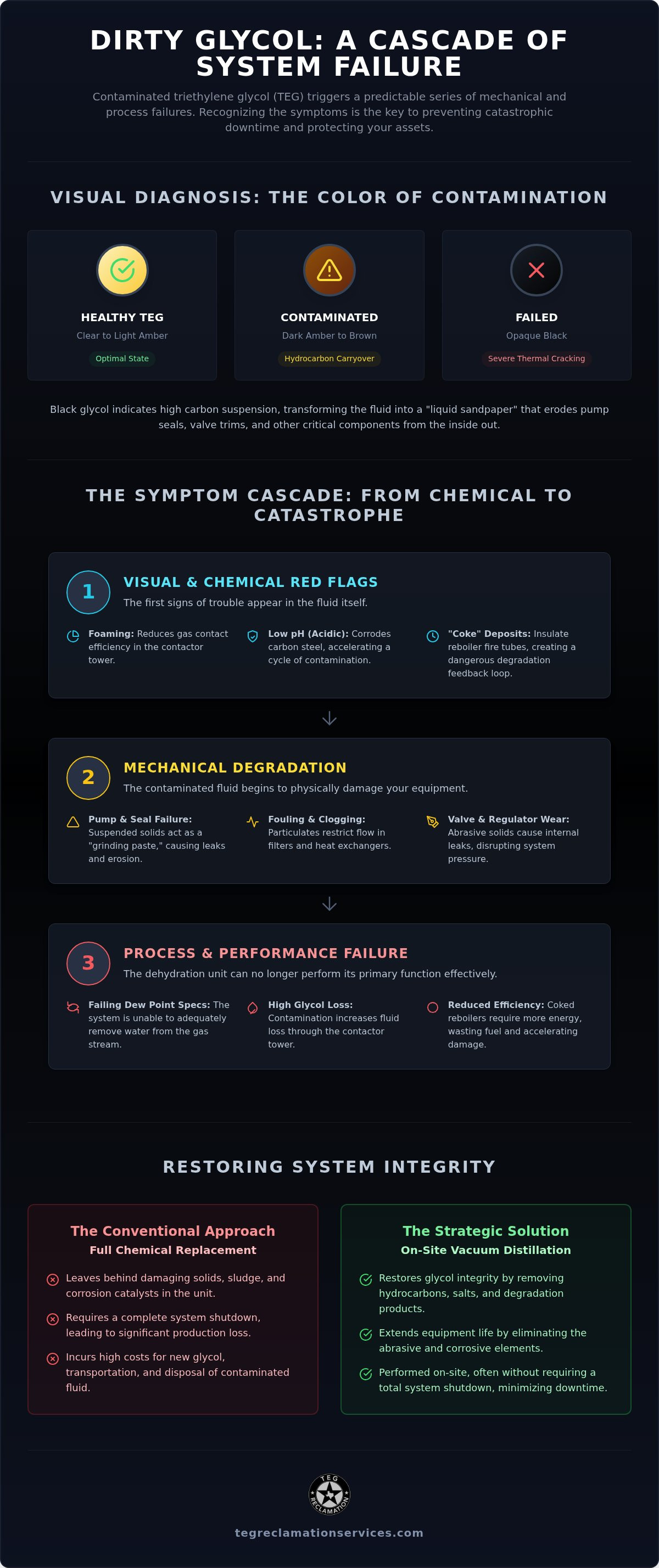
Fresh triethylene glycol (TEG) typically displays a clear or light amber hue. As the fluid circulates through the dehydration unit, its appearance serves as a primary diagnostic tool for system health. A transition toward darker shades often signals the onset of dirty glycol symptoms, specifically thermal degradation or hydrocarbon carryover. When liquid hydrocarbons enter the glycol stream, they don't just change the color; they actively destabilize the chemical balance. This contamination often precedes a sharp drop in pH levels. Acidic glycol is highly corrosive, attacking the carbon steel components of your DEHY unit and creating a cycle of metallic contamination that further accelerates fluid breakdown.
In the reboiler, excessive heat leads to thermal cracking. This process strips the glycol molecules, leaving behind solid carbon deposits known as "coke." These deposits insulate the fire tube, forcing the burner to run hotter to maintain process temperatures. This creates a dangerous feedback loop of degradation that eventually leads to total fluid failure. Monitoring the reboiler for these deposits is essential; coke formation is a precursor to fire tube failure and significant equipment damage. If you notice a sudden shift in the heating efficiency of your reboiler, the glycol chemistry is likely compromised.
Black Glycol and Carbon Suspension
When glycol reaches a state of opaque blackness, it's usually due to a high concentration of suspended carbon particulates. These microscopic solids are the direct result of thermal cracking. Unlike larger debris, these fines don't easily settle out in standard filtration. They remain in the stream, acting as a liquid sandpaper that erodes pump seals and valve trims. This permanent black state indicates that the glycol's molecular structure has been compromised. The fluid can no longer perform its dehydration duties effectively, and the abrasive nature of the carbon suspension will lead to premature mechanical failure across the entire DEHY unit.
Foaming and Surface Tension Issues
Visual inspections of the contactor sight glass often reveal foaming, which is a direct result of altered surface tension. Contaminants such as salt from produced water or influxes of liquid hydrocarbons are the typical triggers. Foaming reduces the contact area between the gas and the glycol, leading to immediate spikes in exit gas moisture. Many operators attempt to resolve this by adding anti-foam agents. While these chemicals might temporarily collapse the foam, they don't address the underlying contamination. Relying on additives often masks the severity of the dirty glycol symptoms until a major process upset or equipment failure occurs.
Mechanical Symptoms: How Contamination Damages DEHY Equipment
Contaminated fluid is more than a chemical problem; it's a mechanical hazard. When triethylene glycol carries suspended solids, it transforms from a lubricant into an abrasive medium. This change directly impacts the physical integrity of every component it touches. Abrasive solids, such as iron sulfides or salt crystals, settle in low-velocity areas or embed themselves into soft seals. This leads to a steady degradation of valve seats and regulators, causing internal leaks that disrupt the pressure balance of the entire system. These physical dirty glycol symptoms indicate that your hardware is being consumed from the inside out.
Particulate accumulation also restricts flow. As filters become saturated with degradation products, circulation rates drop. This forces operators to increase pump speeds to maintain water removal targets, which only accelerates the wear cycle. If your unit requires frequent filter changes or shows inconsistent glycol flow, these are classic signs of mechanical bottlenecks caused by fluid failure. Fouling in the heat exchanger surfaces further complicates this by reducing temperature control efficiency, making it harder to maintain the necessary lean glycol temperature before it enters the contactor.
Accelerated Pump and Seal Failure
The glycol pump is the heart of the DEHY unit and often the first component to fail when fluid quality declines. Suspended carbon and chlorides act as a grinding paste on pump seals and O-rings. This friction generates excessive heat and physical erosion, leading to external leaks and loss of prime. Identifying these issues early can prevent a total system failure. For operators dealing with recurring circulation problems, Kimray pump troubleshooting often reveals that the pump isn't the primary failure point; the contaminated fluid is. Internal erosion from salt crystals can pit the pump's internal surfaces, making standard repairs less effective and more frequent.
Reboiler Efficiency and Fire-Tube Fouling
Dirty glycol leaves behind a heavy residue that coats the exterior of the fire-tubes. This layer acts as an insulator, preventing efficient heat transfer from the burner to the glycol stream. As a result, the burner must fire more frequently and at higher intensities to reach the required boiling point. You'll notice this through increased fuel gas consumption and higher stack temperatures. Over time, this insulation creates localized hot spots on the fire-tube metal. These hot spots can lead to metal fatigue and eventually a catastrophic fire-tube failure. Maintaining equipment integrity requires more than just mechanical repairs. If your system shows these signs of wear, restoring your glycol to 98% purity is a proactive step toward protecting your hardware investments and ensuring operational continuity.
Process Symptoms: Losing the Fight Against Water Vapor
When a dehydration unit fails to meet contract specifications, the root cause is frequently found in the degradation of the process fluid. While mechanical wear is a visible consequence, the breakdown of gas quality is a direct result of compromised chemistry. These process-driven dirty glycol symptoms often manifest as a gradual decline in the system's ability to absorb moisture. As triethylene glycol becomes saturated with thermal degradation products and salts, its hygroscopic properties diminish. This creates a scenario where even a properly sized unit cannot meet the required dew point depression, leading to moisture spikes in the sales gas stream that can trigger pipeline shut-ins or downstream processing issues.
The cascade effect of salt contamination is particularly damaging to gas quality. Beyond boiling point issues, salts can precipitate out in the contactor, fouling trays or structured packing. This reduces the contact time between the gas and the glycol, further degrading the dehydration performance. When the process fluid is compromised, the entire system's efficiency collapses. This often forces operators to run pumps faster and burners hotter, which only worsens the initial contamination and accelerates the destruction of the fluid's molecular structure.
Loss of Dew Point Depression
The primary function of TEG is its natural affinity for water molecules. However, the presence of dissolved contaminants, particularly salts from produced water carryover, disrupts this chemical relationship. Salts cause boiling point elevation in the reboiler, which interferes with the stripping process. If the reboiler can't effectively remove water from the rich glycol, the "lean" glycol returning to the contactor remains too diluted. This dilution directly impacts the dew point. Troubleshooting these moisture spikes requires more than just checking reboiler temperatures; it requires an assessment of how chemical impurities are inhibiting the fluid's capacity to hold water.
Glycol Carryover and Chemical Loss
Foaming is a common operational hurdle that indicates a high level of liquid hydrocarbons or salt contamination. When the glycol foams, it significantly increases the fluid's volume and surface area within the contactor tower. This leads to "puking," where the glycol is physically carried over the top of the tower and into the sales gas line. The hidden costs of this carryover extend beyond the price of makeup chemicals. Glycol in downstream equipment can foul compressors, damage sensitive instrumentation, and contaminate pipelines. Identifying these dirty glycol symptoms early prevents the expensive cycle of constant chemical replenishment and protects the integrity of the entire gas gathering system.
Analyzing Contaminants: Moving from Symptoms to Lab Data
While visual inspections and mechanical failures provide immediate evidence of system distress, a professional laboratory analysis is necessary to quantify the severity of your dirty glycol symptoms. A comprehensive TEG analysis report moves beyond guesswork by measuring specific chemical markers that dictate system longevity. One of the most critical metrics is Percent Purity. In a healthy system, this should be maintained near 98%; however, as contaminants accumulate, the effective concentration of glycol drops. This reduction in purity directly correlates with a loss in water-absorbing capacity and a sharp increase in operational costs.
Total Suspended Solids (TSS) provide a clear picture of the physical debris circulating through your unit. These solids often consist of iron sulfides from internal corrosion, formation sand, or scale. Unlike larger particulates that a standard filter captures, TSS often includes microscopic fines that stay in suspension. These fines create the abrasive grinding paste that destroys pump seals and valve trims. Measuring the concentration of these solids allows you to predict filter life and mechanical wear rates before a failure occurs.
Chlorides and Salt Accumulation
Dissolved salts present a unique challenge because they're invisible to the naked eye and pass through traditional mechanical filtration. Chlorides are highly aggressive, especially at the elevated temperatures found in the reboiler. When chloride concentrations rise, they catalyze pitting corrosion on stainless and carbon steel surfaces. This chemical attack often necessitates a specialized glycol contamination removal strategy. If your lab report shows a steady climb in chloride parts per million, it's a clear indicator that produced water is carrying over into your system and compromising your hardware.
Thermal Degradation Products
Thermal stress breaks down the glycol molecule into organic acids, such as glycolic or formic acid. These acids are the primary reason for a drop in pH. As the fluid becomes more acidic, the rate of corrosion throughout the DEHY unit accelerates. Additionally, thermal degradation can lead to the formation of heavy polymers, which increase fluid viscosity and make the glycol harder to pump. Many operators attempt to sweeten the system by adding fresh chemicals. This is a temporary fix; adding clean glycol to a degraded batch doesn't remove the acids or polymers. It simply dilutes them. To truly restore system health, you must remove the root contaminants. Contact us for a technical consultation to determine if your system is a candidate for on-site reclamation.
Restoring System Integrity with On-Site Reclamation
Operators don't always realize that total chemical replacement is an avoidable expense once dirty glycol symptoms become unmanageable. While the immediate reaction to black or foaming glycol is often to dump and replace the entire batch, this involves high procurement costs and significant logistical challenges. On-site reclamation offers a pragmatic alternative that restores the fluid's chemical integrity without requiring a facility shutdown. By addressing contamination within the active system, you avoid the production losses associated with draining and refilling the unit. This process restores TEG to over 98% purity, effectively resetting the fluid to a like-new state.
Maintaining this purity is essential for long-term operational efficiency. After the initial purification, implementing glycol chemical cleaning strategies helps maintain heat transfer surfaces and prevents the re-accumulation of degradation products. This proactive approach ensures that the dehydration unit operates at its designed capacity, meeting dew point specifications consistently. It's a far more sustainable model than the "run to failure" cycle that plagues many industrial gas plants.
Sidestream Vacuum Distillation Benefits
The primary advantage of our proprietary sidestream vacuum distillation process is the simultaneous removal of water, dissolved salts, and suspended solids. Unlike standard filtration that only captures large particulates, this method targets the microscopic and dissolved contaminants that cause the most damage to DEHY units. Because the equipment operates on a sidestream loop, the main process continues to run. You'll achieve total restoration of the glycol chemistry while maintaining full gas throughput. This level of purity is unattainable through simple sweetening or additive programs; it provides a clear path to optimized dehydration performance without the environmental burden of waste disposal.
Proactive Maintenance and Equipment Longevity
Clean glycol is the most effective way to protect your mechanical assets. Restoring fluid quality directly extends the intervals between Kimray pump repair cycles by eliminating the abrasive carbon fines and corrosive chlorides that erode seals. When the fluid is free of degradation products, the internal components of the DEHY unit are no longer subjected to chemical attack or physical wear. This stability reduces the frequency of emergency chemical flushes and prevents the cascade of failure that typically leads to unplanned outages. We recommend scheduling a comprehensive system audit and fluid analysis to identify which reclamation strategy best fits your operational requirements.
Securing Operational Continuity Through Fluid Restoration
Recognizing dirty glycol symptoms early is the most effective way to prevent a total system collapse. We've analyzed how visual discoloration, frequent pump failures, and missed dew point specifications aren't isolated incidents; they're direct consequences of chemical degradation. Relying on reactive maintenance or temporary additives often masks these deeper issues until they cause a catastrophic equipment failure. Transitioning to a proactive reclamation strategy allows you to address the root cause of contamination while maintaining full production throughput.
Our proprietary vacuum distillation technology restores TEG to over 98% purity, resetting your process fluid to a like-new state without requiring any production shutdowns. This approach protects your hardware and ensures your gas meets pipeline specifications consistently. By choosing on-site purification over expensive chemical replacement, you stabilize operating costs and extend the life of your mechanical assets. Don't wait for the next pump seal failure to address your fluid chemistry. Restore your DEHY efficiency with TEG Reclamation Services and secure your plant's long-term reliability. Expert fluid management is the foundation of a high-performing dehydration unit.
Frequently Asked Questions
What causes triethylene glycol to turn black in a DEHY unit?
Triethylene glycol turns black primarily due to thermal degradation and the subsequent formation of suspended carbon particulates. This occurs when the reboiler temperature exceeds the chemical's stability limits, causing the molecules to "crack." These microscopic carbon solids remain in suspension, creating an opaque appearance that signals compromised fluid integrity. This condition is often a precursor to fire-tube fouling and accelerated mechanical wear throughout the dehydration unit.
How does dirty glycol affect dew point depression?
Contaminated fluid loses its natural affinity for water molecules, which directly inhibits its ability to meet dew point specifications. Dissolved salts and degradation products cause boiling point elevation in the reboiler, making it difficult to strip water from the rich glycol stream. Consequently, the returning "lean" glycol contains too much moisture to effectively dehydrate the gas, leading to moisture spikes in the sales gas line and potential pipeline shut-ins.
Can I remove salts and chlorides from glycol using standard filters?
Standard mechanical filtration is incapable of removing dissolved salts and chlorides from triethylene glycol. While filters can capture larger suspended solids, salts remain in solution and circulate through the entire system. These dissolved contaminants are highly corrosive and contribute to boiling point issues in the reboiler. Removing these chemical impurities requires specialized vacuum distillation reclamation to separate the pure glycol from the dissolved salt ions and liquid hydrocarbons.
What are the most common signs of glycol foaming?
The most immediate sign of glycol foaming is the presence of a stable foam layer visible through the contactor or flash tank sight glasses. This condition often leads to "puking," where glycol is physically carried over the top of the contactor tower into downstream equipment. High chemical makeup requirements and liquid carryover in the sales gas line are secondary indicators that contamination has significantly altered the fluid's surface tension.
Is it better to replace contaminated glycol or reclaim it?
Reclamation is generally superior to replacement because it restores the existing fluid to over 98% purity without the high costs of new chemical procurement or disposal. On-site purification eliminates the need for production shutdowns, allowing the facility to maintain full throughput during the process. While replacement only provides a temporary fix for dirty glycol symptoms, reclamation removes the root contaminants, such as chlorides and organic acids, that simple replacement often leaves behind.
How does dirty glycol damage Kimray pumps and seals?
Contaminated glycol damages Kimray pumps by introducing abrasive suspended solids that act as a grinding paste on internal seals and O-rings. These particulates erode the polished surfaces of the pump's moving parts, leading to external leaks and loss of circulation. Additionally, dissolved chlorides can cause localized pitting corrosion on internal pump components. This mechanical degradation significantly shortens maintenance cycles and increases the frequency of expensive seal replacements and pump rebuilds.
How often should TEG be lab-tested for contamination?
Operators should ideally schedule professional laboratory testing for triethylene glycol at least semi-annually to monitor for early dirty glycol symptoms. However, if you notice visual discoloration, frequent filter changes, or an inability to meet dew point targets, immediate testing is required. Regular analysis tracks the accumulation of chlorides, pH shifts, and total suspended solids, allowing maintenance teams to intervene with reclamation services before a major equipment failure or production shutdown occurs.
Can glycol reclamation be performed while the plant is running?
Yes, specialized on-site reclamation is performed using a sidestream process that allows the dehydration unit to remain fully operational. The purification equipment connects to the active glycol loop, extracting and cleaning the fluid while the main system continues to dehydrate gas. This method ensures zero production downtime and eliminates the logistical risks associated with draining the unit. It's a highly efficient way to restore chemical integrity without interrupting facility revenue or throughput.


Comments