
Expert Kimray Pump Repair: Dehydration Guide (2026)
Updated: Aug 12
What if the recurring seal failures and unscheduled shutdowns in your dehydration system aren't caused by the pump itself, but by the fluid it's forced to move? Most field operators accept frequent Kimray pump repair as an unavoidable operational cost, often replacing diaphragms and O-rings without addressing why the equipment stalled in the first place. This cycle of reactive maintenance leads to lost production and inflated parts budgets that eat into your bottom line.
You know that maintaining a consistent glycol circulation rate is the only way to meet pipeline specifications and protect your equipment. This guide provides the technical framework to diagnose common failure points, execute precise repairs, and optimize your dehydration unit for maximum uptime. We'll examine the critical relationship between mechanical integrity and system chemistry to help you restore circulation and extend the service life of your pumps. By following these professional standards, you can reduce chemical costs and ensure your system operates with the reliability your facility demands.
Table of Contents
Diagnosing Failure Points in Kimray Energy Exchange Pumps
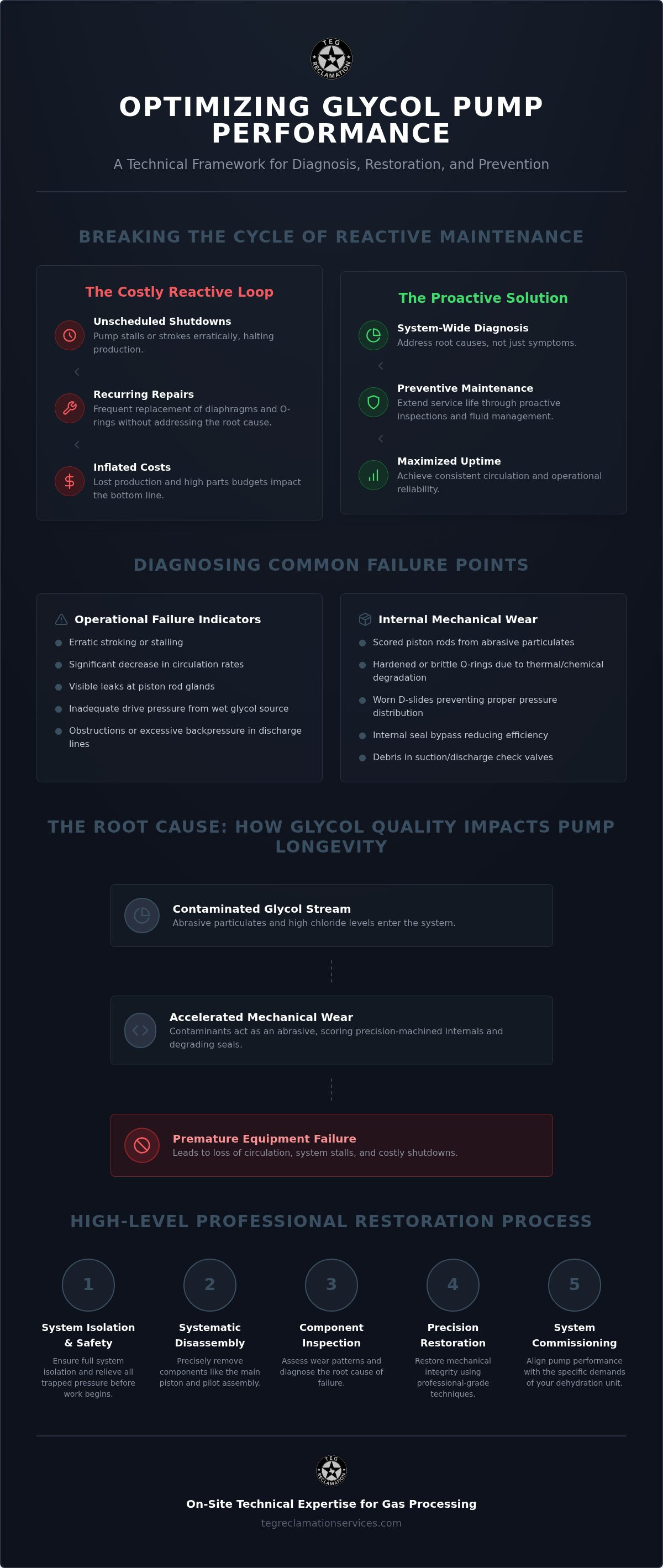
Identifying the root cause of a pump failure is the primary step toward restoring operational continuity in a glycol dehydration system. When a Kimray energy exchange pump begins to stall or stroke erratically, it signals a breakdown in the critical pressure balance required for consistent circulation. These malfunctions often stem from contaminated glycol streams that introduce abrasive particulates into the pump's precision-machined internals. Professional Kimray pump repair starts with a diagnostic phase that looks beyond the immediate mechanical stall to the system-wide conditions that caused the failure.
A primary focus during initial inspection should be the pilot piston and the D-slide. If these components show signs of scoring or debris buildup, the pump will lose its ability to switch the flow of wet glycol between the power and displacement cylinders. This results in a complete loss of circulation. Internal seal bypass is another common but subtle failure point. When internal seals fail, high-pressure wet glycol bypasses the power cylinder, leading to a significant decrease in circulation rates despite the pump appearing to stroke. This bypass reduces the energy exchange efficiency, forcing the system to work harder for less output.
External indicators provide immediate clues regarding the state of the internal hardware. Visible leaks at the piston rod glands typically indicate advanced packing wear. If left unaddressed, these leaks result in chemical loss and potential environmental compliance issues. Documenting these symptoms before disassembly ensures that the restoration process addresses the underlying system health issues rather than just the visible damage. Effective Kimray pump repair requires a systematic approach to identifying these mechanical and operational failures before they result in total production loss.
Common Mechanical Failure Indicators
Mechanical wear patterns provide a clear roadmap of the pump's operating environment. Scored piston rods are frequently caused by solid particulates trapped in the glycol stream, which act as an abrasive against the seals. Hardened or brittle O-rings suggest that the pump's exposed to excessive thermal degradation or chemical incompatibility, often due to degraded triethylene glycol (TEG). Worn D-slides prevent proper pressure distribution between cylinders, causing the pump to hang up during the transition phase of its stroke.
Operational Troubleshooting Steps
Before committing to a full teardown, perform a targeted operational check to rule out external system issues. Verify that the pump receives adequate drive pressure from the wet glycol source; low pressure prevents the pilot piston from shifting properly. Obstructions in the discharge lines or excessive backpressure can also mimic mechanical failure by stalling the pump mid-stroke. Finally, inspect the suction and discharge check valves for proper seating. Debris lodged in these valves prevents a tight seal, which kills the pump's volumetric efficiency and halts fluid movement.
Step-by-Step Restoration of Glycol Circulation Pumps
Executing a professional Kimray pump repair begins with absolute system isolation. This process is not merely a maintenance task; it's a high-stakes mechanical restoration that requires strict adherence to safety protocols. Before any bolts are loosened, you must ensure the pump is completely isolated from the high-pressure wet glycol stream and the low-pressure dry glycol discharge. Relieving all trapped pressure is essential to prevent equipment damage or operator injury. Once the system is depressurized, the systematic removal of the suction and discharge blocks allows access to the internal check valves and seals that drive the unit's energy exchange process.
With the blocks removed, the focus shifts to extracting the main piston and pilot assembly. These core components are responsible for the pump's stroking action and must be handled with precision. While cleaning metal surfaces with a non-corrosive solvent, it's vital to assess how the glycol quality has impacted the internal metallurgy over time. Removing the accumulated glycol film reveals the true state of the hardware, allowing for a definitive diagnosis of wear patterns that aren't visible during standard operations. For complex field scenarios, our Kimray pump repair and service experts provide on-site technical support to ensure your system returns to peak performance.
Disassembly and Component Inspection
Thorough inspection is the cornerstone of a successful rebuild. Start by removing the check valve caps and extracting the darts to look for pitting, erosion, or debris embedded in the seats. Even minor surface irregularities can lead to significant backflow issues. Next, examine the cylinders for internal scoring. Deep vertical scratches often indicate that particulate matter has bypassed the filtration system, creating a path for glycol to leak past the piston seals. All metal components should be cleaned until they are free of carbonized glycol and particulates, ensuring a pristine surface for the new elastomers.
Reassembly and Testing Protocols
Standardizing the Kimray pump repair process requires meticulous reassembly. All new O-rings, U-cups, and seals from a high-quality repair kit must be lubricated with a compatible, high-temperature grease to prevent tearing during installation. When seating the piston assembly, ensure the seals are oriented correctly to handle the directional pressure of the glycol stream. Torque all bolts to OEM specifications to maintain high-pressure integrity and prevent gasket failure. Finally, introduce pressure slowly to the unit. Observe the initial strokes to verify the timing of the pilot shift and check all connection points for leaks before returning the pump to full service.
The Impact of Glycol Quality on Kimray Pump Longevity
The mechanical integrity of an energy exchange pump is inextricably linked to the chemistry of the fluid it circulates. In many glycol dehydrator systems, the focus remains on the hardware, yet the fluid often serves as the primary driver of equipment failure. Solids and particulates, such as iron sulfide or wellhead sand, act as high-speed abrasives against pump seals and piston rods. This abrasive action creates micro-grooves that eventually lead to high-pressure bypass and total pump failure. When these contaminants aren't removed, they turn the glycol into a grinding paste that destroys precision-machined surfaces.
Corrosive wear represents a more insidious threat to system uptime. Dissolved chlorides and salts within the triethylene glycol (TEG) create an environment where internal pitting of metal components becomes inevitable. This corrosion degrades the seating surfaces of the pilot piston and D-slide, making even the most thorough Kimray pump repair a short-term solution if the underlying fluid quality isn't addressed. Chemical imbalances also lead to glycol foaming. Foaming causes pump cavitation, where air pockets collapse with enough force to erode metal surfaces and cause erratic stroking patterns that stress the entire assembly.
Implementing a regular glycol reconditioning service is the only way to break this cycle of mechanical degradation. Without restoring the TEG to its baseline state, the pump will continue to process a contaminated stream rather than a lubricant. This neglect leads to recurring seal failures, O-ring hardening, and increased operational costs that could be avoided through proactive fluid management.
How Contaminants Kill Your Pump
Thermal degradation produces carbonaceous byproducts, commonly known as coke. These fine particles clog the small pilot ports and D-slide channels, causing the pump to stall during the transition phase of its stroke. High glycol pH levels also accelerate the failure of elastomers, causing them to swell or lose their sealing capacity. If your maintenance strategy ignores these chemical factors, your Kimray pump repair efforts will remain reactive and fail to provide the long-term reliability your facility requires.
Reclamation as a Preventive Strategy
Maintaining 98% purity through sidestream purification significantly reduces mechanical friction within the pump internals. Removing dissolved salts prevents the internal pitting that destroys cylinder walls and valve seats. This proactive approach offers a high long-term ROI by extending the intervals between pump services and reducing the need for expensive replacement parts. Combining mechanical restoration with chemical purification ensures the entire dehydration unit operates at peak efficiency without the need for frequent, unscheduled shutdowns.
Preventive Maintenance and Sizing for Operational Uptime
Operational uptime is not achieved through reactive fixes but through precise equipment sizing and rigorous maintenance schedules. Many operators overlook the fact that a Kimray pump repair cycle is often accelerated by running a pump beyond its intended capacity. If a pump is forced to operate at its maximum rated speed to meet dehydration targets, the mechanical stress on the pilot assembly and D-slide increases exponentially. This leads to premature seal failure and internal bypass, which eventually stalls the entire dehydration process and compromises gas quality.
Utilizing a Glycol Pump Sizing Calculator
Selecting the correct pump requires a technical evaluation of several variables to ensure long-term reliability. A professional Glycol Pump Sizing Calculator uses gas flow rates, moisture content, and the desired dew point to determine the necessary circulation rate for your specific facility. Running a pump at 60% to 70% of its maximum capacity is a standard industrial practice to extend the time between service intervals. It's also necessary to adjust pump speed for seasonal variations. Higher gas temperatures in summer increase moisture saturation, requiring a higher circulation rate, while winter conditions might allow for a slower, more efficient stroke count that preserves seal life.
Proactive Maintenance Checklists
A structured inspection routine identifies early-stage wear before it causes a total system shutdown. Monthly checks should focus on monitoring drive pressure and recording the stroke count to detect any deviations from the established baseline. Visible leaks at the rod packing or erratic stroking are immediate signals that internal components are degrading. An annual service involves a complete teardown, including the replacement of all elastomers and the polishing of metal-to-metal seating surfaces. Keeping critical spare parts like pilot pistons and D-slides on-site is a pragmatic strategy to minimize downtime during these scheduled restorations.
Effective maintenance also requires looking at the entire system as a single operational unit. You must integrate BTEX system maintenance to ensure that emission control equipment doesn't create excessive backpressure. High backpressure on the pump's discharge line can stall the unit and mimic a mechanical failure, leading to unnecessary Kimray pump repair costs. By monitoring circulation rates and ensuring all downstream components are clear, you can preserve the integrity of your pump internals and maintain consistent gas processing efficiency.
To optimize your facility's performance and reduce operational costs, use our Glycol Pump Sizing Calculator to verify your equipment is correctly matched to your current production volumes.
Professional Technical Field Services for Gas Processing
While internal maintenance teams often manage routine inspections, complex system failures require the intervention of specialized field experts. On-site technical support provides a significant advantage because these professionals understand the entire dehydration unit as an integrated circuit rather than a collection of isolated parts. A Kimray pump repair performed by an expert ensures that the mechanical restoration is perfectly aligned with the system's current thermal and pressure profiles. Professional DEHY system commissioning is the final, critical step in this process. It verifies that repaired or upgraded pumps are set to the correct stroke rate and pressure balance, preventing the immediate return of the mechanical stresses that caused the initial failure.
Comprehensive DEHY System Support
Our field services are designed to address the root causes of operational instability. We integrate Kimray pump repair with essential services like chemical flushing and DEHY equipment upgrades to clear the system of accumulated contaminants. This comprehensive approach allows our team to troubleshoot complex issues that standard DIY manuals don't cover, such as subtle pressure drops or chemical imbalances that lead to recurring stalls. By leveraging professional support, facilities can maintain strict compliance with industry safety standards while reducing the liability associated with high-pressure mechanical work.
Maximum Efficiency Without Shutdowns
The core objective of our technical service is to maintain operational continuity. Our sidestream service model allows for critical maintenance and purification tasks to be executed without requiring a total production shutdown. With over 45 years of experience in oil and gas process equipment, our leadership ensures that every repair and commissioning project is handled with meticulous precision. This deep industry knowledge allows us to identify and resolve mechanical bottlenecks quickly, restoring your system to peak performance while your production remains online. We provide the specialized skills necessary to protect your equipment health and optimize your bottom line.
Contact us for specialized Kimray pump field service to restore your system's circulation and ensure maximum dehydration efficiency.
Securing Operational Continuity in Your Dehydration Unit
Reliable gas processing depends on the synergy between mechanical precision and fluid chemistry. We've established that addressing a stall through Kimray pump repair is a temporary measure if the system continues to circulate contaminated glycol. By prioritizing accurate pump sizing and maintaining high-purity TEG, you can effectively eliminate the abrasive wear that leads to recurring seal failures and unscheduled downtime. Professional oversight ensures these variables are managed together rather than in isolation.
Our field support is backed by over 45 years of process equipment expertise. We provide national service coverage to ensure your upstream and midstream operations remain compliant and efficient. Our proprietary methods restore glycol to 98% purity on-site, providing a total health check for your dehydration equipment without the need for shutdowns. Professional commissioning ensures that every component is calibrated for the specific demands of your facility, protecting your hardware from premature wear.
Request Expert Kimray Pump Repair and Field Service to stabilize your circulation rates and extend the life of your critical hardware. Taking these proactive steps today ensures a more reliable and cost-effective operation for years to come.
Frequently Asked Questions
What are the signs that my Kimray pump needs immediate repair?
Primary indicators include erratic stroking, stalling mid-cycle, or visible leaks at the piston rod glands. These symptoms often point to worn D-slides or hardened O-rings that prevent the pump from maintaining the necessary pressure balance. Immediate Kimray pump repair is required when circulation rates drop below your facility’s minimum specification, as this risks pipeline off-spec events and production shutdowns.
Can I repair a Kimray pump while the dehydration unit is still running?
No, you cannot perform mechanical repairs while the pump is under pressure. The unit must be fully isolated from both the high-pressure wet glycol and the dry glycol discharge lines. Relieving all internal pressure is a critical safety requirement to prevent equipment damage or operator injury during disassembly. Professional field services allow for these repairs to happen while production continues by using bypass systems or temporary circulation units.
How often should I replace the seals and O-rings in my glycol pump?
Most operators implement an annual replacement schedule for all elastomers and seals during a planned maintenance window. However, high levels of particulate contamination or thermal degradation in the glycol stream can necessitate more frequent service. Monitoring for increased stroke counts or external leakage helps determine if your specific operating environment requires a shorter maintenance interval to prevent total failure.
Why does my Kimray pump keep stalling even after I replaced the repair kit?
Stalling after a kit replacement often occurs because the underlying cause, such as glycol contamination or internal cylinder scoring, wasn't addressed. If the glycol contains abrasive solids, they will immediately damage new seals and D-slides. Additionally, excessive backpressure from a restricted BTEX system or clogged discharge lines can stall even a perfectly rebuilt pump by preventing the pilot piston from shifting correctly.
Does the quality of my triethylene glycol affect how long my pump lasts?
Glycol quality is the most significant factor in determining the service life of your pump internals. Contaminants like salts, chlorides, and solid particulates act as abrasives that erode metal seating surfaces and tear through new seals. Maintaining 98% purity through professional reclamation reduces mechanical friction and prevents the internal pitting that leads to recurring Kimray pump repair cycles.
Is it better to repair a Kimray pump or replace it with an electric alternative?
Repairing an existing energy exchange pump is generally the most pragmatic choice for facilities with established pneumatic infrastructure. While electric alternatives offer different emission profiles, they require significant capital expenditure and site power availability. A professional restoration often provides the same reliability at a fraction of the cost of a total system overhaul, provided the pump is correctly sized for the application.
What tools are required for a standard Kimray energy exchange pump repair?
A standard repair requires basic hand tools, including a set of wrenches, a torque wrench, and a pick for seal removal. You also need a non-corrosive solvent for cleaning metal surfaces and an OEM-specified, high-temperature grease for O-ring lubrication. Precise reassembly requires following specific torque values to ensure high-pressure integrity and prevent gasket failure during the initial stroking phase.
How does pump sizing impact the frequency of mechanical failures?
Incorrect pump sizing is a leading cause of premature mechanical failure. If a pump is undersized for the gas flow, it must run at maximum stroke rates, which accelerates the wear on the pilot assembly and D-slide. Properly sizing your equipment ensures it operates within an efficient mid-range, typically 60% to 70% of its maximum capacity, which significantly extends the intervals between necessary repairs.


Comments