
Glycol Circulation Pump Repair: Troubleshooting and Maintenance FAQ (2026)
- Aug 7
- 12 min read
Updated: Aug 11
What if your recurring glycol circulation pump repair isn't actually a mechanical failure, but a symptom of poor system chemistry? It's common to feel that constant maintenance is just the cost of doing business in a high-stakes DEHY environment. You understand that unscheduled downtime and glycol loss don't just hurt the bottom line; they create environmental hazards and complicate emissions compliance under EPA NESHAP standards.
This article provides the technical clarity you need to identify specific failure modes and troubleshoot performance drops before they lead to a total system shutdown. You'll learn to evaluate whether a pump restoration is viable or if the 60% repair-to-replacement cost threshold suggests it's time for an upgrade to more efficient technology. We'll walk through the critical steps for maintaining optimal circulation rates, ensuring your equipment operates with the precision and reliability required for modern industrial standards.
Table of Contents
Understanding Glycol Circulation Pump Operation and Failure
In a triethylene glycol (TEG) dehydration system, the circulation pump serves as the primary driver of moisture removal. Its performance determines whether the lean glycol effectively contacts the gas stream to achieve the required dew point depression. When flow rates fluctuate or stop entirely, the result is immediate; moisture levels in the gas rise, leading to hydrate formation and potential pipeline rejection for non-compliance. Success in gas processing depends on the pump's ability to maintain a precise TEG-to-gas ratio, making a thorough understanding of these units the first step in successful glycol circulation pump repair and long-term system optimization.
Energy Exchange vs. Electric Glycol Pumps
Energy exchange pumps, often referred to as gas-assist units, utilize the high pressure of the rich glycol coming from the contactor to drive the movement of lean glycol back into the system. This design is highly efficient for remote locations because it leverages existing system energy. However, this mechanical reliance means the pump is susceptible to wear in specific areas. The seals, O-rings, and check valves within these units are the most frequent points of failure. These components must withstand constant pressure differentials and the abrasive nature of any particulates present in the glycol stream.
Electric motor-driven pumps offer a different set of advantages, particularly in environments where emissions compliance is a priority. These units provide a consistent and easily adjustable flow rate that doesn't depend on gas pressure fluctuations. While they eliminate the risk of gas venting associated with older energy exchange models, they introduce electrical components and mechanical couplings that require their own specialized maintenance schedules. Choosing between these technologies often depends on the specific site requirements for emissions and available power infrastructure.
The Relationship Between Pump Health and Dehydration Efficiency
Improper circulation rates are often the root cause of "wet gas" issues. If the pump is oversized, you risk excessive methane emissions and higher fuel costs. If it's undersized or struggling due to internal wear, the gas remains saturated. Operators should monitor for signs of a pump reaching its limit, such as cavitation, erratic cycling, or a complete stall. These symptoms often indicate that the internal mechanics can no longer overcome the hydraulic demands of the system.
Maintaining balance is critical for operational uptime. Many systems operate with pumps that are poorly matched to current production levels, leading to premature mechanical breakdown. Utilizing a glycol pump sizing calculator is essential to determine if your current hardware matches the actual production volume of the well. Precision in sizing reduces the mechanical load on the unit, extending the interval between necessary glycol circulation pump repair cycles and ensuring the DEHY unit meets its performance targets.
Troubleshooting Common Glycol Pump Failures
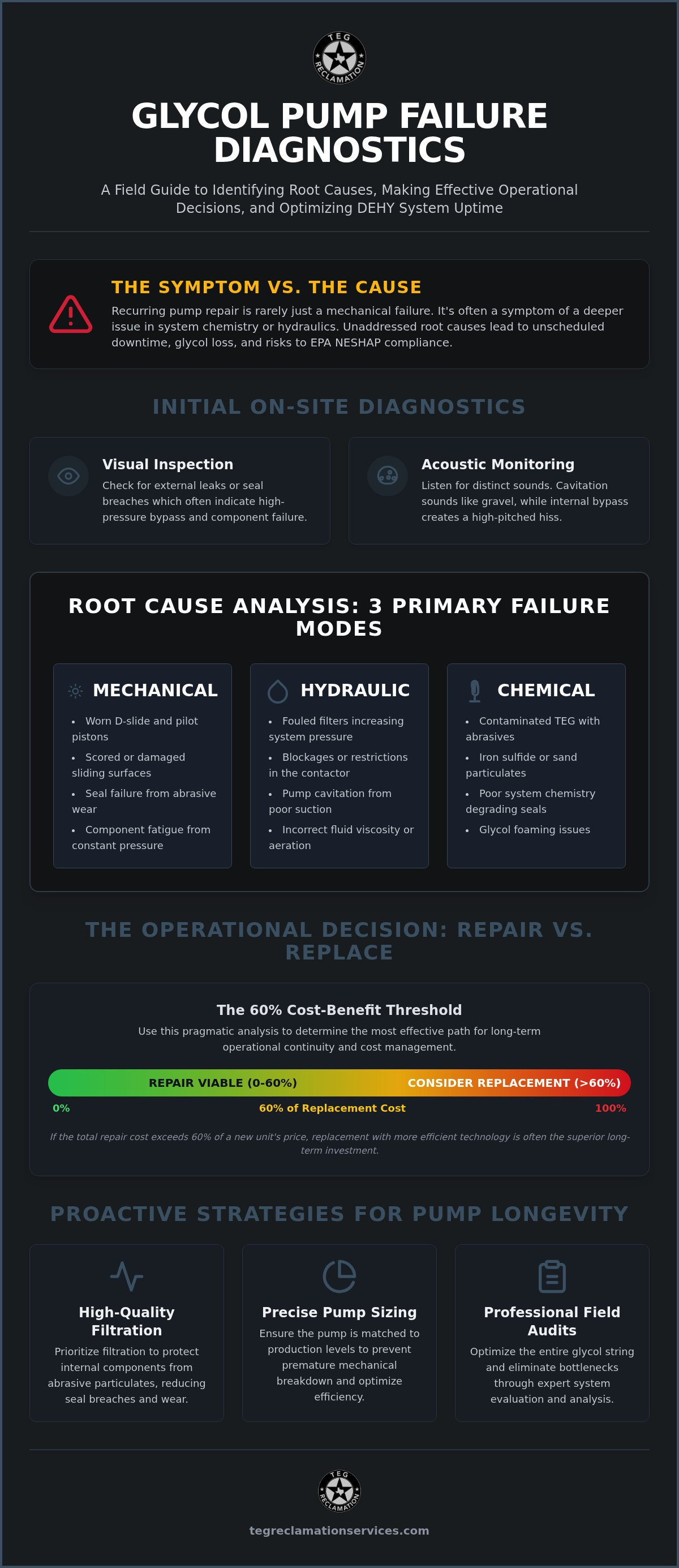
Effective glycol circulation pump repair begins with a methodical diagnostic approach. A stalled or underperforming pump is rarely an isolated incident; it's usually a response to a mechanical, hydraulic, or chemical imbalance within the DEHY string. Before dismantling the unit, perform a visual inspection for external leaks or seal breaches that indicate high-pressure bypass. Acoustic monitoring is equally valuable. Cavitation often sounds like gravel circulating through the housing, while internal bypass creates a distinct high-pitched hissing sound as rich glycol slips past worn internal components. These symptoms provide immediate clues about the internal state of the equipment without requiring an immediate shutdown.
Pressure differential analysis allows you to isolate where the blockage exists. By comparing the suction and discharge pressures, you can determine if the pump is fighting a fouled filter or a restricted contactor. If the pump is cycling but not moving fluid, the issue is often hydraulic or related to priming. If it's dead-stalled, the failure is typically mechanical. Identifying these distinctions early prevents unnecessary part replacements and focuses your maintenance efforts on the actual root cause.
Mechanical Failure Modes
In energy exchange units, the D-slide and pilot pistons are the primary wear points. These components must shift precisely to maintain the timing of the stroke. If the sliding surfaces become scored or worn, the pump will eventually stall on center. Seal failure is another common issue, often driven by particulate abrasive wear. When the triethylene glycol (TEG) becomes contaminated with iron sulfide or sand, these solids act as an abrasive that destroys the polished surfaces of the seals. Check valves are also susceptible to sticking. This is frequently caused by the accumulation of salt or paraffin, which prevents the ball from seating correctly and leads to a loss of prime and erratic flow rates.
Hydraulic and System Issues
Suction problems often manifest as vapor lock. This occurs when the glycol temperature is too high or the suction line is restricted, causing the fluid to flash into a gas before it enters the pump. Similarly, air entrainment can lead to erratic pumping and reduced volumes. On the discharge side, high back-pressure in the reboiler can inhibit the pump's ability to move fluid. This is often a result of a fouled fire tube or a blockage in the heat exchanger. Glycol foaming is another significant hurdle. When the glycol foams, the pump's efficiency drops because it's attempting to compress a gas-liquid mixture rather than move a solid column of fluid. For complex issues that persist after standard troubleshooting, professional Kimray pump repair and service can provide the deep technical analysis needed to restore system balance.
Repair vs. Replace: Making the Operational Decision
Deciding between a targeted glycol circulation pump repair and a complete unit replacement requires a pragmatic evaluation of both immediate costs and long-term operational continuity. The industry standard suggests that if the total cost of parts and specialized labor exceeds 60% of the price of a new unit, replacement is the more viable path. However, this calculation must also account for the age of the equipment and its service history. A pump that has undergone multiple field repairs in a short window may indicate systemic issues, such as poor chemical purity or improper sizing, that a simple seal kit cannot resolve. In these high-stakes scenarios, the revenue lost during unscheduled downtime often outweighs the capital expenditure of a new, optimized pump.
Operational efficiency is also a major factor in this decision. With the U.S. Department of Energy setting new efficiency standards for circulator pumps, many legacy PSC motor models are being phased out in favor of high-efficiency ECM technology. Upgrading during a failure event can proactively address upcoming regulatory shifts and reduce the energy load on the DEHY unit. For specialized equipment, engaging an expert for a Kimray pump repair ensures that the restoration meets OEM specifications, preserving the integrity of the dehydration string while extending the life of the asset.
The Case for Field Repair
Field repairs are often the most efficient solution for localized mechanical issues like seal breaches or O-ring degradation. Replacing these soft goods on-site minimizes the duration of production interruptions and restores hydraulic integrity quickly. Standardizing these maintenance intervals allows operators to catch wear before it leads to a catastrophic housing failure. Utilizing technical field services for precision troubleshooting ensures that the repair addresses the root cause, such as particulate friction, rather than just the symptom. This approach is particularly effective when the pump housing and internal pistons remain within acceptable tolerances.
When Replacement is the Better Option
Replacement becomes necessary when the internal housing shows signs of severe erosion or "washout" that prevents a proper seal. No amount of new internal components can compensate for a compromised pump body. Furthermore, if your production volume has changed significantly since the original installation, the existing pump may no longer be capable of maintaining the required TEG-to-gas ratio. Upgrading to a modern electric pump can also assist in BTEX reduction and emissions compliance, helping the facility meet EPA NESHAP standards. Matching the new pump specifications to your updated DEHY capacity ensures the system operates at its peak efficiency point, reducing the frequency of future repairs.
Maintenance Strategies for Glycol Pump Longevity
The long-term reliability of a dehydration system depends heavily on the cleanliness of the circulating medium. While mechanical components eventually wear, the rate of degradation is directly proportional to the quality of the triethylene glycol (TEG) being moved. Operators who shift their focus from reactive glycol circulation pump repair to a rigorous fluid-management protocol often see a significant extension in the mean time between failures. This proactive approach involves a combination of mechanical filtration and chemical monitoring to ensure the pump internals remain protected from abrasive and corrosive forces.
Filtration and Particulate Control
High-efficiency filtration is the first line of defense for any pump. Particulate filters, typically rated between 5 and 10 microns, are essential for removing iron sulfide and other solids that create "black glycol." These particulates act as an industrial grinding paste inside the pump housing, rapidly eroding pistons and scoring cylinder walls. Monitoring the pressure differential across these filters is a daily requirement for field operators; a sudden drop can indicate a ruptured element, while a rapid increase suggests a surge in system contaminants. Carbon filtration must also be maintained to remove liquid hydrocarbons that cause foaming and hydraulic instability during the pump's suction stroke.
Chemical Quality and Component Protection
Beyond particulates, the chemical makeup of the TEG influences component integrity. A pH level that falls below 7.0 indicates an acidic environment that accelerates corrosive wear on pump metals and elastomers. Dissolved chlorides and salts are particularly dangerous because they promote pitting on polished seal surfaces, leading to premature leaks. Sidestream vacuum distillation effectively removes dissolved salts and degraded thermal byproducts that standard particulate and carbon filters cannot capture. By integrating a glycol reconditioning service into your annual maintenance routine, you ensure that the chemical environment supports, rather than destroys, your hardware.
Daily audits should include a visual check for seal leaks and a confirmation of the stroke rate to ensure the unit hasn't stalled or slowed. Annual routines provide the final layer of protection, allowing for a deep dive into the system's hydraulic balance and the health of the primary circulators. This is the ideal time to perform a preventative glycol circulation pump repair, replacing soft goods before they fail in the middle of a production surge. To secure your operations against chemical-driven failure, consult with our technical field services to audit your filtration and fluid health.
Technical Field Services for DEHY Optimization
Specialized field services provide the technical depth required to move beyond reactive maintenance. When a dehydration system underperforms, the issue often extends beyond a single component. While a standard glycol circulation pump repair might temporarily restore flow, it doesn't address the hydraulic or chemical imbalances that caused the failure. Professional troubleshooting involves a meticulous analysis of the entire glycol string, identifying bottlenecks that restrict efficiency and drive up operational costs. This level of scrutiny ensures that every repair contributes to the total restoration of system function, rather than just providing a short-term fix.
Commissioning and optimization services are essential for new or upgraded DEHY units. These services ensure that all components are calibrated to work in harmony from day one, preventing the "break-in" failures that often plague poorly installed equipment. Professional commissioning establishes a baseline for performance, making it easier to detect deviations during future inspections. This strategic foundation is the key to minimizing the frequency of glycol circulation pump repair cycles over the life of the unit. Reducing long-term OPEX requires a shift from a "fix-it-when-it-breaks" mentality to a proactive approach focused on equipment health and operational continuity.
Comprehensive DEHY Audits
A thorough audit evaluates the synchronization between the pump, the reboiler, and the contactor. This includes examining burner management systems and BTEX units to ensure they're operating within the necessary thermal and environmental parameters. Often, hidden efficiencies are found by optimizing the TEG circulation rate to match actual gas volumes. Proper equipment sizing is a critical component of this process, as it directly impacts your ability to maintain EPA compliance. By auditing the system as a whole, operators can identify where oversized components are leading to excessive fuel consumption or unnecessary emissions, allowing for targeted upgrades that improve the bottom line.
On-Site Technical Support Benefits
The primary advantage of on-site technical support is the elimination of "parts-swapping" guesswork. Field experts utilize specialized tools and decades of experience to diagnose complex mechanical issues with precision. This problem-solving approach extends the lifecycle of critical assets and significantly reduces the risk of environmental hazards. Rather than waiting for a total stall, precision maintenance allows for the scheduled replacement of wear components during planned downtime. This methodical rhythm of care preserves the integrity of the machinery and ensures operational uptime in high-stakes environments. For comprehensive system optimization, contact TEG Reclamation Services for technical field support to secure your facility's performance.
Securing Operational Continuity through Technical Precision
Maintaining a reliable dehydration unit requires a shift from reactive fixes to a comprehensive strategy of system optimization. You've seen how identifying the root cause of failure, whether mechanical or chemical, is the only way to prevent recurring downtime. Executing a successful glycol circulation pump repair requires more than just a new seal kit; it demands a thorough evaluation of fluid purity and hydraulic balance. By applying the 60% repair-to-replacement threshold and auditing the entire DEHY string, you can ensure your facility remains compliant with EPA standards while maximizing equipment life.
Adhering to these standards of care is vital for any critical system, from industrial dehydration units to property management tasks like septic tank pumping Portland OR, which ensures long-term reliability and environmental safety.
TEG Reclamation Services brings over 45 years of experience in oil and gas process equipment to every site visit. We provide specialized Kimray pump repair and DEHY optimization with national technical field service coverage. Our experts move beyond the symptoms to restore the total health of your machinery, helping you avoid the guesswork of unnecessary parts-swapping. It's time to stabilize your production and protect your assets with professional oversight. Request On-Site Technical Maintenance and Pump Service today to ensure your dehydration unit operates at peak efficiency.
Frequently Asked Questions
What are the signs that my glycol circulation pump is failing?
Primary indicators of failure include cavitation noises that sound like gravel in the housing, erratic stroke timing, and visible seal leaks. A noticeable rise in gas moisture at the outlet often signifies that the pump is no longer maintaining the required TEG-to-gas ratio. Technical diagnostics should begin by checking for internal bypass or high-pressure rich glycol slipping past worn internal components.
How often should I service my Kimray energy exchange pump?
Service frequency for a Kimray energy exchange pump depends on the particulate load and chemical purity of your system. Most operators perform a soft good replacement annually to prevent unscheduled downtime. If your triethylene glycol contains high levels of iron sulfide, you may need to audit the internal components every six months to ensure the D-slide and pistons remain within tolerance.
Can contaminated glycol cause my pump seals to fail prematurely?
Contaminated glycol is the primary cause of premature seal failure in circulation pumps. Solids like sand, salt, or iron sulfide act as an abrasive paste that scores the polished surfaces of the mechanical seals. Maintaining chemical purity through advanced reclamation and high-quality filtration is essential to extend the interval between each glycol circulation pump repair.
What is the difference between a gas-assist pump and an electric glycol pump?
A gas-assist pump utilizes the high pressure of the rich glycol from the contactor to power the movement of lean glycol. An electric pump uses an external motor to drive the fluid, providing a consistent flow rate regardless of gas pressure fluctuations. Electric models are increasingly favored in low-emission environments to satisfy EPA NESHAP regulations, as they eliminate the venting of assist gas.
How do I calculate the correct pump size for my dehydration unit?
Calculating the correct pump size requires determining the specific TEG-to-gas ratio needed to achieve your target dew point depression. This calculation accounts for the gas volume, operating pressure, and inlet moisture content. Utilizing a specialized sizing calculator ensures that you don't over-circulate glycol, which prevents excessive methane emissions and reduces unnecessary mechanical wear on the unit.
Is it possible to repair a glycol pump without shutting down production?
Repairing a pump without shutting down production is only possible if your DEHY unit is equipped with a parallel standby pump. If no redundancy exists, the system must be isolated and depressurized before the technician can perform a glycol circulation pump repair. Proactive maintenance during scheduled turnarounds is the most effective way to avoid emergency shutdowns during peak production periods.
What role does glycol pH play in pump maintenance?
Glycol pH is a critical indicator of the corrosive potential within your pump housing. When the pH drops below 7.0, the triethylene glycol becomes acidic, leading to the rapid degradation of elastomers and metal surfaces. Maintaining a slightly alkaline pH level protects the internal valves and seals from chemical attack, preserving the hydraulic integrity of the entire dehydration string.
Why is my glycol pump stalling or cycling irregularly?
Stalling or irregular cycling is typically caused by worn D-slides, fouled pilot pistons, or vapor lock in the suction line. In energy exchange units, the mechanical shifting of the internal pistons must be precise to maintain the stroke rhythm. If the internal passages are restricted by paraffin or salt accumulation, the pump will eventually stall on center, requiring a professional teardown and cleaning.


Comments