
Kimray Pump Troubleshooting: A Field Guide to Glycol Circulation Issues
Updated: Aug 22
A stalling glycol pump is rarely just a mechanical failure; it's often a symptom of a contaminated system reaching its breaking point. When production stops because of wet gas, the immediate pressure to restore circulation can lead to hasty part replacements that don't solve the underlying issue. Effective Kimray pump troubleshooting requires a shift in focus from the hardware to the fluid it moves. If your dehydrator is failing to meet the industry standard of 7 lb per MMSCF, the root cause is likely hidden within the glycol chemistry itself.
We understand that frequent downtime and the rising cost of replacement parts threaten your operational margins. This guide provides the technical framework to master the diagnostic steps needed to identify and resolve Kimray glycol pump failures for good. You'll learn how to restore glycol circulation immediately while addressing the contamination issues that cause recurring stalls. We'll preview the essential workflows to extend the mean time between failures and maintain peak dehydration efficiency across your entire system. By identifying these root causes, you move from reactive repairs to proactive equipment health management.
Table of Contents
Identifying Symptoms of Kimray Pump Failure in Dehydration Units
Maintaining a reliable glycol dehydration system depends on the consistent performance of the energy exchange pump. When circulation falters, the contact between lean glycol and wet gas in the absorber decreases, causing a sharp drop in dew point depression. This failure often manifests as sales gas moisture levels rising above the required 7 lb/MMSCF threshold. Effective Kimray pump troubleshooting starts with sensory observation and data collection before any tools are applied to the unit. Operators must understand that a pump that's still moving isn't necessarily a pump that's working correctly.
Visual and Audible Warning Signs
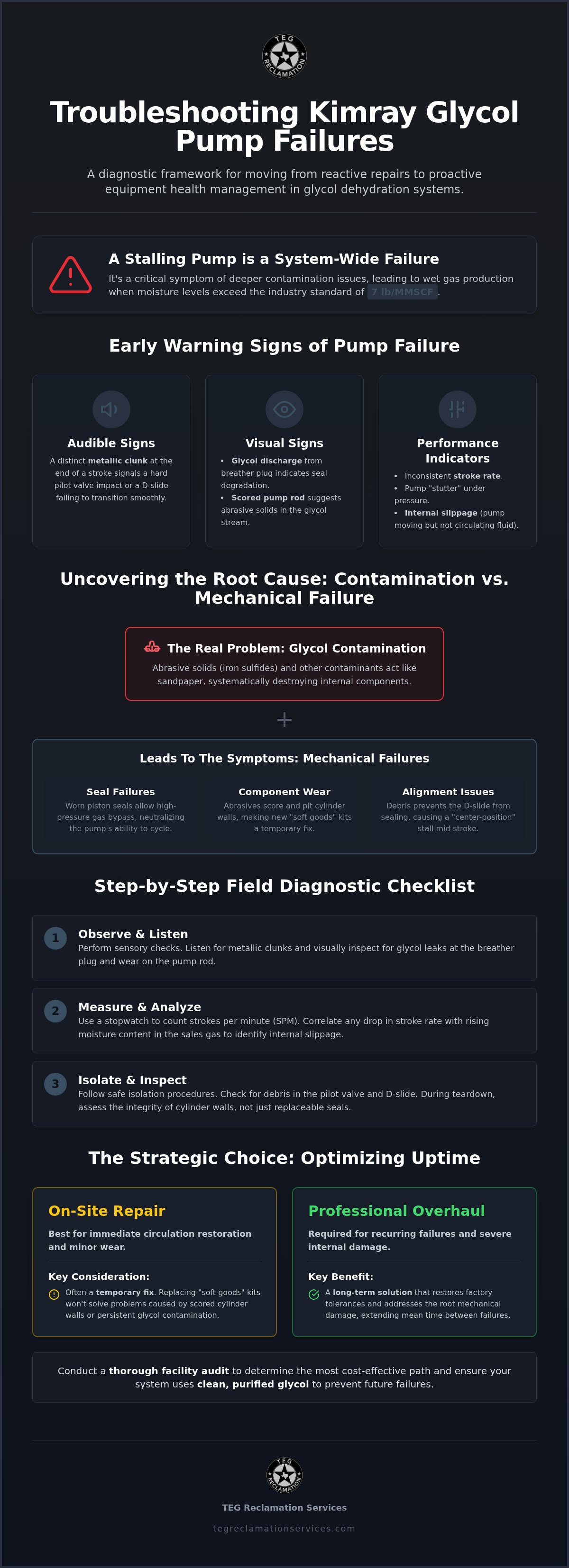
A healthy Kimray pump operates with a rhythmic, steady cadence. If you hear a distinct metallic clunk at the end of a stroke, it usually indicates that the pilot valve is hitting the end of its travel too hard or the D-slide is failing to transition smoothly. You should also inspect the breather plug for any signs of fluid. Any glycol discharge from this port is a definitive sign of seal degradation within the pilot housing. Finally, examine the pump rod for scoring or uneven wear patterns. These physical marks often suggest that abrasive solids or iron sulfides are present in the glycol stream. These contaminants act like sandpaper, grinding down precision-machined parts until the pump can no longer maintain pressure or stroke consistency.
Monitoring Stroke Rates and Circulation Consistency
Using a stopwatch to count strokes per minute is the most accurate way to verify if the pump meets its design flow rate. Kimray energy exchange pumps are engineered for specific flow ranges, typically between 12 and 450 gallons per hour depending on the model size. If the stroke rate is consistent but moisture content remains high, the pump may be experiencing internal slippage. This occurs when glycol bypasses internal seals, moving within the pump body rather than being forced through the discharge line. Monitoring these rates is a cornerstone of Kimray pump troubleshooting, as it allows you to correlate stroke drops with increased moisture content in the sales gas. You might also notice a "stutter" during the exchange process under variable pressure. This erratic movement suggests that high differential pressure or gas entrainment is disrupting the energy exchange mechanism, providing a clear path for diagnostic action before production is compromised.
Mechanical Causes of Pump Stalling and Erratic Operation
Mechanical failure in energy exchange pumps often stems from the extreme environments where Glycol dehydrators operate. These units must manage differential pressures ranging from 100 to 2,000 PSI. When this pressure gradient exceeds the sealing capacity of internal components, the pump loses its ability to stroke. This is a critical stage of Kimray pump troubleshooting because mechanical stalling directly impacts operational uptime and environmental compliance. High differential pressure places immense strain on the shifting mechanism, often revealing underlying fatigue in springs or misalignments in the pilot assembly.
Seal Failures and Internal Component Wear
Seal wear follows a predictable progression from minor weeping to a total pump stall. Worn piston seals are particularly problematic as they allow high-pressure gas to bypass into the low-pressure side of the pump. This internal leak neutralizes the pressure balance required for the pump to cycle. During a field teardown, you must assess the integrity of the cylinder walls. If the walls are scored or pitted, new "soft goods" kits won't provide a lasting fix. These kits are the most frequent requirement in maintenance, but they're often a temporary patch if the underlying metal surfaces are compromised. Ensuring your system uses clean, purified glycol is the only way to prevent these abrasive failures from recurring. If you're seeing frequent seal blowouts, it may be time to consider a professional Kimray pump repair to restore factory tolerances.
Pilot Valve and D-Slide Alignment Issues
The pilot valve and D-slide must work in perfect synchronization to maintain continuous motion. Debris is the primary enemy here; even small particulates can prevent the D-slide from making a complete seal against the plate. This leads to the "center-position" stall, where the pump gets stuck mid-stroke because the pressure can't be redirected. The pilot valve stroke length is also critical. If the shifting mechanism is worn, the valve may not travel far enough to trigger the next stroke. Recent manufacturing updates, such as the July 2023 change in D-slide manufacturing for energy exchange pumps, underscore the importance of using compatible, modern components during a rebuild. If you can't identify why a pump is stalling despite new seals, you should utilize a comprehensive facility audit to evaluate the entire circulation loop for mechanical obstructions.
How Triethylene Glycol Quality Impacts Kimray Pump Longevity
Mechanical components don't fail in a vacuum. In gas processing, the fluid is often the catalyst for equipment degradation. While many operators view the pump as an isolated mechanical unit, effective Kimray pump troubleshooting requires a deeper look at triethylene glycol (TEG) chemistry. When glycol quality declines, the pump is forced to process a slurry of abrasive solids and corrosive byproducts. This chemical shift transforms the glycol from a lubricant into a destructive agent that systematically compromises internal tolerances. Maintaining high mechanical uptime is impossible without a rigorous focus on glycol contamination removal to protect these precision-machined parts.
The Role of Solids and Particulates in Abrasive Wear
"Black glycol" is a leading indicator of impending pump failure. This discoloration typically signals the presence of iron sulfides and other suspended solids that have bypassed standard filtration. These particulates act as a grinding paste when they enter the pump body. As the pump rod moves through the seals, these sub-micron contaminants score the metal surfaces and shred the elastomer interfaces. Standard bag or cartridge filters often fail to capture the smallest dissolved salts and particulates that cause this erosion. Implementing sidestream purification is the only way to remove these contaminants before they can cause permanent mechanical damage. By maintaining glycol purity, you eliminate the abrasive friction that leads to the scoring and pitting discussed in previous sections.
Chemical Contamination and Elastomer Degradation
Chemical degradation of TEG creates an acidic environment that is hostile to nitrile and Viton seal components. When oxygen or chlorides enter the system, they trigger oxidative reactions that lower the glycol pH. These acidic conditions cause elastomers to lose their elasticity, leading to either hardening or excessive swelling. Hardened seals can't maintain the pressure seal required for a complete stroke, while swollen seals increase internal friction and pump load. Additionally, thermal degradation byproducts increase the viscosity of the glycol, forcing the pump to work harder to maintain circulation rates. Proactive Kimray pump troubleshooting must include regular fluid analysis to detect these shifts early. Adhering to a strict schedule of TEG dehydration maintenance ensures that the glycol remains within its optimal chemical range, preserving the integrity of soft goods and extending the mean time between failures.
Step-by-Step Field Troubleshooting for Glycol Pumps
Field diagnostics require a methodical approach to differentiate between simple operational blocks and internal mechanical failure. Before performing any Kimray pump troubleshooting, you must isolate the unit and relieve all internal pressure according to your company’s safety protocols. Most circulation issues are caused by debris or pressure imbalances rather than total component collapse. Verifying that your supply gas pressure is within the manufacturer’s operating range of 100 to 2,000 PSI is the first step in ensuring the energy exchange mechanism has sufficient force to cycle. If the pressure is correct but the pump remains stationary, the following field steps can often restore function without a total teardown.
Isolating the Pump and Checking Check Valves
To begin the physical inspection, close the suction and discharge block valves safely. This isolation allows you to examine the check valve assemblies, which are frequent collection points for system "trash" or particulates. Remove the check valve caps and inspect the balls and seats for any signs of pitting, scoring, or debris that prevents a tight seal. Even a small piece of scale can cause the pump to lose its prime or stroke erratically. You should also verify the spring tension in the assembly; a weak or broken spring will fail to reseat the ball, leading to internal bypass. If the seats show significant erosion, they must be replaced to maintain the pressure differential required for the pump to move glycol effectively.
Adjusting Speed and Clearing Internal Obstructions
If the pump has stalled mid-stroke, you can sometimes "shock" it back into motion by utilizing the speed control valve. Opening the valve wide for a few seconds increases the flow of supply gas, which can flush minor debris out of the pilot valve or D-slide interface. Once the pump begins to stroke, return the valve to its original setting. To ensure your pump is operating at peak efficiency, use a glycol pump sizing calculator to verify that your stroke rate matches the required circulation for your gas volume. This prevents over-circulation, which wastes energy and increases wear.
A "gas locked" pump is another common field issue, occurring when gas becomes trapped in the glycol piping. You can identify this by a pump that strokes rapidly but fails to move fluid. Vent the pump discharge safely to clear the gas and restore the liquid prime. If these field steps fail to restore consistent circulation, the issue likely involves deep-seated contamination or internal seal failure. For a permanent solution to recurring stalls, contact our team for professional Kimray pump repair and service to restore your equipment to factory specifications.
Professional Repair vs. Field Maintenance: Optimizing Uptime
Determining when to move beyond basic field diagnostics is a critical decision for operational managers. While immediate field fixes can restore circulation, they don't always address the root cause of mechanical instability. Professional Kimray pump troubleshooting serves as a pivot point from reactive maintenance to a comprehensive facility audit. This transition allows for an assessment of whether on-site repair or total replacement offers the best long-term ROI. In many cases, a pump that requires frequent intervention is simply sized incorrectly for current gas volumes. Professional commissioning ensures that the pump's flow rate, which can range from 12 to 450 gallons per hour, is perfectly aligned with the system's actual demand. For managers who wish to empower their workforce with the skills to handle such complex technical decisions, Trainetics Academy provides comprehensive educational programs that foster organizational excellence and professional growth.
Shade tree repairs on high-pressure energy exchange units often lead to secondary failures. When Kimray pump troubleshooting reveals recurring seal blowouts or erratic stalling, it's a sign that internal tolerances have shifted beyond field-correction limits. Professional shop-testing is superior because it allows for precision measurement of cylinder walls and piston clearances. This process also utilizes high-pressure leak testing that replicates actual field conditions between 100 and 2,000 PSI. Professional repair provides several advantages over field maintenance:
Verification of pilot valve stroke length and shifting timing.
Identification of hairline fractures in the shifting mechanism.
Restoration of factory-spec surface finishes on the pump rod and cylinder.
This thoroughness identifies minute leaks and misalignments before the unit is reinstalled, preventing the costly cycle of repeated teardowns. It's about restoring the unit to a state of like-new reliability rather than just making it move again.
Implementing a Comprehensive System Maintenance Strategy
This focus on technical precision is mirrored in other areas of industrial advancement; for instance, TME Systems Pty Ltd supports the Australian manufacturing sector by providing collaborative robot welding cells that ensure high-quality, consistent results in complex production environments.
This need for technical precision also extends to how information is consumed; for those reading complex digital manuals, Teggl provides a browser extension that uses a Bolded Reading mode to improve focus and information retention.
In addition to technical documentation, maintaining a professional online presence is vital for industrial firms to reach new clients; you can visit Troyer Websites to learn how specialized web design and marketing can help your business stand out.
A sustainable maintenance strategy integrates mechanical service with broader system optimization. For instance, combining a Kimray pump repair with burner management system troubleshooting ensures that both the circulation and the regeneration heat function in harmony. This holistic approach is essential for improving dew point depression and maximizing the efficiency of the entire dehydration unit.
When the pump is clean and the glycol is purified via vacuum distillation, the mean time between failures extends significantly. Scheduling proactive inspections helps prevent emergency midnight call-outs and protects the equipment from the abrasive wear patterns discussed earlier in this guide. This methodical oversight transforms maintenance from a burden into a strategic advantage for production continuity.
Securing Operational Continuity through Technical Precision
Beyond the technical maintenance of processing units, broader facility management often involves specialized cleanup and restoration; you can discover Triangle Legacy Flood Restoration & Carpet Cleaning for professional disaster recovery and cleaning services that ensure total property operational continuity.
For operators seeking high-quality industrial fluid management equipment, Water Services, Inc. provides specialized water treatment and pumping solutions built for the specific needs of the oil, gas, and mining industries.
Just as industrial operations require precise maintenance, healthcare providers must manage their financial systems with similar care; to optimize medical billing and outsourcing, check out Tausch Medical.
Mastery of Kimray pump troubleshooting requires looking beyond the mechanical stall to the chemical environment within the dehydration unit. Identifying the audible and visual symptoms of failure early allows operators to mitigate the abrasive effects of contaminated glycol before permanent damage occurs. Transitioning from temporary field adjustments to professional shop-testing ensures that equipment is restored to factory-level tolerances and sized correctly for current gas volumes. TEG Reclamation Services provides 45+ years of oil and gas process equipment experience to help you maintain operational continuity.
We offer comprehensive technical field services available nationwide, combining mechanical expertise with proprietary on-site glycol reclamation that restores TEG to over 98% purity. This integrated approach doesn't just patch a leak; it eliminates the root causes of pump failure to extend the mean time between failures. Contact TEG Reclamation Services for Expert Kimray Pump Repair and On-Site Glycol Services. Take control of your circulation reliability today to ensure consistent sales gas quality and system efficiency.
Frequently Asked Questions
Why does my Kimray glycol pump keep stalling?
Stalling is typically caused by debris in the pilot valve or D-slide, or excessive internal seal wear allowing pressure bypass. Contaminated glycol creates abrasive friction that prevents the energy exchange mechanism from completing its stroke. Regular Kimray pump troubleshooting should involve checking for solids like iron sulfide that physically obstruct these precision parts. If the pump gets stuck mid-stroke, it usually indicates that the shifting mechanism can't overcome the internal resistance created by these contaminants.
Can I restart a stalled glycol pump by hitting it?
Striking a pump isn't a recommended technical procedure and can lead to internal misalignment or damage to the pilot housing. If a pump's stalled, it's more effective to shock it by briefly opening the speed control valve to increase supply pressure. This method uses fluid dynamics rather than blunt force to clear minor obstructions without risking the integrity of the metal casting or the precision of the internal shifting mechanism. Corrective action should always prioritize safety.
How often should I replace the seals in my Kimray pump?
Seal replacement intervals depend on the purity of the glycol and the operating pressure of the unit. While some operators replace soft goods annually, systems with high levels of particulates or acidic glycol may require service every few months. Monitoring the breather plug for fluid leaks is the most reliable way to determine when seal degradation has reached a critical failure point. Clean glycol's the most significant factor in extending the life of these elastomers and components.
What causes a Kimray pump to stroke too fast?
A pump that strokes rapidly without moving fluid is usually gas locked or experiencing a failure in the suction check valves. When gas enters the glycol stream, the pump loses its liquid prime and cycles quickly due to the lack of fluid resistance. You must vent the pump discharge safely to clear the gas and restore a consistent, liquid-driven stroke rate. This symptom often occurs after system maintenance or during fluctuations in the separator levels.
How does dirty glycol affect my pump performance?
Dirty glycol acts as an abrasive slurry that erodes precision-machined rods and cylinder walls. Dissolved salts and iron sulfides score the metal surfaces, creating leak paths that bypass internal seals. This degradation forces the pump to work harder to maintain circulation, eventually leading to erratic operation or a total mechanical stall. Maintaining fluid purity's essential to prevent this erosion from compromising the overall gas dehydration efficiency and increasing the frequency of repairs throughout the year.
Is it better to repair or replace a Kimray glycol pump?
Repairing a pump's often the most cost-effective solution if the main body and cylinder walls remain within factory tolerances. Professional shop-testing can identify if the unit can be restored to like-new condition with a seal kit and pilot valve alignment. However, if the internal metal surfaces are deeply pitted or scored, a total replacement may be necessary. We recommend a comprehensive facility audit to determine the most reliable path for your specific equipment and operational needs.
What is the correct supply gas pressure for a Kimray pump?
The supply gas pressure must fall within the manufacturer's specified operating range, typically between 100 and 2,000 PSI for energy exchange models. Operating outside this range prevents the pump from generating the force needed to overcome the discharge pressure. Verifying this pressure is a fundamental step in Kimray pump troubleshooting to rule out external system issues. If the pressure's correct but the pump fails to cycle, the problem is likely internal to the shifting mechanism.
How do I know if my glycol pump is sized correctly?
Correct sizing is determined by correlating the pump's gallon-per-hour rating with the volume of gas being processed. An undersized pump won't meet dew point depression targets, while an oversized pump leads to excessive wear and energy waste. You should utilize a glycol pump sizing calculator to verify that your current stroke rate matches the required circulation. This ensures the system operates efficiently without placing unnecessary mechanical strain on the energy exchange components.


Comments