
Removing Solids from TEG: A Technical Reference for Dehydration Operators
- 5 days ago
- 11 min read
Standard mechanical filtration is often insufficient for maintaining the long-term integrity of triethylene glycol in high-demand dehydration units. You likely recognize the frustration of frequent glycol pump repairs and the persistent threat of foaming in the contactor tower. These operational hurdles are rarely isolated incidents; they are the direct result of particulate contamination that traditional methods fail to capture. When your system's efficiency drops, the necessity of removing solids from TEG becomes a priority to avoid high replacement costs and unplanned production shutdowns.
This technical reference explains how to restore your glycol to over 98% purity using methods that don't require interrupting gas production. You'll learn the most effective techniques for purifying your system and extending the life of your critical equipment. We will examine the mechanics of particulate compromise and the specialized purification workflows that maintain dew point depression while significantly reducing your annual chemical costs. By focusing on advanced reclamation strategies, you can transition from reactive repairs to a state of steady, optimized performance.
Table of Contents
Understanding Solids Contamination in Triethylene Glycol (TEG)
Solids in triethylene glycol are more than just aesthetic contaminants; they are active agents of mechanical and chemical destruction. In the context of Glycol dehydration, solids are defined as any non-liquid matter that enters or forms within the glycol loop. These particulates are categorized as either inorganic or organic. Inorganic matter typically includes mineral fines and metal oxides, while organic solids often consist of heavy hydrocarbons or polymerized glycol byproducts. Removing solids from TEG is critical because these particles increase the fluid's density and heat capacity, which directly accelerates thermal degradation. When solids accumulate, they create a slurry that coats reboiler tubes, leading to hot spots and the eventual breakdown of the TEG molecule.
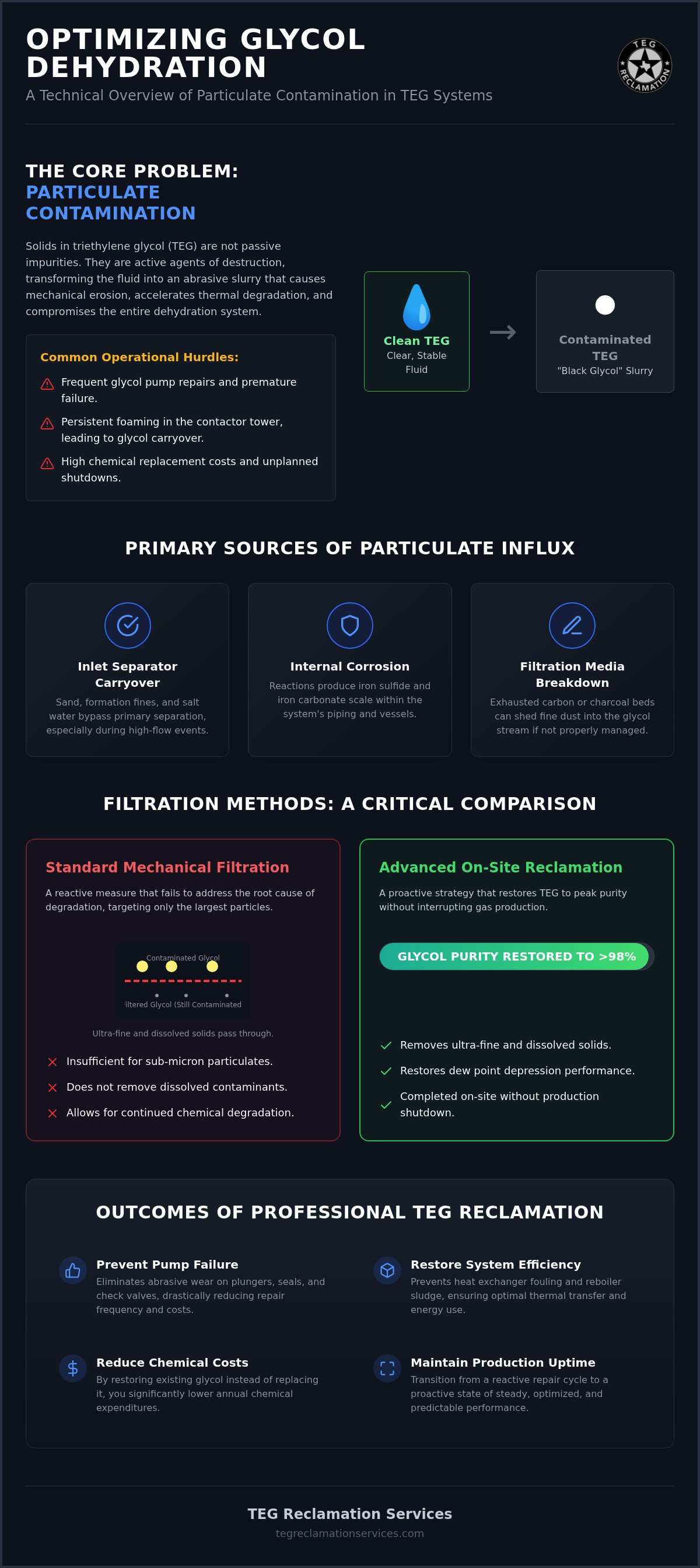
Standard mechanical filtration often fails to maintain system health because it typically targets larger particles. While a 5-micron cartridge filter captures visible debris, it doesn't touch sub-micron particulates or dissolved salts. These microscopic contaminants remain in the stream, acting as catalysts for chemical reactions that wouldn't occur in a pure fluid. Over time, the buildup of these fine particles creates a compounding effect where the glycol degrades faster than the filters can keep up. This results in a cycle of declining fluid quality that mechanical means alone cannot break.
Common Sources of Particulate Influx
Particulates enter the system through several primary pathways. Identifying these sources is the first step in effective troubleshooting:
Inlet Separator Carryover: Sand, formation fines, and salt water often bypass primary separation and enter the contactor tower, especially during high-flow events.
Internal Corrosion: Chemical reactions between hydrogen sulfide, carbon dioxide, and the steel piping produce iron sulfide and iron carbonate scale.
Filtration Media: Exhausted carbon or charcoal beds can shed fine dust into the glycol stream if the downstream polishing filters are bypassed or compromised.
The Impact of Solids on TEG Color and Clarity
The visual state of the glycol is a reliable indicator of its contamination level. The "black glycol" phenomenon occurs when fine iron sulfide particles become suspended in the fluid, turning it from a clear or straw-colored liquid into an opaque, dark slurry. This isn't just a color change; it represents a high concentration of suspended solids that promote chemical foaming. Foaming reduces the contact surface area in the tower, leading to glycol carryover and lost production. Consistently removing solids from TEG ensures the fluid remains clear and stable, which is essential for maintaining the required dew point depression and protecting downstream equipment.
Mechanical Consequences of High Solids Loading in Dehydration Units
High solids loading transforms triethylene glycol from a lubricant into an abrasive slurry. These particulates, often composed of iron sulfide or formation fines, act as a grinding paste within high-pressure systems. This mechanical erosion isn't just a maintenance nuisance; it's a primary driver of operational costs. Just as Tortuga Pools prevents equipment damage through professional pool maintenance and chemical balancing, industrial operators must prioritize removing solids from TEG to avoid the abrasive wear that compromises tight tolerances. Beyond simple wear, these solids accelerate chemical degradation, creating a feedback loop that leads to catastrophic failure in downstream processing equipment and sensitive instrumentation.
Circulation pumps are the heart of the dehydration system and the first to suffer from particulate influx. Abrasive solids scour pump plungers and ceramic seals, creating leak paths that reduce volumetric efficiency and cause pressure drops. This constant friction necessitates more frequent Kimray pump repair and significantly increases the annual budget for replacement parts. Internal check valves and O-rings are particularly vulnerable. Even small amounts of iron carbonate can pit metal surfaces and shred elastomeric components, leading to internal bypass and total pump failure during peak production.
Heat Exchanger Fouling and Reboiler Efficiency Loss
Solids that bypass the pumps eventually settle in low-velocity areas like the shell-and-tube heat exchangers or the reboiler. This accumulation forms a dense, carbonaceous sludge that effectively insulates heat-transfer surfaces. As thermal conductivity drops, the system requires higher fuel gas consumption to maintain the necessary reboiler temperature, which is typically between 350°F and 400°F. This inefficiency is expensive. If the sludge layer causes firetube temperatures to exceed 404°F, the triethylene glycol begins to thermally degrade, creating even more carbon solids in a destructive cycle.
The most severe risk is the "hot spot" phenomenon. When sludge coats the firetube, it prevents the glycol from cooling the metal. This leads to localized overheating and eventual firetube burnout. Replacing a burnt firetube requires a total system shutdown and expensive mechanical labor that could have been avoided. Operators can mitigate these high-stakes repairs by prioritizing a proactive strategy for removing solids from TEG. If your system is already showing signs of wear or increased pump cycles, professional Kimray Pump Repair and Service can restore your mechanical integrity before a catastrophic failure occurs.
Traditional Filtration vs. Advanced Solids Removal Techniques
Standard mechanical filtration relies on barrier technology, typically using bag or cartridge filters rated at 5 microns. While effective for capturing larger scale and formation fines, these systems are fundamentally incapable of addressing dissolved solids, salts, or ultra-fine particulates. Removing solids from TEG requires a methodology that moves beyond simple mechanical separation. Activated carbon, while useful for adsorbing liquid hydrocarbons, does little to mitigate the inorganic solids that contribute to "black glycol." Relying solely on these traditional methods often leads to a cycle of "dump and fill," where operators replace entire glycol volumes once the contamination levels exceed the filters' capacity.
Limitations of Standard Cartridge and Charcoal Filters
Mechanical filters face several operational failures that compromise system integrity. Differential pressure buildup can cause filter bypassing or channel formation, where the glycol stream forces a path through the media without being cleaned. This allows abrasive particulates to circulate freely. Additionally, disposing of contaminated filters is a logistical and environmental burden. Most importantly, these filters cannot restore glycol to virgin-quality specifications. They merely slow the rate of degradation rather than reversing it, leaving the system vulnerable to the mechanical wear discussed in previous sections.
The Role of Sidestream Purification in Total Solids Control
For other industrial applications requiring heavy-duty solids management, centrifugal separators from Sacor Engineering provide a highly efficient mechanical solution for maintaining fluid purity.
Advanced sidestream purification offers a holistic alternative by processing a portion of the glycol stream continuously. This approach prevents the "slugging" of particulates that occurs when filters are changed or bypassed. Unlike mechanical methods, this process removes chlorides and dissolved salts that contribute to corrosion and foaming. By integrating this into your maintenance strategy, you can achieve glycol contamination removal that restores the fluid to over 98% purity.
This continuous management ensures that the system stays within optimal operating parameters without requiring production shutdowns. Removing solids from TEG through on-site reclamation addresses the root cause of fluid failure. It transforms maintenance from a reactive task into a controlled, technical process that preserves both the chemical integrity of the TEG and the mechanical life of the dehydration unit. This method provides a level of restoration that traditional mechanical filters simply can't match.
Best Practices for Monitoring and Managing TEG Particulates
Effective management of triethylene glycol requires a data-driven approach to contamination. You can't manage what you don't measure. Establishing a baseline through comprehensive glycol lab analysis is the first step in a successful maintenance strategy. While many operators focus primarily on pH or water content, the key metrics for removing solids from TEG are Total Suspended Solids (TSS) and iron content. High TSS levels indicate a failure in the filtration loop, while elevated iron content often signals active internal corrosion within the vessel or piping. Sampling should occur at the lean glycol discharge to ensure you're measuring the fluid's quality before it returns to the contactor tower.
Integrating these checks into your btex system maintenance schedule ensures that your emission control equipment isn't compromised by glycol carryover or fouling. A clean system is an efficient system. When solids are managed effectively, the entire dehydration loop operates with greater stability and fewer unplanned interruptions. This proactive stance prevents the accumulation of the abrasive sludge that leads to the mechanical failures discussed in previous sections.
Establishing a Routine Glycol Analysis Program
Frequency of testing depends on the volume and criticality of the unit. High-volume midstream plants should conduct monthly analysis, while smaller upstream units might only require quarterly checks. Interpreting lab results requires looking beyond single data points; you must track the trend of particulate accumulation over time. If TSS levels show a steady climb despite regular filter changes, it's a clear indicator that your mechanical filtration is being overwhelmed. Solids become critical when they exceed 0.01% by weight, at which point mechanical wear on pump seals and heat exchanger fouling becomes inevitable.
Recognizing Early Warning Signs of Solids Accumulation
Field-level monitoring provides the earliest cues that the system is reaching a tipping point. Unexplained pressure drops across the filter housing often indicate that the media is blinded by fine particulates or "black glycol" sludge. If you notice an increased frequency of glycol foaming incidents, it's likely that suspended solids are stabilizing the foam bubbles in the contactor. Finally, listen to your equipment. Audible cues from circulation pumps, such as a grinding or knocking sound, often indicate that abrasive wear is occurring on the internal check valves. Proactive monitoring saves thousands in replacement costs. If your analysis shows rising TSS levels, consider Vacuum Distillation Glycol Reclamation to restore your fluid purity without a shutdown.
Optimizing System Health with Professional TEG Reclamation
Professional reclamation shifts the operational paradigm from viewing contaminated glycol as a waste product to treating it as a renewable asset. While standard mechanical filtration has inherent limits, vacuum distillation restores TEG to over 98% purity by removing the contaminants that filters leave behind. This on-site approach is far superior to hauling spent glycol to off-site disposal facilities, which incurs high transportation fees and necessitates the purchase of expensive virgin chemical replacements. Removing solids from TEG on-site ensures your inventory remains in peak condition, directly impacting the bottom line by reducing glycol replacement costs and eliminating long-term disposal liabilities.
Sidestream processing stands as the gold standard for operational continuity. Instead of a "dump and fill" strategy that requires system downtime, professional reclamation works alongside your active production. This method maintains the chemical integrity of the fluid without the risks associated with high-temperature degradation or the accumulation of dissolved salts. It's a proactive technical solution that addresses the root cause of system inefficiency rather than just managing the symptoms of contamination.
Restoring Purity Without Production Interruptions
The primary advantage of sidestream integration is its ability to connect directly to live dehydration units. There's no requirement for unit blowdowns or the labor-intensive chemical flushing that typically halts gas production. The reclamation equipment operates in a continuous loop with your system, pulling a small percentage of the fluid for purification and returning it at virgin-quality specifications. This steady restoration ensures that the system maintains the required dew point depression throughout the entire process. It's the most reliable method for removing solids from TEG while keeping your facility online and meeting pipeline specifications without interruption.
Long-term Benefits of Professional Glycol Maintenance
Just as technical fluids require purification, physical facility surfaces also need specialized care; for expert maintenance of high-traffic areas, learn more about Sani-Tech Victoria.
Consistent fluid maintenance extends the mechanical life of every component in the dehydration loop, from high-pressure pumps to reboiler firetubes. By keeping the glycol clear and free of abrasive particulates, you prevent the erosion and thermal fouling that lead to catastrophic equipment failure. Effective black glycol restoration results in a stable, non-foaming fluid that protects your capital investment. Beyond the mechanical benefits, on-site reclamation supports environmental compliance by minimizing waste generation and reducing the total carbon footprint of your operations. It represents a disciplined, technical approach to asset management that prioritizes uptime and equipment longevity.
Securing Long-Term Operational Integrity through Advanced Purification
Maintaining a clean triethylene glycol stream is essential for preventing the mechanical erosion and thermal degradation that plague high-pressure dehydration units. Traditional mechanical filtration often falls short of capturing the sub-micron particulates and dissolved salts that compromise fluid chemistry. A disciplined approach to removing solids from TEG transforms your maintenance from a series of reactive repairs into a controlled, technical strategy. By prioritizing fluid purity, you extend the service life of your circulation pumps and reboilers while ensuring consistent dew point depression.
Operational continuity doesn't have to be sacrificed for system health. Our proprietary sidestream vacuum distillation requires zero downtime, allowing you to maintain full production while we work. With over 45 years of specialized oil and gas process equipment experience, we provide a reliable solution that restores contaminated glycol to over 98% purity on-site. Restore your TEG to 98% purity with our on-site reclamation services. Taking this proactive step today ensures your facility remains efficient and compliant for years to come.
Frequently Asked Questions
How do solids get into a closed-loop TEG system?
Solids enter the glycol loop through two primary pathways: external influx and internal formation. External sources include sand, scale, and formation fines that bypass the inlet separator. Internal sources are typically corrosion products, such as iron sulfide and iron carbonate, or charcoal dust from exhausted filtration beds. Identifying these sources early is vital for maintaining system health and preventing the abrasive wear that compromises pump seals and reboiler tubes.
Can I remove solids from TEG using only mechanical filters?
Mechanical filters are insufficient for total purification because they only target larger particulates. While a 5-micron filter captures visible debris, it cannot address sub-micron particles or dissolved salts. Additionally, filters often suffer from bypassing or channel formation, allowing contaminants to circulate freely. Removing solids from TEG effectively requires a more advanced reclamation process that restores the fluid to virgin-quality specifications beyond the capabilities of standard bag or cartridge units.
What is the maximum allowable solids content in triethylene glycol?
Industry benchmarks indicate that Total Suspended Solids (TSS) should remain below 0.01% by weight. Once contamination exceeds this threshold, the glycol becomes abrasive, leading to the rapid erosion of pump plungers and check valves. High solids loading also insulates heat-transfer surfaces in the reboiler, which increases fuel consumption and risks firetube burnout. Maintaining levels below this limit is essential for preserving the mechanical integrity of your dehydration equipment.
How does particulate contamination cause glycol foaming?
Particulate contamination promotes foaming by increasing the surface tension of the glycol and stabilizing bubble structures. Fine solids, particularly iron sulfide, act as a physical framework that prevents bubbles from breaking in the contactor tower. This leads to massive glycol carryover into the gas stream. Removing solids from TEG eliminates these stabilizing agents, allowing for a cleaner separation and preventing the production losses associated with persistent chemical foaming incidents.
What is the difference between suspended solids and dissolved solids in TEG?
Suspended solids are insoluble physical particles, such as sand or metal scale, that remain floating in the fluid. Dissolved solids, including salts and chlorides, are chemically integrated into the glycol and cannot be seen or filtered mechanically. While suspended matter causes abrasive wear, dissolved solids contribute to corrosion and lower the fluid's boiling point. Both types of contamination require specialized reclamation to ensure the TEG returns to over 98% purity.
Will removing solids help improve my dew point depression?
Removing solids directly improves dew point depression by restoring the chemical efficiency of the triethylene glycol. When particulates are present, they promote foaming and thermal degradation, which reduces the glycol’s ability to absorb water vapor. By purifying the stream, you ensure maximum contact surface area in the tower and maintain the high lean-glycol concentration required to meet pipeline specifications. Clean glycol is fundamentally more effective at achieving deep moisture removal.
How often should I test my glycol for solids and particulates?
Testing frequency should be based on the unit's throughput and criticality. High-volume midstream facilities should perform a comprehensive glycol analysis monthly to track trends in TSS and iron content. Smaller upstream units typically require quarterly testing. Regular monitoring allows operators to intervene before solids reach critical levels, preventing the "black glycol" phenomenon and avoiding the high costs associated with unplanned mechanical repairs or total glycol replacement.
Is it possible to remove solids while the dehydration unit is running?
Yes, it is possible to purify your system without interrupting gas production. Advanced sidestream vacuum distillation integrates directly into the live loop, pulling a portion of the fluid for processing while the unit remains operational. This method provides a continuous solution for removing solids from TEG, restoring the fluid to over 98% purity without the need for unit blowdowns, chemical flushing, or expensive production shutdowns.


Comments