
Glycol Hydrocarbon Removal: Optimizing Dehydration Unit Performance
Frequent glycol foaming isn't just a maintenance nuisance; it's a clear signal that your dehydration unit is operating at a fraction of its design capacity. When heavy hydrocarbons infiltrate your system, the resulting equipment fouling and reduced system longevity can quickly spiral into significant operational overhead. You're likely familiar with the frustration of escalating chemical replacement costs and the environmental burden of managing waste glycol. Many operators accept these issues as the cost of doing business, yet continuing to operate with contaminated triethylene glycol only invites further mechanical degradation.
We understand that maintaining operational uptime is your primary objective. This article provides a technical roadmap for effective glycol hydrocarbon removal to restore your chemistry to over 98% purity without requiring a production shutdown. You'll learn how managing contamination directly improves dehydration efficiency and protects critical components like pumps and reboilers. We'll examine the transition from reactive chemical dosing to a proactive reclamation strategy that maximizes equipment life and ensures your system meets high-pressure purity standards through specialized on-site restoration.
Table of Contents
The Critical Role of Glycol Hydrocarbon Removal in Gas Processing
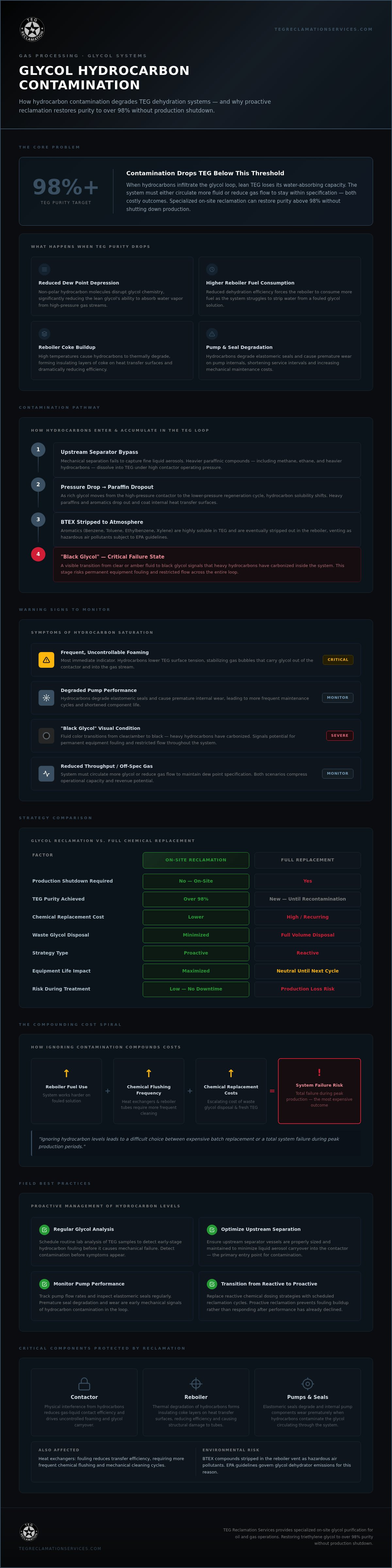
Hydrocarbon contamination in triethylene glycol (TEG) systems occurs when liquid or gaseous hydrocarbons bypass upstream separation and enter the glycol loop. This presence of non-polar molecules disrupts the chemical balance of the glycol dehydration process, significantly reducing the lean glycol's ability to absorb water vapor. Effective glycol hydrocarbon removal is therefore not an optional maintenance task; it's a fundamental requirement for achieving the necessary dew point depression in high-pressure gas streams.
When TEG purity drops, the entire facility's throughput is compromised. Contaminated glycol has a lower water-carrying capacity, which means the system must circulate more fluid to achieve the same results, or the operator must reduce gas flow to remain within specification. These contaminants tend to accumulate in two critical areas: the contactor, where they cause physical interference, and the reboiler, where high temperatures can cause hydrocarbons to thermally degrade and form insulating layers of coke on heat transfer surfaces. Implementing a consistent strategy for glycol hydrocarbon removal ensures that these operational bottlenecks are neutralized before they impact the bottom line.
Identifying Symptoms of Hydrocarbon Saturation
The most immediate indicator of hydrocarbon saturation is frequent, uncontrollable foaming. Hydrocarbons lower the surface tension of the TEG, allowing gas bubbles to stabilize and create foam that carries glycol out of the contactor and into the gas stream. Beyond foaming, operators should monitor pump performance closely. Hydrocarbons can degrade elastomeric seals and cause premature wear on internal components, leading to frequent maintenance cycles. A visual inspection often reveals the transition from a clear or amber fluid to "black glycol," a condition signaling that heavy hydrocarbons have carbonized within the system, potentially causing permanent equipment fouling and restricted flow.
The Economic Impact of Contaminated Glycol
Operating a dehydration unit with contaminated chemistry leads to a compounding set of expenses. Reduced dehydration efficiency translates directly into higher fuel consumption at the reboiler as the system struggles to strip water from a fouled solution. There are also hidden costs associated with equipment longevity; fouling in the heat exchangers and reboiler tubes necessitates more frequent chemical flushing and mechanical cleaning. For a detailed breakdown of how to identify these issues early, refer to our glycol contamination removal guide. Ultimately, ignoring hydrocarbon levels leads to a difficult choice between expensive batch replacement or a total system failure during peak production periods.
Mechanisms of Contamination: How Hydrocarbons Foul DEHY Units
While mechanical separation in upstream vessels is the first line of defense, it often fails to capture fine aerosols or address the chemical solubility of heavier hydrocarbons in triethylene glycol. High operating pressures in the contactor increase the solubility of methane, ethane, and heavier paraffinic compounds. When these hydrocarbons dissolve into the TEG, they travel through the system, eventually reaching the flash tank and reboiler. Effective glycol hydrocarbon removal becomes necessary because these substances don't simply wash out; they accumulate and chemically alter the desiccant's properties over time.
Temperature changes further complicate the issue. As the rich glycol moves from the high-pressure contactor to the lower-pressure, higher-temperature regeneration cycle, the solubility of these hydrocarbons shifts. This shift leads to the dropout of heavy paraffins and aromatics, which then coat internal surfaces. This fouling reduces heat transfer efficiency and creates a cycle of degradation that mechanical filters alone cannot resolve. Without intervention, these contaminants remain trapped in the loop, circulating repeatedly through the system.
Aromatics and the BTEX Connection
Aromatic hydrocarbons, specifically Benzene, Toluene, Ethylbenzene, and Xylene (BTEX), present a unique challenge. These compounds are highly soluble in TEG and are eventually stripped out in the reboiler, where they are vented as hazardous air pollutants. Following EPA guidelines for glycol dehydrator operations is essential for environmental compliance. Excessive hydrocarbon loading directly increases the volume of these emissions. Maintaining low hydrocarbon levels is a prerequisite for effective BTEX system maintenance, ensuring that flare stacks or vapor recovery units aren't overwhelmed by unexpected slugs of volatile organic compounds.
Thermal Degradation and Sludge Formation
The presence of hydrocarbons accelerates the thermal degradation of glycol. At the high temperatures found in the reboiler, hydrocarbons can undergo cracking, leading to the formation of organic acids and solid carbonaceous deposits known as "coke." This coke acts as an insulator on fire tubes, causing hot spots and potential metal fatigue. Additionally, the resulting sludge and particulates are abrasive to moving parts. If you're experiencing circulation failures, integrating these findings into your Kimray pump troubleshooting routine is vital, as grit and sludge often destroy pump seals and internal D-slides.
Proactive glycol hydrocarbon removal is the only way to break the cycle of thermal degradation and sludge buildup. If your unit is struggling with persistent fouling, exploring on-site reclamation services can restore your chemistry and protect your capital equipment from long-term damage.
Comparing Glycol Reclamation vs. Full Chemical Replacement
When triethylene glycol becomes saturated with hydrocarbons, operators often face a choice between a total batch replacement or professional reclamation. Purchasing new chemical inventory is a significant capital expenditure, but the true cost lies in the associated logistics. Draining a system requires handling thousands of gallons of potentially hazardous waste, which incurs high disposal fees and strict environmental oversight. In contrast, glycol hydrocarbon removal through on-site restoration allows for the recovery of the existing inventory, returning it to over 98% purity while eliminating the need for off-site waste transport.
This management of chemical health is a critical component of the broader natural gas processing and dehydration overview, where maintaining gas quality and supply chain integrity is paramount. Reclaiming glycol on-site ensures that the desiccant remains within specification without the volatility of chemical market pricing or the risk of supply chain delays. It's a pragmatic approach that treats glycol as a reusable asset rather than a consumable waste product.
The Limitations of Standard Filtration
Standard mechanical filters and carbon beds serve a purpose but have clear functional ceilings. While particulate filters remove solid debris, they can't address dissolved hydrocarbons that have chemically bonded with the TEG. Carbon beds can capture some dissolved organics, but they saturate quickly and become ineffective if the hydrocarbon load is high. When these systems are overwhelmed, glycol hydrocarbon removal through specialized distillation is the only way to strip out the dissolved fraction. In cases of severe system fouling, glycol chemical cleaning may be utilized alongside reclamation to ensure the internal vessel surfaces are also restored to baseline efficiency.
Operational Continuity: The Shutdown Factor
The most significant advantage of reclamation is the preservation of production uptime. A full chemical swap requires a complete system shutdown, drainage, and a potentially risky restart. For midstream operators, even a few hours of downtime can result in massive revenue losses. Proprietary sidestream processes allow for continuous operation; the unit remains online while the glycol is purified in a parallel loop. This eliminates the mechanical stress of system restarts and ensures that dew point depression is maintained throughout the maintenance cycle. By avoiding a full drainage, you also mitigate the risk of air pockets or seal failures that often occur during commissioning after a total system empty.
Best Practices for Managing Hydrocarbon Levels in the Field
Maintaining a clean system requires a shift from reactive fixes to disciplined field protocols. A rigorous glycol analysis schedule is the cornerstone of this approach. While visual indicators like color changes are useful, they don't quantify the dissolved hydrocarbon load. Operators should establish a quarterly sampling routine to monitor pH, water content, and hydrocarbon saturation levels. This data allows for the scheduling of glycol hydrocarbon removal before fouling reaches a critical threshold.
Upstream of the contactor, the performance of inlet separators and filter separators must be verified. Small adjustments to dump valve timing or filter element replacement can significantly reduce liquid carryover. Inside the dehydration unit, reboiler temperatures must be kept within the design range, typically between 350°F and 400°F. Operating above this range to compensate for poor dehydration often backfires by accelerating the thermal cracking of hydrocarbons into sludge.
Circulation integrity is equally vital. Hydrocarbons act as poor lubricants and can carry abrasive particulates that damage pump internals. Regular Kimray pump repair and maintenance ensure that the glycol continues to move at the correct rate, preventing stagnant pockets where contaminants can settle and bake onto fire tubes.
Field Troubleshooting and Inspections
Monitoring the glycol loss rate per million cubic feet of gas (MMcf) is a key metric for identifying contamination-induced foaming. If losses spike without an increase in gas velocity, hydrocarbon saturation is the likely culprit. A performance audit should also include checking the temperature differential across the lean/rich heat exchanger. A narrowing differential often indicates that internal fouling is insulating the tubes, a direct result of hydrocarbon dropout.
Chemical Flushing and System Neutralization
When a system has been neglected, glycol hydrocarbon removal through distillation should be preceded by a thorough system cleaning. Chemical Flushing is utilized to dissolve paraffinic deposits and neutralize organic acids that cause localized corrosion in the contactor trays. This step ensures that when high-purity glycol is reintroduced, it isn't immediately re-contaminated by residual sludge in the piping.
If your unit's performance metrics are sliding, request a professional on-site system audit to determine if reclamation or mechanical repair is the best path forward.
Advanced On-Site Purification: Restoring TEG Purity to 98%
On-site vacuum distillation represents the most sophisticated tier of glycol hydrocarbon removal. Unlike rudimentary filtration, this process targets the chemical composition of the fluid itself. By deploying mobile reclamation units directly to midstream and upstream facilities, operators can address contamination at the source. This approach restores triethylene glycol to over 98% purity, effectively resetting the chemical baseline of the entire dehydration system without the need for off-site transport.
The primary benefit of this methodology is the sidestream configuration. The reclamation unit operates in parallel with the active dehydration loop, meaning production continues without interruption. This continuous purification removes contaminants as they accumulate, preventing the heavy hydrocarbon loading that leads to foaming and thermal degradation. By maintaining this high level of purity, you extend the operational life of reboilers, heat exchangers, and pumps, reducing the frequency of capital-intensive DEHY equipment upgrades. This proactive maintenance ensures that the glycol hydrocarbon removal process translates directly into sustained dehydration efficiency.
The Process of Total Restoration
Total restoration requires moving beyond surface-level cleaning to achieve molecular-level purification. While standard field practices might manage particulates, vacuum distillation is required to strip out dissolved salts, chlorides, and heavy hydrocarbons that have become chemically integrated with the TEG. The goal of vacuum distillation is to restore glycol to virgin-like specifications on-site. This comprehensive removal of impurities prevents the corrosive environment that typically develops in fouled systems, protecting the structural integrity of the contactor and reboiler tubes from localized pitting and acid-driven metal loss.
Partnering for Operational Excellence
Effective reclamation is built on a foundation of deep technical expertise. With 45+ years of experience in oil and gas process equipment, our team understands the nuances of complex mechanical systems and the chemistry required to keep them online. National service coverage ensures that these specialized capabilities are available across the United States, providing a consistent standard for facility optimization regardless of location. Professional reclamation doesn't just solve a chemical problem; it supports long-term ESG and efficiency goals by reducing the environmental impact of waste glycol and minimizing the carbon footprint associated with chemical transport and manufacturing. This strategic approach ensures your facility remains both compliant and profitable through superior chemistry management.
Restoring Operational Efficiency and System Longevity
Managing hydrocarbon levels is a technical necessity for any operator focused on maximizing dew point depression and protecting capital assets. We've explored how glycol hydrocarbon removal through specialized on-site distillation eliminates the need for expensive batch replacements while maintaining continuous production. By restoring triethylene glycol to over 98% purity, you can effectively neutralize the root causes of foaming and equipment fouling before they lead to mechanical failure. Operational continuity is paramount. This proactive approach ensures your desiccant remains within specification without the logistical burden of hazardous waste disposal.
Leveraging over 45 years of oil and gas expertise ensures your dehydration unit receives the technical oversight required for long-term reliability. Our proprietary sidestream process allows your facility to remain online, turning chemical maintenance into a seamless part of your operational strategy. Optimize your dehydration unit with TEG Reclamation Services to secure your facility's performance and significantly reduce environmental waste. Taking control of your glycol chemistry today preserves the health of your infrastructure and supports the stability of your production targets for years to come.
Frequently Asked Questions
What are the primary indicators that hydrocarbons need to be removed from my glycol?
Primary indicators include uncontrollable foaming, a transition to black glycol, and a measurable decrease in water absorption efficiency. While visual changes suggest contamination, a technical analysis of the hydrocarbon saturation level is necessary to confirm the need for purification. Operators should monitor for increased glycol losses in the gas stream, which often signals that hydrocarbons have lowered the fluid's surface tension.
Can hydrocarbon removal be performed while the dehydration unit is still running?
Yes, professional glycol hydrocarbon removal can be performed without interrupting production. By utilizing a proprietary sidestream vacuum distillation process, the reclamation unit connects directly to the existing dehydration loop. This configuration allows the system to remain online while the glycol is continuously purified in a parallel circuit. This eliminates the revenue losses associated with production shutdowns and the mechanical risks of restarting a completely drained system.
How does hydrocarbon contamination affect BTEX emission levels in O&G facilities?
Hydrocarbon contamination significantly increases BTEX emissions because aromatics like benzene and toluene are highly soluble in triethylene glycol. When these compounds reach the reboiler, they're stripped out and vented as hazardous air pollutants. High hydrocarbon loading can overwhelm flare stacks or vapor recovery units, making purification essential for maintaining environmental compliance. Reducing the organic load in the glycol loop directly lowers the volume of volatile organic compounds released.
What is the difference between glycol filtration and glycol reclamation?
Standard filtration is a mechanical process designed to remove solid particulates and debris from the glycol stream. In contrast, reclamation uses vacuum distillation to address contaminants at the molecular level, including dissolved hydrocarbons, salts, and organic acids. While filters are necessary for daily maintenance, they can't restore the chemical purity of the TEG. Reclamation actually resets the chemistry of the fluid to virgin-like specifications.
What purity level can be expected after a professional on-site reclamation service?
Operators can expect their triethylene glycol to be restored to over 98% purity following a professional on-site reclamation service. This high level of purification ensures that the desiccant regains its full water-carrying capacity and operates within industry standards for high-pressure systems. Achieving this purity level is critical for maintaining the necessary dew point depression and protecting sensitive downstream equipment from moisture carryover and internal corrosion.
How often should a glycol system undergo a technical purification process?
The frequency of purification depends on the specific contamination rate of your facility, but it should be dictated by quarterly chemical analysis. Operators typically schedule reclamation when hydrocarbon or salt levels reach thresholds that compromise dehydration efficiency or cause mechanical issues. Regular monitoring allows for proactive maintenance, ensuring that glycol hydrocarbon removal occurs before fouling leads to uncontrollable foaming or permanent equipment damage in the reboiler.
Does hydrocarbon removal help prevent glycol foaming issues?
Removing hydrocarbons is the most effective way to address persistent foaming issues in dehydration units. Hydrocarbons lower the surface tension of triethylene glycol, which allows gas bubbles to stabilize and create foam. This foam leads to glycol carryover and loss of dehydration capacity. By stripping these contaminants out of the system, the fluid's natural surface tension is restored, preventing the physical conditions that allow foam to form.
What happens to the waste products removed during the reclamation process?
During the vacuum distillation process, contaminants are separated from the glycol and concentrated into a small volume of waste material. This waste is typically collected in on-site storage containers for the operator to manage according to their existing environmental protocols. Because the reclamation process is highly efficient, the volume of waste produced is significantly lower than the total volume of glycol that would otherwise require disposal during a full chemical replacement.


Comments