
Glycol System Acid Neutralization: A Technical Guide for Dehydration Units
Updated: Aug 12
Neutralizing acid in your dehydration unit stops the immediate chemical "burn" of corrosion, yet it often initiates a cycle of salt accumulation that eventually kills system efficiency. If you're managing a DEHY unit, you know that maintaining a stable pH is a constant battle against thermal degradation and oxygen ingress. Proper glycol system acid neutralization is essential for protecting expensive reboilers and heat exchangers from rapid metal loss. With glycol prices seeing significant increases in 2026, including Dow's $0.31 per pound hike, the financial stakes of fluid longevity have never been higher.
It's common to feel like you're just chasing a moving target as foaming and carryover disrupt your daily operations. This technical guide provides the framework you need to identify acidity early, neutralize it safely, and manage your system to extend equipment life. We'll explore the mechanics of pH stabilization, the limits of chemical buffering, and the transition from temporary neutralization to long-term glycol health. Learn how to maintain your target pH range of 7.0 to 8.5 and recognize when chemical additives are no longer enough to protect your assets.
Table of Contents
Understanding Glycol System Acid Neutralization and pH Stability
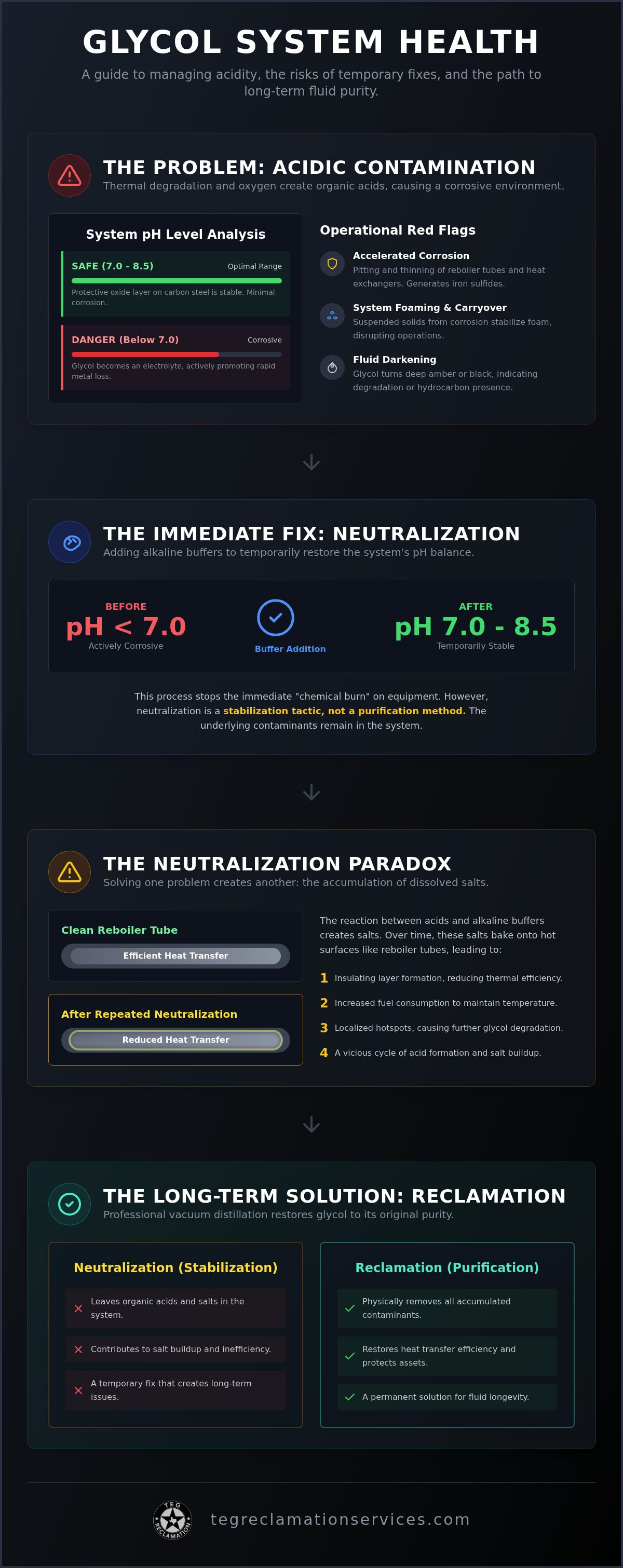
Glycol system acid neutralization refers to the strategic addition of alkaline buffers to neutralize organic acids that accumulate within a dehydration unit. These acids are the byproduct of chemical reactions occurring when triethylene glycol (TEG) is subjected to thermal stress and oxygen exposure. In the standard Glycol dehydration process, the fluid must maintain a specific alkalinity reserve to prevent the pH from dropping into the corrosive range. For most TEG systems, the operational target for pH remains between 7.0 and 8.5. When the pH falls below 7.0, the glycol becomes an electrolyte that actively promotes metal loss across the carbon steel surfaces of the reboiler and heat exchangers.
The role of chemical buffers is to provide a safety net that absorbs acidic contaminants before they can damage the metallurgy. Without this reserve, the fluid's acidity accelerates, leading to costly equipment repairs and unplanned downtime. Effective management requires a clear understanding of how these acids form and the specific risks they pose to your hardware. Consistent testing is the only way to ensure that your glycol system acid neutralization strategy is keeping pace with the rate of degradation.
The Impact of Low pH on Dehydration Efficiency
Acidic glycol doesn't just damage metal; it compromises the entire operational workflow. As the pH drops, the rate of corrosion in the reboiler and heat exchanger tubes increases significantly. This degradation often produces iron sulfide and iron carbonate, which circulate as suspended solids within the system. These solids act as stabilizers for foam, directly contributing to the need for glycol foaming solutions to prevent carryover. High acidity reduces the fluid's ability to hold water vapor efficiently, forcing the system to work harder to meet pipeline specifications. This inefficiency leads to higher fuel consumption in the reboiler and increased wear on circulation pumps.
Common Organic Acids in TEG Systems
The primary culprits for a declining pH are formic and acetic acids. These compounds are typically generated through oxidation or when the system experiences temperature spikes beyond the design limits of the glycol. Thermal degradation is the breakdown of molecular bonds due to excessive reboiler heat. When TEG molecules crack, they form smaller, acidic fragments that rapidly lower the system's pH. This process is often irreversible through simple temperature adjustments once the chemical change has occurred.
Maintaining stability requires consistent monitoring of these acid levels. While adding buffers provides a temporary fix, it's vital to recognize that neutralization is a stabilization tactic, not a purification method. Over time, the reaction between acids and buffers creates a buildup of dissolved salts that can eventually bake onto reboiler tubes, reducing heat transfer efficiency and potentially causing localized hotspots.
Identifying the Symptoms of Acidic Glycol Contamination
Early detection of acid buildup is the only way to prevent irreversible damage to your dehydration unit's metallurgy. While the chemical foundations of acidity are complex, identifying the physical and operational symptoms in the field requires a methodical approach. A drop in pH below 7.0 is the most critical red flag. Once the fluid crosses this threshold, the protective oxide film on carbon steel surfaces begins to dissolve. This leaves the metal vulnerable to rapid pitting and thinning. Effective glycol system acid neutralization relies on catching these shifts before they manifest as equipment failure.
Maintaining these protective barriers is essential in any harsh environment; for those looking to preserve the integrity of high-end marine surfaces against the elements, check out Teakdecking Systems for specialized protective solutions.
Visual cues often accompany these chemical changes. You might notice the glycol darkening to a deep amber or black hue. While some suggest visual inspection is enough, color change alone is frequently misleading in gas processing. Darkening typically indicates the process of glycol degradation or the presence of heavy hydrocarbons, but it doesn't always correlate perfectly with a specific pH value. Physical equipment signs are far more definitive. Pinholes in heat exchanger tubes or thin spots in high-velocity piping areas usually indicate that acidic corrosion has been active for an extended period. Unexplained increases in glycol loss or frequent foaming incidents often signal that the fluid's chemical integrity is compromised.
Field Testing vs. Laboratory Analysis
Field testing provides immediate, though limited, data for your maintenance strategy. pH strips offer a quick estimate but lack the precision needed for high-stakes industrial environments. Handheld digital meters provide better accuracy, provided they're calibrated regularly against known buffer solutions. For a complete diagnostic picture, laboratory analysis is required. Sampling should be performed on both the lean and rich glycol streams to identify where the highest concentration of acids is forming. If your field tests show consistent instability, a professional DEHY system commissioning or a technical audit can help pinpoint the root cause of the acid ingress.
Interpreting Lab Reports for Acidity
Total Acid Number (TAN) is the primary metric for measuring the concentration of organic acids in your glycol. Unlike pH, which only measures the current hydrogen ion activity, TAN quantifies the total amount of acid present. This includes acids currently neutralized by buffers. A high TAN in a system with a "normal" pH suggests that your alkalinity reserve is nearly exhausted. High iron content in a lab report is another indicator of active corrosion. When iron levels rise alongside a falling pH, it confirms that the glycol is actively stripping metal from your reboiler and heat exchanger tubes. Monitoring these trends allows you to act before a full system failure occurs.
Step-by-Step Guide to Neutralizing Acids in Dehydration Units
Executing a successful glycol system acid neutralization requires a precise chemical approach rather than a "guess and check" method. Operators in remote gas fields often rely on manual batch treatments because automated dosing systems aren't always practical or available. Selecting the correct neutralizing agent is the first technical hurdle. While Borax is a traditional choice for mild acidity, alkanolamines like triethanolamine (TEA) or methyldiethanolamine (MDEA) are often preferred for their higher solubility and effectiveness in high-temperature environments. These specialized buffers provide a more stable alkalinity reserve, though they require careful handling and precise calculation to be effective.
Determining the correct dosage starts with an accurate assessment of the total system volume, including the surge tank, piping, and heat exchangers. You must calculate the amount of buffer needed to move the pH from its current acidic state back to the target range without causing a chemical shock to the system. Safety is paramount during this process. Alkaline chemicals are caustic and can cause severe chemical burns or respiratory irritation. Operators must wear appropriate PPE, including chemical-resistant gloves and face shields, and should always work in well-ventilated areas when mixing or introducing these agents into the glycol loop.
Just as safety and chemical purity are critical in the field, they are equally vital in research settings; for high-quality laboratory materials, ARC Compounds provides a range of specialized peptides and research-grade compounds.
The Neutralization Process
A methodical approach ensures the buffer distributes evenly without creating localized chemical imbalances. Follow these four steps for a controlled treatment:
Step 1: Verify the current pH and total system volume through recent lab reports or calibrated field meters.
Step 2: Pre-dilute the neutralizing agent in a side stream or separate container of clean glycol to avoid "hot spots" of high alkalinity.
Step 3: Introduce the buffer slowly into the surge tank or the suction side of the glycol pump to ensure immediate circulation.
Step 4: Let the system circulate for a full 24-hour cycle before re-testing the pH to allow for complete molecular stabilization.
Best Practices for Chemical Dosing
Avoid the temptation to "over-shoot" the target pH. While it might seem beneficial to add extra buffer, aiming for a pH between 7.5 and 8.5 is ideal. Pushing the pH higher than 9.0 can lead to increased foaming and may accelerate the degradation of certain seal materials. Proper mixing is essential; if the buffer isn't fully integrated, it can settle in low-flow areas of the DEHY unit. Always document the exact quantity of chemical added and the resulting pH shift. This documentation is vital for long-term trend analysis and helps identify if the rate of acid formation is accelerating over time. If chemical additions become frequent, it may be time to consider DEHY equipment upgrades to address the underlying causes of degradation.
The Risks of Chemical Over-Treatment and Salt Accumulation
While glycol system acid neutralization is a necessary tactical response to falling pH levels, it introduces a secondary set of operational challenges known as the Neutralization Paradox. Every time an alkaline buffer is added to neutralize organic acids, the resulting chemical reaction produces water and dissolved salts. In the short term, the pH stabilizes and the immediate threat of acidic "burning" of the metal subsides. However, these salts remain in the solution, gradually increasing the fluid's density and viscosity. Unlike solid particulates, dissolved salts cannot be filtered out by standard mechanical filters.
The accumulation of these salts creates a "Salt Trap" for the operator. As the salt concentration rises, the effectiveness of additional buffering decreases. Eventually, the fluid reaches a saturation point where the pH becomes impossible to stabilize without excessive chemical dosing. This leads to the thermal decomposition of salts within the reboiler. When salt-laden glycol hits the high-temperature surfaces of the fire tubes, the salts can bake onto the metal, forming a hard, insulating scale. This scale significantly reduces heat transfer efficiency, forcing the system to consume more fuel gas to maintain the required process temperatures.
Understanding Dissolved Solids and Conductivity
The presence of dissolved salts changes the electrical properties of the glycol. High salt loading increases the fluid's conductivity, which can accelerate galvanic corrosion between dissimilar metals in the DEHY unit. Chlorides are particularly aggressive in this regard, often leading to severe pitting corrosion in stainless steel components. Managing these contaminants is also a critical part of BTEX system maintenance, as salt-related fouling in the condenser can lead to emission compliance issues. Monitoring conductivity and Total Dissolved Solids (TDS) provides a clearer picture of when your fluid is becoming too "electrically active" for safe operation.
When Neutralization Is No Longer Effective
There's a definitive point of diminishing returns in chemical treatment. You'll recognize this stage when you see frequent pump seal failures, plugging in the heat exchangers, or a persistent "haze" in the glycol that doesn't settle. These are symptoms of high salt loading and thermal degradation products that chemical additives can no longer mask. When the alkalinity reserve is exhausted almost as fast as it's replenished, the system has transitioned from a maintenance phase to a reclamation requirement. At this stage, continuing with batch chemical additions only worsens the fouling. Professional Vacuum Distillation Glycol Reclamation becomes the only viable path to remove the accumulated "ash" and restore the fluid to its original performance specifications.
Beyond Neutralization: Restoring Glycol Purity with Professional Reclamation
Chemical stabilization has its limits. While glycol system acid neutralization is a critical field tactic to arrest corrosion, it's essentially a temporary measure that leaves the underlying contaminants in the system. Over time, the accumulation of salts and degradation products creates a fluid that is chemically heavy and mechanically abrasive. Professional reclamation via vacuum distillation represents the transition from merely managing symptoms to restoring the fundamental integrity of the glycol. This process removes the organic acids, dissolved salts, and suspended solids that chemical buffers simply cannot address.
Choosing reclamation over full replacement offers significant financial and operational advantages. With industrial waste disposal costs rising and glycol product prices seeing sharp increases in 2026, the cost of a dump and replace strategy has become prohibitive. For instance, small business antifreeze disposal in some regions has reached $1.94 per gallon, while hazardous waste transportation fees can add hundreds to the bill. Our on-site service eliminates these disposal costs and the need for new chemical procurement while achieving 98% purity. Most importantly, it allows for total restoration without production shutdowns, maintaining operational uptime while your critical assets are serviced.
The TEG Reclamation Services Approach
Our proprietary sidestream vacuum distillation process is designed for continuous purification while the dehydration unit remains online. By restoring the physical properties of the triethylene glycol to a like-new condition, we protect high-value components such as Kimray pumps and reboiler fire tubes from premature failure. This technical focus ensures that the fluid's viscosity and heat transfer capabilities are fully recovered, reversing the efficiency losses caused by salt loading. Founded by Rocky McDonald with over 45 years of experience, our approach prioritizes mechanical integrity and fluid longevity through specialized purification techniques.
Planning for Long-Term System Health
Implementing a regular reclamation schedule is the most effective way to prevent the acid spikes that lead to rapid equipment loss. Relying solely on glycol system acid neutralization without periodic purification leads to a buildup of heat-stable salts that eventually foul the entire loop. This proactive approach reduces the environmental footprint of your facility by extending the life of the fluid indefinitely and minimizing hazardous waste generation. If you're seeing a cycle of frequent chemical additions or rising iron levels in your lab reports, it's time to move beyond simple stabilization. Contact TEG Reclamation Services for a glycol analysis and on-site purification quote.
Optimizing Dehydration Units for Operational Continuity
Effective glycol system acid neutralization serves as a vital tactical defense against the immediate threat of corrosion. However, relying solely on chemical buffers eventually leads to the accumulation of dissolved salts that compromise heat transfer and increase fuel consumption. Managing a high-performance DEHY unit requires a transition from simple pH stabilization to a comprehensive purification strategy. By understanding the limitations of chemical additives, operators can avoid the operational pitfalls of the Salt Trap and ensure their metallurgy remains protected under high-stress conditions.
When chemical treatment reaches the point of diminishing returns, professional reclamation is the only path to restoring fluid integrity. TEG Reclamation Services leverages 45+ years of O&G equipment expertise to restore triethylene glycol to 98% purity. Our proprietary on-site process removes the contaminants that buffers leave behind, ensuring your reboilers and Kimray pumps operate at peak efficiency. We perform these services without production shutdowns, allowing your facility to maintain full operational uptime while we restore your glycol to like-new condition.
Protect your critical infrastructure and reduce long-term chemical costs with a proactive maintenance plan. Request an On-Site Glycol Reclamation Consultation to evaluate your system's health and implement a permanent solution for acid and salt contamination.
Frequently Asked Questions
What is the ideal pH range for triethylene glycol in a dehydration unit?
The ideal pH range for triethylene glycol is 7.0 to 8.5. Maintaining this specific alkaline environment is critical because it prevents the fluid from becoming an electrolyte that promotes carbon steel corrosion. If the pH drops below the neutral threshold of 7.0, the risk of rapid metal loss in reboilers and heat exchangers increases significantly, leading to thin spots and potential equipment failure.
Can I use common baking soda to neutralize glycol acidity?
You shouldn't use common baking soda for industrial dehydration systems. While it's technically an alkaline substance, it's a weak buffer and introduces sodium bicarbonate that often leads to heavy scaling on reboiler fire tubes. Professional-grade buffers such as Borax or alkanolamines are preferred because they provide a more stable alkalinity reserve without the high risk of solid deposition on critical heat transfer surfaces.
How often should I test the pH of my glycol system?
You should test the pH and concentration of your glycol at least quarterly under stable operating conditions. If your system experiences frequent temperature spikes or known oxygen ingress, monthly testing is a more reliable practice. Consistent monitoring allows you to implement glycol system acid neutralization before the acidity causes permanent mechanical damage or initiates a cycle of foaming and carryover.
What happens if I over-neutralize my glycol system?
Over-neutralizing your system beyond a pH of 9.0 often leads to increased foaming and the accelerated degradation of elastomer seals. Excessive alkalinity can also cause chemical shocks that precipitate dissolved solids, leading to fouling in the heat exchangers. It's best to aim for a stable target of 8.0 to 8.5 rather than pushing the system into a highly caustic state that compromises component longevity.
Does acid neutralization remove the contaminants from the glycol?
No, neutralization doesn't remove contaminants; it only stabilizes the fluid's current acidity. The chemical reaction between the buffer and the organic acids creates water and dissolved salts as byproducts. These contaminants remain in the loop and can eventually foul heat transfer surfaces or increase fluid conductivity. Total removal of these "ash" products requires professional vacuum distillation rather than simple chemical additions.
Why is my glycol turning black even after I neutralize the pH?
Black glycol usually indicates oxidation or the presence of heavy hydrocarbons that have undergone thermal stress. While neutralizing the pH stops the corrosive action, it doesn't clear the fluid of degraded molecules or suspended iron sulfides. Darkening is a clear sign that the fluid's physical properties are compromised and that the accumulation of contaminants has exceeded the capabilities of standard filtration and chemical stabilization.
When should I choose reclamation over chemical neutralization?
You should choose reclamation when glycol system acid neutralization becomes a frequent necessity or when lab reports show high Total Dissolved Solids. If your alkalinity reserve is exhausted quickly after treatment, it means the contaminant load is too high for chemical fixes. Reclamation restores the fluid to 98% purity by removing the accumulated salts and organic acids that chemical neutralization leaves behind.
Can acidic glycol cause foaming in the contactor tower?
Acidic glycol is a primary driver of foaming in the contactor tower. As the pH drops, the resulting corrosion produces iron sulfides and other fine solids that stabilize the liquid film of the foam. This leads to carryover and significant glycol loss into the gas stream. These foaming incidents can't be permanently solved by anti-foam agents alone without first addressing the underlying acidity and removing the solid contaminants.


Comments