
Improving Dew Point Depression in Natural Gas Dehydration Units
Updated: Aug 12
Mechanical adjustments alone will never solve a dew point issue if your glycol chemistry is fundamentally compromised. Most operators face the threat of pipeline shut-ins because they address the symptoms of high water content rather than the root cause. You might increase circulation rates or raise reboiler temperatures, but these actions often lead to diminishing returns and excessive glycol loss. Achieving consistent, reliable results requires a focus on improving dew point depression through a combination of chemical purity and mechanical precision.
This article provides a technical roadmap to optimize your DEHY unit by addressing the three pillars of dehydration efficiency. You'll learn how to restore Triethylene Glycol (TEG) to over 98% purity and ensure your contactor internals remain protected from corrosion. We'll examine why advanced glycol management is the most effective way to reach pipeline-spec gas while reducing your annual chemical spend. By integrating proper pump sizing with specialized reclamation techniques, you can extend the life of your equipment and maintain operational continuity without the need for costly production shutdowns.
Table of Contents
Defining Dew Point Depression in Natural Gas Dehydration
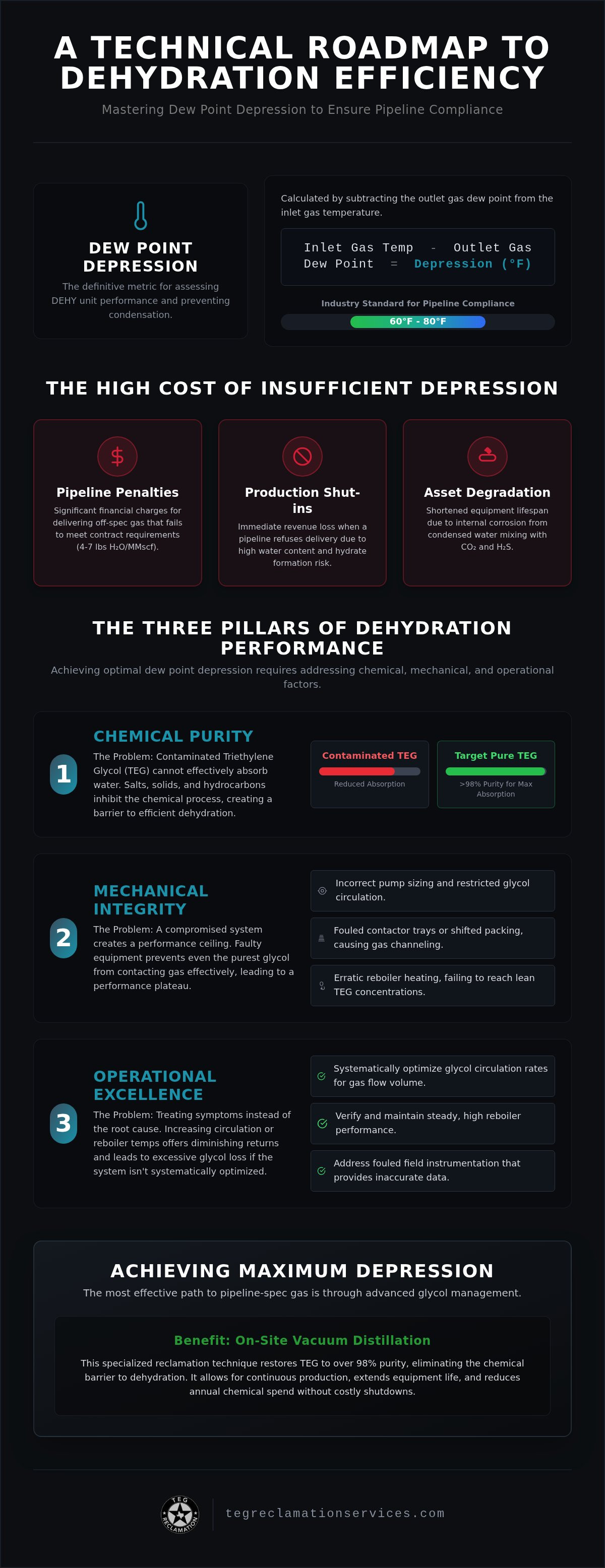
Dew point depression is the temperature difference between the saturated gas stream and the temperature at which water vapor begins to condense into a liquid. In the context of Glycol dehydration, this value serves as the definitive indicator of a unit's performance. It isn't simply about removing bulk water; it's about shifting the dew point low enough to prevent condensation under varying pipeline conditions. Improving dew point depression is the primary objective for operators who must meet strict delivery contracts and maintain system integrity across fluctuating seasonal temperatures.
The relationship between pipeline specifications and required depression levels is direct. Most US interstate pipelines require gas to contain no more than 4 to 7 lbs of water per million standard cubic feet (MMscf). To reach these levels, the dehydration unit must achieve a specific depression based on the inlet gas temperature and pressure. Pressure and temperature are the primary variables influencing the theoretical limits of water removal. While higher pressures generally facilitate water absorption, elevated temperatures increase the gas's water-carrying capacity, making the dehydration process more demanding.
Calculating Depression in the Contactor
Operators calculate this value by subtracting the outlet gas water dew point from the inlet gas temperature. If gas enters the contactor at 100°F and exits with a dew point of 30°F, the unit achieves a 70°F depression. A 60°F to 80°F depression is considered the industry standard for many US pipelines to ensure compliance and safety. Common measurement errors often stem from fouled field instrumentation. Sensors coated in glycol or contaminated by particulates frequently report inaccurate data, which can mask a failing process until a pipeline shut-in occurs.
The Impact of Water Content on Operational Stability
Insufficient depression is a primary catalyst for hydrate formation in downstream piping. These ice-like solids can plug valves and headers, leading to immediate pressure drops and total system failure. There is also a direct correlation between high dew points and internal corrosion rates. When water vapor condenses in the presence of CO2 or H2S, it forms acidic compounds that aggressively attack steel contactor internals and pipelines. The economic consequences of failing to meet contract specifications include:
Pipeline Penalties: Financial charges for delivering off-spec gas.
Production Shut-ins: Immediate loss of revenue when a pipeline refuses delivery.
Asset Degradation: Shortened lifespan of expensive contactors and downstream equipment.
Improving dew point depression protects these assets and ensures the facility remains profitable by avoiding the high costs of unplanned maintenance and equipment replacement.
Maintaining the overall productivity of industrial facilities also requires reliable logistical support; for example, many operators rely on React Fueling for commercial diesel and fuel delivery to ensure their site equipment and fleets remain operational.
Mechanical and Operational Factors Limiting Performance
Mechanical integrity dictates the operational ceiling of any dehydration unit. Even with high-quality glycol, a unit with compromised internals or failing pumps will never reach its design specifications. Identifying bottlenecks in the glycol circulation loop is the first step toward improving dew point depression. When the volume of lean glycol reaching the contactor is restricted, the gas-liquid contact is insufficient to absorb moisture effectively. This often results in a performance plateau that operators mistakenly attribute to chemical exhaustion.
Contactor tray efficiency and packing integrity are equally critical. If the trays are fouled or the packing has shifted, the gas will channel through the vessel without making adequate contact with the TEG. This mechanical failure prevents the mass transfer required for deep dehydration. Reaching the necessary lean glycol concentration also depends on the reboiler's ability to maintain a steady, high temperature. Most units require a lean concentration of at least 99% to meet interstate pipeline standards, a threshold that is impossible to maintain if the heating system is erratic. For those looking to verify their current system capacity, using a glycol pump sizing calculator can provide immediate clarity on circulation requirements.
Glycol Circulation and Pump Reliability
The heart of the circulation loop is the Kimray pump. Ensuring the pump is sized correctly for the required circulation rate is vital for optimizing TEG circulation rates. If the pump is undersized, it won't deliver enough glycol to handle surges in gas flow. Conversely, signs of pump cavitation or seal failure indicate mechanical wear that degrades performance and leads to excessive glycol loss. Implementing strict Kimray pump repair protocols ensures that the pump maintains the consistent flow needed for reliable water removal.
Burner Efficiency and Heat Flux
Inconsistent reboiler heat is a common barrier to achieving maximum depression. If the burner cannot maintain the 380°F to 400°F range required for TEG regeneration, the glycol remains rich and loses its affinity for water. Troubleshooting flame patterns and fuel gas pressure is essential for maintaining heat consistency. A stable burner management system prevents thermal cycling, which can degrade the glycol over time. Referencing a guide on burner management system troubleshooting helps operators identify issues before they lead to a total system shut-in.
The Chemical Barrier: How Contamination Reduces Depression
Mechanical reliability is essential, but the chemical state of your triethylene glycol (TEG) often dictates the functional limit of the dehydration process. Contaminated glycol loses its hygroscopic affinity, meaning it cannot absorb water vapor at the rate required for pipeline specifications. This chemical barrier is a primary obstacle to improving dew point depression in older or heavily loaded systems. When TEG becomes saturated with impurities, the reboiler's ability to strip water is significantly hampered. This results in "rich" glycol entering the contactor, which lacks the capacity to meet moisture targets.
Hydrocarbon carryover further complicates the process by altering the surface tension of the glycol. This leads to foaming, which reduces the effective surface area for gas-liquid contact in the contactor trays. Additionally, a pH imbalance, often caused by the accumulation of organic acids, leads to the acid-etching of steel internals. This corrosion introduces iron sulfides and other particulates into the stream, creating a cycle of degradation that compromises the entire unit's efficiency and increases chemical spend.
Identifying Glycol Contaminants
Operators often rely on visual cues, but "Black Glycol" is merely a symptom of deeper issues like thermal degradation or solid accumulation. Laboratory analysis is the only definitive way to confirm the presence of dissolved salts and chlorides. These contaminants are particularly dangerous because they raise the glycol's boiling point, leading to higher reboiler temperatures that accelerate thermal breakdown. Understanding these risks is vital for optimizing glycol absorption systems. For a systematic approach to diagnosing these issues, consult our glycol contamination removal guide.
Thermal Degradation and Carbon Solids
Excessive heat flux in the reboiler causes TEG molecules to crack, forming insoluble carbon solids known as "coke." These particulates act as abrasives in the Kimray pump and plug the contactor trays, further reducing gas-liquid contact. As the TEG molecules break down, their ability to hold water decreases permanently. Simple mechanical filtration might remove larger solids, but it cannot restore the chemical integrity of the fluid. Improving dew point depression when thermal degradation has occurred requires more than just changing filters; it necessitates a total restoration of the glycol's molecular purity to break through performance plateaus and ensure long-term operational stability.
Operational Checklist for Improving Dew Point Depression
Improving dew point depression is a methodical process that demands precision at every stage of the glycol loop. Operators often reach a performance plateau where mechanical adjustments no longer yield results. Breaking through this plateau requires a systematic evaluation of the entire dehydration unit. This checklist provides the technical steps necessary to restore efficiency and ensure pipeline compliance.
Step 1: Conduct a comprehensive dehydration unit performance audit to identify existing bottlenecks. This baseline data is essential for determining if the issue is mechanical or chemical.
Step 2: Optimize the glycol circulation rate based on current gas flow volumes. Over-circulating wastes energy and increases chemical loss, while under-circulating fails to meet dew point targets.
Step 3: Verify reboiler temperature settings and ensure stripping gas flow is sufficient to achieve the desired lean concentration.
Step 4: Implement a strict chemical flushing and cleaning schedule to remove accumulated solids and prevent equipment fouling.
Step 5: Evaluate glycol purity levels. If TEG purity has fallen below 98%, consider advanced reclamation to restore the fluid's hygroscopic properties.
Optimizing the Lean/Rich Glycol Loop
The efficiency of the dehydration process depends on balancing the glycol-to-water ratio. To achieve maximum absorption, the lean glycol entering the contactor must have a high affinity for water. Stripping gas plays a critical role here; it's often the only way to reach a 99.5%+ lean concentration in standard atmospheric reboilers. Monitoring the temperature approach at the contactor inlet is also vital. If the lean glycol is too hot, it won't absorb water effectively; if it's too cold, it can cause hydrocarbon condensation and foaming.
Preventative Maintenance Protocols
Stability in gas processing relies on consistent preventative measures. Regular filter changes and carbon bed maintenance are non-negotiable to prevent particulates from damaging pumps and fouling trays. Routine chemical analysis should be performed to track salt and chloride accumulation, which often go undetected until equipment damage occurs. For a deeper look at long-term reliability strategies, refer to our guide on TEG dehydration maintenance. For facilities experiencing persistent off-spec gas, scheduling DEHY system commissioning can resolve complex operational issues and restore peak performance.
Achieving Maximum Depression Through Vacuum Distillation
Standard atmospheric reboilers are limited by the physical properties of Triethylene Glycol. While these systems effectively strip water, they cannot remove the dissolved salts, chlorides, and heavy hydrocarbons that accumulate during continuous operation. These contaminants raise the boiling point of the mixture, often forcing operators to increase reboiler heat to levels that cause thermal cracking. Improving dew point depression becomes functionally impossible when the glycol's water-absorbing capacity is chemically blocked by these impurities. Reaching the next level of efficiency requires a more sophisticated approach to chemical restoration.
Sidestream vacuum distillation offers a proactive solution by purifying the TEG while the dehydration unit remains in service. This process removes the contaminants that conventional filtration and atmospheric boiling leave behind. By integrating this technology into your operational workflow, you maintain continuous production while simultaneously restoring the chemical integrity of your system. This method bypasses the performance plateaus associated with aged or contaminated glycol, allowing the unit to return to its original design specifications without the need for a total system drain.
The Science of High-Purity Glycol
The relationship between glycol purity and dehydration is governed by the vapor pressure of the solution. Higher purity levels directly correlate to a lower vapor pressure of water in the gas stream. When TEG is restored to over 98% purity, it regains its maximum affinity for water molecules. This allows operators to reach 'impossible' dew points that were previously unattainable due to salt saturation. Purified glycol also provides critical protective benefits for mechanical components. It reduces abrasive wear on Kimray pumps and ensures that BTEX systems operate with maximum efficiency by preventing fouling in the emission control condensers.
A Strategic Approach to Dehydration Efficiency
Many facilities rely on a reactive 'dump and refill' strategy that is both expensive and wasteful. This approach only provides a temporary fix and fails to address the underlying buildup of corrosive elements within the contactor internals. Proactive reclamation represents a superior long-term ROI. By maintaining high dew point depression through consistent chemical restoration, you extend the lifespan of your equipment and reduce overall chemical spend. It's a shift from managing symptoms to maintaining a clean, efficient process loop.
Transitioning to a proactive maintenance model ensures your gas stays within contract specifications regardless of seasonal temperature swings or fluctuations in inlet gas quality. If you're ready to break through performance plateaus and secure your operational uptime, contact TEG Reclamation Services to optimize your DEHY unit today.
Securing Operational Uptime with Advanced Chemical Restoration
Consistent dehydration performance depends on the synergy between mechanical precision and chemical integrity. While pump sizing and burner management are essential for daily stability, the functional limits of water removal are ultimately defined by the purity of your Triethylene Glycol. Addressing the chemical barriers created by salts and thermal degradation is the only way to ensure your facility meets strict pipeline specifications. Improving dew point depression requires a transition from reactive maintenance to a proactive reclamation model that addresses the root causes of efficiency loss.
Our proprietary vacuum distillation technology restores TEG to over 98% purity on-site, allowing your team to maintain operational continuity with zero production downtime. This specialized approach removes the contaminants that conventional reboilers cannot touch, protecting your contactor internals and extending the life of your equipment. Don't let contaminated chemistry dictate your production limits. Request a Technical Consultation for Your Dehydration Unit to optimize your process and achieve reliable, long-term results. We're ready to help you maintain a cleaner, more efficient dehydration loop.
Frequently Asked Questions
What is the ideal dew point depression for natural gas?
An ideal dew point depression for many US pipelines ranges between 60°F and 80°F. This specific range ensures the gas meets water content limits, typically 4 to 7 lbs per MMscf. Achieving this target depends on the inlet gas temperature and the purity of your lean glycol. If your unit fails to maintain this depression, you risk hydrate formation and pipeline shut-ins that disrupt operational continuity and revenue.
How does glycol purity affect dew point depression?
Glycol purity directly dictates the solution's affinity for water vapor. Higher purity levels lower the vapor pressure of water in the gas stream, which is essential for improving dew point depression. When Triethylene Glycol is restored to over 98% purity, it regains its maximum hygroscopic capacity. Contaminants like salts and chlorides inhibit this process, preventing the glycol from reaching the lean concentrations required for deep dehydration in the contactor.
Can I improve depression by just increasing the reboiler temperature?
Increasing reboiler temperature yields diminishing returns and introduces significant operational risks. While higher heat can strip more water, exceeding 400°F accelerates the thermal degradation of TEG. This process creates carbon solids and organic acids that foul equipment and erode Kimray pump internals. Instead of relying on excessive heat, operators should focus on removing dissolved contaminants that artificially raise the glycol's boiling point and hinder regeneration efficiency.
What are the signs that my TEG is too contaminated to provide adequate depression?
Visible cues like "Black Glycol" often indicate carbon solids or thermal cracking. Other signs include persistent foaming in the contactor, increased pump seal failures, and an inability to meet moisture specs despite optimal reboiler settings. If your unit requires constant temperature adjustments to maintain depression, it's likely that dissolved salts have compromised the chemical integrity of the TEG. Laboratory analysis is the only definitive way to confirm these contamination levels.
Does stripping gas help in improving dew point depression?
Stripping gas is a critical tool for reaching lean glycol concentrations above 99%. By introducing a small amount of dry gas into the reboiler or stripping column, you lower the partial pressure of water vapor. This allows the reboiler to strip more moisture at safer temperatures. Using stripping gas is a proven method for improving dew point depression when atmospheric regeneration alone cannot meet the demanding requirements of interstate pipeline contracts.
What role does the Kimray pump play in achieving depression specs?
The Kimray pump controls the glycol circulation rate, which must be precisely balanced against the gas flow volume. If the circulation rate is too low, there isn't enough lean glycol to absorb the water vapor in the contactor. If it's too high, you increase energy consumption and glycol loss. Proper pump sizing and maintenance ensure a consistent flow of purified TEG, which is necessary to maintain the required depression specs.
How often should I test my glycol for contaminants?
Standard industrial practice suggests testing your glycol for contaminants at least twice per year. However, quarterly analysis is recommended for units operating under high loads or those prone to hydrocarbon carryover. Regular testing allows you to track the accumulation of chlorides and salts before they cause irreversible damage to contactor internals. This proactive approach helps you identify when advanced reclamation is needed to prevent performance plateaus and unplanned shutdowns.
Is on-site glycol reclamation faster than replacing the entire batch?
On-site glycol reclamation is significantly more efficient than a total batch replacement. Replacing glycol requires a full system shutdown, expensive disposal of old fluid, and the purchase of new chemicals. Reclamation services, such as vacuum distillation, restore your existing TEG to over 98% purity while the unit remains in operation. This approach eliminates production downtime and provides a superior return on investment by maintaining the chemical health of your dehydration loop.



Comments