
Natural Gas Dehydration Facility Upgrades: A Comprehensive Optimization Checklist
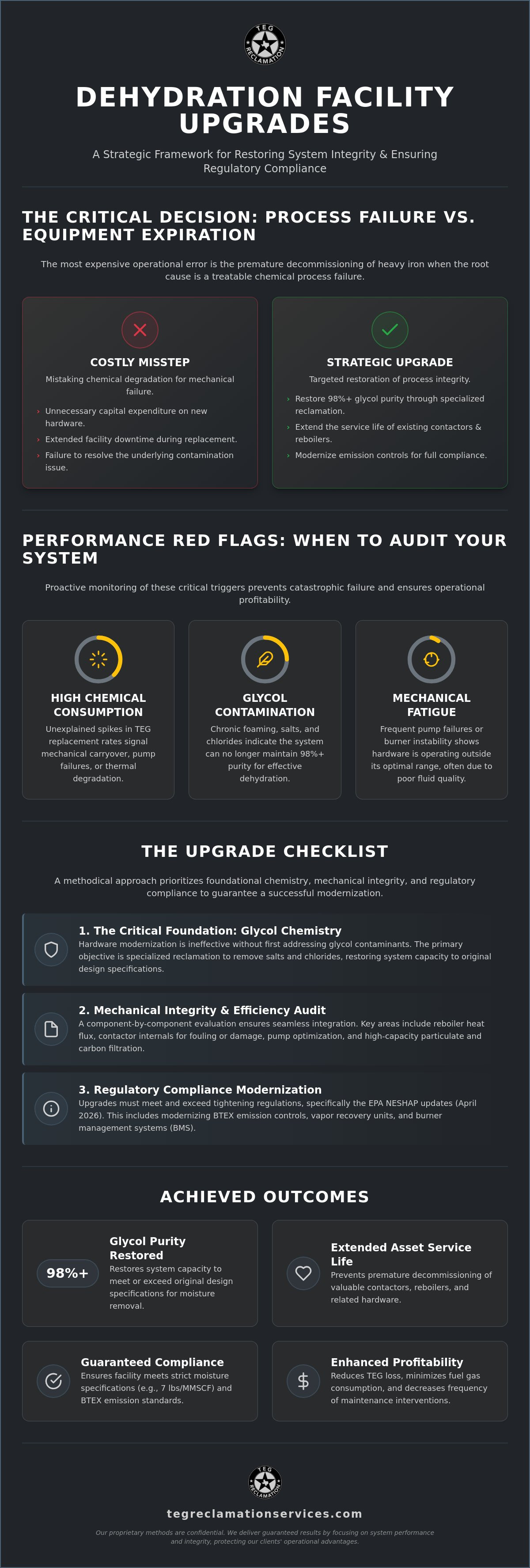
The most expensive decision a facility manager can make is mistaking a chemical process failure for a mechanical equipment expiration. With Triethylene Glycol (TEG) prices averaging $1.56 per kilogram in early 2026 and the EPA April 2026 NESHAP updates tightening the leash on BTEX emissions, the margin for operational error has vanished. Strategic dehydration facility upgrades focus on restoring the integrity of the glycol stream and modernizing emission controls rather than the premature decommissioning of heavy iron. We understand that maintaining a 7 pound moisture specification while managing rising operational costs is a constant technical challenge.
This guide provides a professional framework for evaluating your system performance against its original design specifications. You'll learn how to implement targeted upgrades that restore 98%+ glycol purity and extend the service life of your existing contactors and reboilers. We will examine a comprehensive checklist covering pump optimization, thermal efficiency, and regulatory compliance strategies to ensure your facility remains both profitable and compliant.
Table of Contents
Evaluating the Need for Dehydration Facility Upgrades
Operational continuity in gas processing depends on the precision of the Glycol dehydration process. When a system fails to meet its design specifications, the immediate reaction is often to replace entire components. However, professional dehydration facility upgrades involve a more nuanced approach. We define these upgrades as the targeted modernization of mechanical systems and chemical management processes to restore dew point depression and ensure environmental compliance. The decision to modernize isn't merely about equipment age; it's a response to evolving throughput demands, rising operational costs, and shifting regulatory mandates.
Choosing to "let it ride" with an underperforming system carries significant financial risks. With Triethylene Glycol (TEG) prices averaging $1.56 per kilogram in early 2026, excessive chemical loss due to carryover or thermal degradation directly impacts profitability. Furthermore, inefficient systems consume more fuel gas and require more frequent maintenance interventions. A proactive upgrade strategy identifies these inefficiencies before they result in a total facility shutdown or a pipeline rejection for moisture content exceeding the 7 lbs/MMSCF standard.
Regulatory Drivers for System Modernization
Stricter environmental oversight acts as a primary catalyst for facility modernizations. The U.S. EPA proposed updates to the NESHAP standards for 40 CFR Part 63, Subparts HH and HHH on April 22, 2026. These changes place increased pressure on operators to control benzene, toluene, ethylbenzene, and xylene (BTEX) emissions. Older facilities often lack the vapor recovery or burner management system (BMS) sophistication required to meet these new thresholds. Upgrading these specific components doesn't just satisfy the air permit; it often improves the thermal efficiency of the entire reboiler assembly, leading to more consistent glycol regeneration.
Performance Indicators for Operational Upgrades
Identifying the need for dehydration facility upgrades starts with analyzing specific operational red flags. If your system is failing to achieve required dew point depression despite high circulation rates, the issue likely lies in process chemistry or mechanical bypass. We monitor several critical triggers:
Chemical Consumption: Unexplained spikes in TEG replacement rates usually indicate mechanical issues in the contactor or pump failures.
Contamination Levels: Chronic foaming or the presence of chlorides and salts suggests that the system can no longer maintain the 98%+ purity required for effective dehydration.
Mechanical Fatigue: Frequent Kimray pump failures or burner instability indicates that the hardware is operating outside its optimal range.
Before any capital is allocated for hardware, a comprehensive performance audit is required. This technical baseline allows us to determine if the solution requires mechanical repair, such as Kimray pump service, or a deeper chemical restoration through vacuum distillation. Without this audit, upgrades are merely guesswork.
The Dehydration Facility Upgrade Checklist: Essential System Components
Executing successful dehydration facility upgrades requires a methodical assessment of both the pressurized and atmospheric sides of the unit. Mechanical integrity must align with industry design standards to ensure that any new component integrates seamlessly with the existing process loop. A checklist approach prevents the common mistake of upgrading a single part while leaving a bottleneck elsewhere in the system. We prioritize components that directly impact dew point depression, emission control, and fuel consumption.
The reboiler and contactor tower form the mechanical foundation of the facility. During an upgrade, we inspect contactor internals for tray damage or packing fouling that causes gas channeling. On the regeneration side, we evaluate the reboiler’s heat flux and the efficiency of the still column. If the reboiler can't maintain the necessary temperature for glycol concentration, hardware modernization is mandatory. Proper filtration is equally critical. Particulate and carbon filtration must have the capacity to handle the full circulation rate to prevent solids from damaging pump seals or fouling heat exchangers.
Emission Control and BTEX Upgrades
Modernizing emission controls is often the primary driver for a project. Upgrading to high efficiency BTEX condensers allows facilities to capture volatile organic compounds that older systems simply vented. Integrating these with vapor recovery units (VRUs) or flare systems ensures compliance with the 2026 NESHAP updates. Precise temperature control within the condenser is the key variable; maintaining the correct thermal gradient maximizes the capture of hazardous air pollutants before they reach the stack. This process protects the environment while potentially recovering usable hydrocarbons.
Maintaining this level of thermal precision is a fundamental engineering challenge, whether in industrial gas processing or in the advanced air conditioning solutions provided by companies like Commodus.
Pumping System and Circulation Optimization
Circulation rates dictate the efficiency of the entire dehydration cycle. We evaluate the performance of existing Kimray pumps against the requirements of the current gas throughput. If the circulation rate is too high, it wastes fuel and increases BTEX emissions; if it's too low, you won't meet moisture specs. Utilizing a glycol pump sizing calculator helps determine if your current hardware is optimized for your specific flow conditions. Preventing seal failures and extending pump life depends heavily on maintaining the chemical purity of the glycol stream through improved filtration and reclamation.
Advanced Burner Management (BMS) Services
Burner Management Systems are the frontline of facility safety and efficiency. Modernizing pilot lights and ignition systems reduces the frequency of "nuisance trips" that cause unnecessary downtime. Advanced BMS units provide precise reboiler temperature control, which prevents the thermal degradation of TEG. By optimizing the combustion process, facilities reduce their carbon footprint and lower fuel gas consumption. These dehydration facility upgrades transform a manual, high-maintenance burner into an automated, reliable heat source that responds dynamically to process changes.
Glycol Chemistry: The Critical Foundation of Any DEHY Upgrade
Integrating new hardware during dehydration facility upgrades yields diminishing returns if the process fluid remains compromised. Triethylene glycol (TEG) is the lifeblood of the system; its chemical health dictates the efficiency of water absorption and the longevity of mechanical components. Running contaminated, thermally degraded, or "black" glycol through a modernized reboiler or contactor is a strategic error that leads to rapid equipment fouling. To realize the full value of a facility overhaul, operators must achieve and maintain a glycol purity of 98% or higher.
Hardware modernization is often blamed for performance failures that are actually rooted in process chemistry. If the TEG inventory is saturated with salts or heavy hydrocarbons, the boiling point shifts, making it impossible for even a brand-new reboiler to achieve the necessary concentration. This chemical imbalance forces the system to operate outside its design parameters, negating the benefits of the upgrade and accelerating the degradation of new seals and gaskets.
The Hidden Cost of Contaminated Glycol
Contaminants act as abrasive agents within the system loop. Particulates and degradation byproducts cause premature wear on pump diaphragms and valve seats, leading to frequent maintenance cycles. Beyond mechanical damage, chemical impurities like chlorides and organic acids initiate internal corrosion, eating away at the metallurgy of newly installed components. Most importantly, the relationship between purity and performance is absolute. As glycol accumulates contaminants, its capacity for dew point depression drops. This forces the system to run higher circulation rates, which increases fuel gas consumption and pushes emission levels toward regulatory limits.
On-Site Restoration vs. Replacement
The traditional approach to contaminated TEG has been total inventory replacement. However, this method is increasingly difficult to justify given the rising costs of raw chemicals and the logistics of hazardous waste disposal. Vacuum distillation reclamation offers a superior alternative by restoring the existing inventory to like-new specifications. This process removes the salts, chlorides, and thermal degradation products that standard filtration cannot catch. It's a surgical approach to chemical management that preserves your existing investment.
Choosing on-site reclamation over replacement provides a significant advantage for operational continuity. Because the purification occurs while the facility remains online, there's no need for a costly shutdown or the complex logistics of hauling bulk liquids. This approach supports the goals of dehydration facility upgrades by ensuring that new hardware operates in a clean, non-corrosive environment from the moment of commissioning. Reclaiming the existing glycol inventory also aligns with environmental sustainability goals by eliminating the need for off-site disposal and reducing the facility's overall chemical footprint.
Strategic Implementation: Commissioning and Performance Audits
The execution of dehydration facility upgrades requires a structured transition plan to ensure that mechanical changes translate into process improvements. Implementation isn't merely about the physical installation of hardware; it's about managing the transition to minimize facility downtime. A phased upgrade strategy allows for the integration of modernized components, such as high-efficiency BTEX condensers or burner management systems, while maintaining throughput. This methodical approach ensures that the facility continues to meet gas moisture specifications throughout the modernization process.
Strategic implementation concludes with a rigorous verification phase. We use performance audits to document the return on investment, focusing on specific metrics like reduced fuel gas consumption and improved dew point depression. These audits provide the technical proof that the system is operating within its new design parameters. Without this data, it's impossible to verify if the facility is fully compliant with the 2026 NESHAP emission standards or if the glycol stream has reached the necessary 98% purity threshold.
System Commissioning Best Practices
Specialized DEHY commissioning is the final safeguard before returning a unit to full service. We verify that flow rates, pressures, and temperatures align with the engineered design specs. Calibrating the control systems is vital for optimal BTEX capture and burner performance. Technicians must ensure that the vapor recovery units and ignition systems are synchronized to prevent nuisance trips. Training site personnel on the operation of these upgraded components is a core part of this process, as it ensures the facility maintains its efficiency gains long after the commissioning team leaves the site.
Chemical Cleaning and Flushing
Introducing clean or reclaimed glycol into a system that hasn't been professionally cleaned is a common operational error. Chemical flushing removes the accumulated sludge, scales, and particulates that settle in contactors and heat exchangers over time. This process neutralizes residual acids that would otherwise initiate immediate corrosion on newly installed metal surfaces. Professional field services utilize specialized flushing techniques to ensure the internal metallurgy is pristine before the system is recharged with glycol. This step is essential for protecting the mechanical integrity of the unit and ensuring the longevity of the upgrade.
To ensure your modernization project achieves its full potential, it's critical to partner with experts who understand the intersection of mechanical hardware and process chemistry. Our team provides the technical oversight required for successful DEHY system commissioning and long-term optimization. This professional approach guarantees that your facility remains a reliable, compliant asset in a demanding regulatory environment.
Technical Field Services for Dehydration Facility Modernization
Executing successful dehydration facility upgrades requires a partnership with specialists who understand the intricate balance between mechanical hardware and chemical process stability. General maintenance crews often overlook the subtle interactions between glycol purity and equipment longevity. Our technical field services provide the specialized oversight necessary to ensure that modernization efforts result in sustained operational uptime. By focusing on the total health of the system, we help operators avoid the common pitfall of treating symptoms while the underlying process issues remain unresolved.
A primary advantage of partnering with an elite specialist is the ability to leverage proprietary vacuum distillation reclamation. This process allows for the total restoration of TEG purity to 98% or higher without requiring a facility shutdown. Maintaining operational continuity during the purification process is a critical requirement for high-volume midstream and upstream assets. This result-oriented approach ensures that your system operates in a clean, non-corrosive environment, protecting your investment in new hardware and preventing the premature failure of modernized components.
Integrated solutions are the cornerstone of long-term reliability. Our field teams provide comprehensive support that ranges from Kimray pump repair and service to the installation of advanced BTEX emission control systems. This multi-disciplinary expertise allows us to troubleshoot complex problems that span across mechanical, thermal, and chemical boundaries. Expert field inspections identify high-priority needs before they escalate into emergency repairs, ensuring that your facility remains both profitable and compliant with evolving environmental standards.
Comprehensive Dehydration Support
Accessing specialized equipment for on-site chemical processing is a fundamental requirement for modern gas plants. With 45+ years of industry experience in process equipment, we provide the technical depth needed to manage complex dehydration facility upgrades from inception to final commissioning. We develop customized maintenance programs for upstream and midstream facilities that prioritize technical integrity. These programs are designed to extend the service life of contactors and reboilers by maintaining the chemical environment they were engineered to operate in, reducing the total cost of ownership over the life of the asset.
Next Steps for Your Facility
The first step in any modernization project is a detailed system audit. This technical baseline identifies the specific drivers for your upgrade, whether they are rooted in regulatory compliance or efficiency losses. Consulting with technical experts on BTEX and BMS compliance ensures that your capital allocation is targeted for maximum impact. Our team is ready to provide the professional guidance needed to restore your system to its original design specifications and ensure long-term operational success; additionally, to support your facility's broader infrastructure, you can discover TekSavvy for reliable business phone solutions.
Contact TEG Reclamation Services for a technical consultation to discuss your facility's specific upgrade requirements and performance goals.
Modernizing for Long-Term Operational Integrity
Successful dehydration facility upgrades require a technical strategy that balances mechanical modernization with chemical restoration. As we've discussed, hardware improvements to reboilers or pumping systems only achieve their full potential when the glycol stream is purified to 98% or higher. By prioritizing technical audits and specialized commissioning, operators ensure their facilities meet the moisture specifications and emission standards required in the 2026 regulatory environment. This holistic approach protects your equipment health and maintains operational continuity.
We leverage 45+ years of oil and gas process expertise to help you achieve these results through a no-shutdown operational model. Our proprietary vacuum distillation process restores your glycol inventory to like-new specifications while your system remains online. Whether you need a performance audit or a complete system overhaul, we provide the specialized tools and knowledge required for industrial excellence. Optimize your DEHY facility with TEG Reclamation Services to ensure your assets remain reliable and compliant for years to come.
Frequently Asked Questions
What are the most common signs that a dehydration facility needs an upgrade?
Failure to consistently meet the 7 lbs/MMSCF moisture specification is the primary indicator of system fatigue. You should also monitor for unexplained increases in glycol consumption, frequent Kimray pump failures, or rising BTEX emission levels that approach permit limits. These operational red flags often signal that the mechanical components or the process chemistry can no longer handle the current gas throughput or regulatory requirements.
Can I upgrade my BTEX emission controls without shutting down production?
Yes, many emission control modernizations can be implemented while the facility remains online. Strategic use of bypasses and the installation of modular, skid-mounted BTEX condensers allow for technical upgrades without interrupting the main gas flow. This approach is essential for midstream operators who must maintain constant operational continuity while meeting the latest environmental compliance standards for hazardous air pollutants.
How does glycol purity affect the lifespan of my Kimray pumps?
Contaminated triethylene glycol acts as an abrasive slurry that rapidly destroys pump seals, diaphragms, and internal valve seats. Maintaining a glycol purity level of 98% or higher significantly extends the interval between service cycles. By removing salts, chlorides, and particulates through reclamation, you reduce the mechanical wear that leads to frequent Kimray pump repair and service requirements.
What is the difference between glycol reclamation and total glycol replacement?
Glycol reclamation utilizes on-site purification to restore your existing inventory to its original design specifications, whereas replacement involves disposing of the old fluid and purchasing new chemical stock. Reclamation is generally more efficient because it eliminates the logistical costs of waste disposal and new chemical procurement. It also allows the facility to continue operating during the purification process, providing a seamless transition for dehydration facility upgrades.
Is a burner management system (BMS) upgrade required for environmental compliance?
Modern air permits often necessitate a BMS overhaul to ensure precise combustion control and reliable emission monitoring. Following the April 2026 EPA regulatory updates, facilities must demonstrate tighter control over reboiler temperatures to maximize BTEX capture efficiency. Upgrading to an automated BMS reduces the risk of nuisance trips and ensures that the combustion process remains within the parameters defined by your environmental permit.
How often should a dehydration unit performance audit be conducted?
Operators should conduct a comprehensive performance audit at least once per year or whenever there is a significant shift in gas composition or flow rates. Regular audits provide the technical baseline needed to identify efficiency losses early. This proactive data collection allows you to plan dehydration facility upgrades strategically, ensuring that capital is allocated to the components that will provide the highest return on investment.
What are the benefits of on-site vacuum distillation for glycol systems?
On-site vacuum distillation allows for the total removal of salts, chlorides, and thermal degradation products without requiring a facility shutdown. This process restores the chemical integrity of the TEG inventory, which is the critical foundation for effective dew point depression. Because the work is performed on-site, it eliminates the environmental risks and high costs associated with hauling contaminated chemicals for off-site disposal.
How can chemical flushing improve the efficiency of an older DEHY unit?
Chemical flushing removes the built-up sludge, scales, and corrosive particulates that accumulate on the internal surfaces of contactors and heat exchangers. This restoration of the internal metallurgy improves heat transfer efficiency and prevents the immediate contamination of new or reclaimed glycol. It's a necessary step during any modernization project to ensure that the system operates at its maximum engineered capacity.


Comments