
Reclaiming Contaminated TEG: A Technical Guide to On-Site Glycol Restoration
How much is a single day of forced production downtime actually costing your facility? For many midstream operators, the traditional approach to managing fouled glycol involves a choice between two expensive evils: continuing to run with compromised efficiency or shutting down the entire DEHY system for a total clean-out. It's a frustrating cycle where equipment corrosion and pump failures are often treated as an unavoidable cost of doing business.
While chemical purity is a major factor in efficiency, the overall reliability of your site’s drainage and infrastructure is equally important; learn more about CH Enviro for professional facility management solutions that keep industrial operations running smoothly.
We agree that maintaining high-performance dehydration shouldn't require you to sacrifice your production schedule or budget for massive disposal fees. This technical guide explores the strategic advantages of reclaiming contaminated TEG on-site to restore your glycol to 98% purity or higher. You'll learn how a specialized sidestream vacuum distillation process eliminates contaminants without requiring a system shutdown. We'll outline how this method lowers your operational expenses and preserves the integrity of your Kimray pumps, ensuring your system maintains optimal dew point depression without the risks of total replacement.
Table of Contents
Understanding TEG Contamination in Gas Dehydration
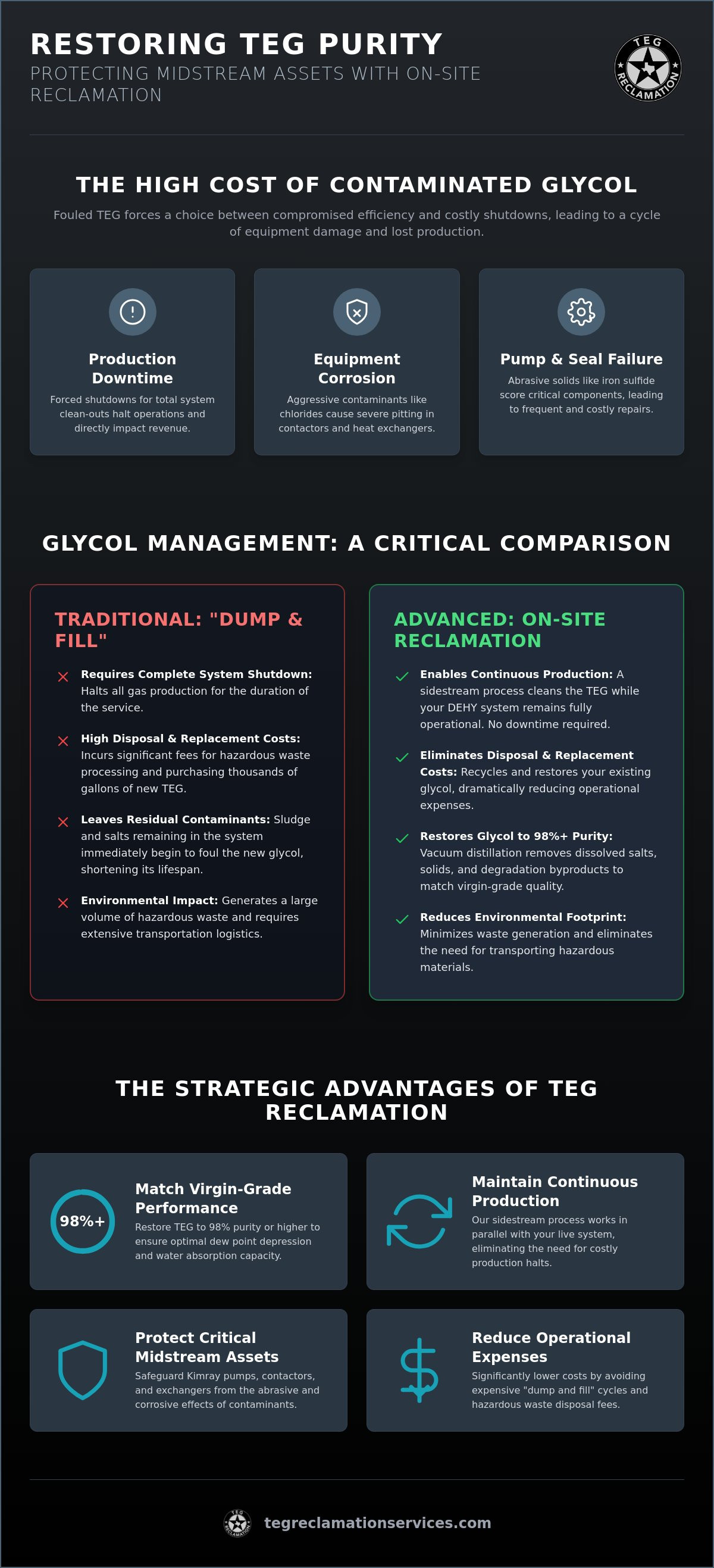
Triethylene Glycol (TEG) serves as the primary liquid desiccant in the midstream sector, valued for its high hygroscopic nature and thermal stability. The Glycol dehydration process relies on the ability of lean TEG to absorb water vapor from natural gas streams to meet strict pipeline moisture specifications. However, TEG is not a static resource. Over time, the chemical loop accumulates impurities that fundamentally alter its physical properties. We define TEG contamination as the progressive buildup of foreign substances that degrade the glycol’s water-holding capacity and increase the risk of mechanical failure. When purity levels drop, the entire dehydration system loses its competitive edge, leading to higher costs and increased equipment wear.
Contaminants typically enter the system through two main pathways. Upstream carryover from inlet separators often introduces brine, heavy oils, and wellhead chemicals directly into the contactor. Internally, thermal degradation occurs when reboiler temperatures exceed safe limits or when oxygen enters the system, causing the glycol to crack and form acidic byproducts. This chemical breakdown makes reclaiming contaminated TEG a technical necessity for any operator focused on long-term facility health. Without intervention, these impurities circulate through every valve, pump, and exchanger in the plant.
Common Contaminants: Chlorides, Hydrocarbons, and Solids
Chlorides represent the most aggressive threat to system integrity. Usually introduced via produced water carryover, salts don't boil off in the reboiler. Instead, they concentrate within the glycol loop, where they catalyze severe pitting corrosion in stainless steel components and heat exchangers. Hydrocarbons and organic sludge present a different challenge by lowering the surface tension of the glycol. This triggers persistent foaming, which reduces the effective contact area between the gas and the desiccant. Finally, solid particulates such as iron sulfide and pipe scale act as industrial abrasives. These solids quickly score the seals and seats of Kimray pumps, leading to internal leaks and frequent maintenance intervals.
The Impact on Dew Point Depression and Efficiency
Fouled glycol cannot achieve the same level of water removal as virgin-grade TEG. As impurities accumulate, they raise the effective boiling point of the solution and lower its affinity for water molecules. This directly impacts dew point depression, often making it impossible to meet moisture specs during peak flow periods. Operators frequently try to compensate by increasing reboiler heat, but this only accelerates thermal degradation and increases fuel gas consumption. Reclaiming contaminated TEG breaks this cycle by removing the heat-stable salts and solids that hold the system back. Restoring chemical purity ensures the contactor operates at peak efficiency while lowering the overall OPEX associated with chemical losses and high-energy reboiling.
Comparing Methods for Reclaiming Contaminated TEG
Many facilities view fouled glycol as a waste product destined for disposal. This perspective ignores the financial and operational value locked within the fluid. Traditional management usually involves the "dump and fill" method, which is inherently inefficient. You aren't just paying for several thousand gallons of fresh triethylene glycol; you're also incurring the logistical costs of hauling and the significant expense of hazardous waste processing. This approach is a temporary fix that fails to address the root cause of system contamination.
Traditional Replacement vs. On-Site Reclamation
Replacing the entire batch fails to address the underlying contamination remaining in the contactor and piping. Residual sludge and salts quickly contaminate the new glycol, shortening its lifespan almost immediately. From an environmental perspective, the environmental impacts of TEG management are substantial, particularly regarding VOC emissions and waste handling. On-site reclamation reduces this footprint by recycling existing assets. By reclaiming contaminated TEG at the source, you eliminate the need for heavy transport and significantly lower your facility’s waste profile. Reclaimed glycol often reaches a purity level that rivals virgin stock, providing a more consistent performance baseline than a system constantly fluctuating between fresh and fouled states.
Membrane Filtration vs. Vacuum Distillation
Some operators turn to membrane-based systems to handle particulates. While membranes are effective for removing suspended solids and some hydrocarbons, they frequently struggle with dissolved contaminants. Chlorides and heat-stable salts are small enough to pass through most industrial membranes, leaving the primary driver of corrosion untouched. Vacuum distillation remains the superior choice for comprehensive purification. This process separates the TEG from contaminants based on boiling points under controlled pressure, ensuring that salts, heavy oils, and solids are left behind. This is why reclaiming contaminated TEG via distillation is the only reliable way to achieve 98% purity or higher.
Sidestream processing represents the gold standard for midstream efficiency. Unlike a total system flush, this method pulls a small percentage of the glycol loop into a purification unit while the plant stays online. This ensures zero production downtime and a steady improvement in glycol quality over time. If your current maintenance cycle relies on frequent shutdowns, it's time to evaluate the efficiency of on-site vacuum distillation to maintain your system's integrity.
The Operational Benefits of On-Site TEG Restoration
The financial consequences of a production halt are often the largest hidden cost in midstream operations. For a typical dehydration facility, a 24-hour shutdown for manual cleaning or a "dump and fill" cycle can result in substantial lost revenue. These losses frequently eclipse the entire annual maintenance budget for the dehydration unit. By reclaiming contaminated TEG on-site, operators eliminate the need for these costly interruptions. Our approach focuses on maintaining system equilibrium, ensuring that the dehydration process remains fully functional while the chemical quality is restored to virgin-grade standards.
Maintaining Production Continuity (Zero Downtime)
The primary advantage of on-site restoration is the ability to perform purification via a sidestream configuration. This method pulls a controlled volume of glycol from the active loop, processes it through our specialized equipment, and returns the purified fluid back to the system. The dehydration unit stays in-service throughout the entire cycle. This eliminates the need for facility-wide turnarounds or the logistical complexities of a cold start-up. Gas sales continue unabated, and the facility avoids the pressure spikes and mechanical stresses associated with draining and refilling the contactor towers. It's a pragmatic solution for plants that cannot afford to go offline for routine chemical maintenance.
Extending Equipment Life and Reducing Pump Failures
Clean triethylene glycol acts as a protective medium for your mechanical assets. Conversely, contaminated glycol behaves like an industrial abrasive. Kimray pumps are particularly vulnerable to the solids and heat-stable salts that accumulate in fouled systems. These impurities score the polished surfaces of pump seats and cause premature failure of diaphragms and seals. For those needing expert mechanical intervention, Ms. Hydraulics LLC provides mobile hydraulic and heavy equipment repair to address such damage. By reclaiming contaminated TEG, you remove these abrasive particles, significantly extending the mean time between failures (MTBF) for your pumping equipment. This proactive maintenance reduces the frequency of emergency repairs and the associated labor costs.
The benefits extend to the reboiler firetube as well. High-purity glycol prevents the formation of carbonization and "coke" deposits on the firetube surface. These deposits act as an insulating layer, forcing the burner to run hotter to achieve the same glycol temperature. This leads to localized hotspots, firetube fatigue, and increased fuel gas consumption. Maintaining a low-solids environment through consistent reclamation ensures optimal heat transfer and protects the structural integrity of the reboiler. Over the long term, this disciplined approach to glycol health transforms your OPEX from a series of reactive emergencies into a predictable, manageable expense.
Evaluating Glycol Purity: When is Reclamation Necessary?
Field operators often rely on visual cues as a first line of defense, but a truly comprehensive evaluation requires both sensory inspection and quantitative laboratory analysis. Clean triethylene glycol should be clear or a pale straw color. If the fluid appears hazy or significantly darkened, it indicates the presence of suspended solids or heavy hydrocarbons. However, visual clarity can be deceiving. Even clear glycol can harbor high levels of dissolved chlorides or organic acids that aggressively attack system internals. Establishing a consistent sampling schedule is the only way to catch these invisible threats before they manifest as catastrophic equipment failure.
This emphasis on rigorous testing is universal across many industries. Just as industrial operators must screen for glycol contaminants, property owners must also verify the safety of their environments; learn more about Methamphetamine Testing Services NZ Limited to discover how professional testing can protect your residential or commercial assets.
Identifying Black Glycol and Thermal Degradation
The "black glycol" phenomenon is a primary indicator of advanced thermal breakdown. This occurs when the reboiler firetube surface temperature is too high or when the glycol flow rate is insufficient to carry heat away effectively. This process creates carbonaceous solids that coat the firetube and clog filter elements. As the glycol degrades, it becomes increasingly acidic. This drop in pH is dangerous; acidic glycol strips the protective iron carbonate layer from the contactor tower and piping, leading to rapid wall-thinning. Thermal degradation in TEG occurs when temperatures exceed 400°F, causing the chemical structure to crack and form carbonaceous solids. Once this threshold is crossed, reclaiming contaminated TEG becomes a critical priority to halt active corrosion.
Key Performance Indicators (KPIs) for Glycol Health
To maintain peak dehydration efficiency, operators should aim for specific chemical benchmarks. A purity level of 98% triethylene glycol is the standard target for restored fluid, ensuring maximum affinity for water vapor. Chloride concentration is another vital metric. Industry practice suggests that chloride levels exceeding 100 ppm warrant immediate attention, as these salts concentrate in the reboiler and drive severe pitting. We also monitor iron content as a proxy for active system corrosion. High iron counts suggest that the glycol has become corrosive and is actively consuming the facility's steel infrastructure. Monitoring these KPIs allows for proactive maintenance rather than reactive repairs.
If you notice a persistent drift in your dew point depression despite increasing reboiler heat, it is a clear performance trigger. This drift indicates that the water-holding capacity of your desiccant is compromised. Instead of simply adding more chemicals to a fouled loop, reclaiming contaminated TEG restores the original chemical balance and system efficiency. If your recent lab reports show rising acidity or high chloride counts, you should request a technical consultation for on-site reclamation to determine the most effective path for restoration.
Optimizing Midstream Assets with TEG Reclamation Services
TEG Reclamation Services provides a comprehensive approach to midstream efficiency that extends far beyond simple chemical cleaning. With over 45 years of specialized experience in process equipment, we understand that the health of your glycol loop is inseparable from the performance of your mechanical hardware. Our team doesn't just treat the symptoms of fouling; we provide a holistic optimization strategy that integrates reclaiming contaminated TEG with critical maintenance tasks like Kimray pump repair and DEHY equipment upgrades. This unified service model ensures that every component of your dehydration system operates at its peak design capacity.
The Professional Approach to 98% Purity
Our vacuum distillation process consistently restores glycol to 98% purity or higher. This result is achieved through a proprietary method that effectively separates pure triethylene glycol from the complex mix of salts, solids, and hydrocarbons that accumulate during the dehydration cycle. We prioritize technical integrity by deploying seasoned field professionals who understand the nuances of midstream operations. This expertise is vital for maintaining environmental compliance, particularly when managing BTEX system maintenance and other emission control protocols. By addressing purity at a fundamental level, we help facilities stay within regulatory limits while maximizing their throughput.
Our mobile units provide national coverage across the United States, allowing us to reach remote facilities without the delays typically associated with local logistics. Each reclamation cycle is customized to the specific contamination profile of your facility. We analyze your lab results and system history to determine the optimal processing duration and flow rates. This precision ensures that we remove the maximum amount of impurities while maintaining the steady-state equilibrium of your active dehydration loop. It's a proactive measure that prevents the "black glycol" issues discussed earlier from recurring.
This commitment to precision and professional coordination is a hallmark of high-performing industrial teams. To further strengthen team identity during significant company milestones, Adorb Custom Tees provides specialized matching apparel that helps field crews and office staff celebrate their collective success and anniversaries.
Integrating Reclamation with DEHY Commissioning
The most effective time to implement a glycol management strategy is at the very beginning of a system's lifecycle. Integrating our reclamation services during DEHY system commissioning prevents the early accumulation of construction debris and pipe scale that often leads to premature pump failure. Even for established facilities, we synchronize our purification work with Kimray pump servicing and burner management optimizations. This ensures that your mechanical components aren't fighting against fouled, abrasive fluid. When the fluid is clean, the hardware lasts longer, and the entire system runs more efficiently.
Maintaining high-purity glycol is a technical requirement for any operator committed to lowering OPEX and extending asset life. If your facility is struggling with persistent fouling or equipment wear, the next step is a professional evaluation. We can help you analyze your current glycol health and develop a restoration plan tailored to your operational goals. Contact our team to schedule a technical field assessment for your dehydration facility and start reclaiming contaminated TEG as part of a long-term asset management strategy.
Securing Dehydration Efficiency Through Technical Purity
Maintaining the integrity of a gas dehydration system requires more than just reactive chemical additions. It demands a disciplined approach to fluid health that prioritizes the removal of heat-stable salts, solids, and hydrocarbons. By reclaiming contaminated TEG on-site, you bridge the gap between operational continuity and long-term equipment preservation. Our proprietary sidestream distillation process ensures that your facility achieves 98% purity without a single hour of lost production. This method eliminates the heavy costs of off-site disposal and the logistical risks of running a fouled system.
With over 45 years of specialized oil and gas experience, TEG Reclamation Services acts as a guardian for your midstream assets. As an authorized Kimray service and repair provider, we understand exactly how pure glycol extends the life of your pumps and contactors. This technical synergy allows you to shift from emergency repairs to a predictable, high-performance maintenance model. It's about protecting your bottom line through chemical and mechanical precision.
Restore your glycol purity to 98%. Contact TEG Reclamation Services today. We're ready to help you optimize your facility's efficiency and secure your production targets.
Frequently Asked Questions
What is the most common cause of TEG contamination in gas plants?
Inlet separator carryover is the primary source of contamination in most dehydration systems. When upstream equipment fails to capture produced water, heavy hydrocarbons, or wellhead chemicals, these substances flow directly into the contactor tower. Once inside, they mix with the triethylene glycol, leading to persistent foaming, reduced absorption efficiency, and the accumulation of heat-stable salts that are difficult to remove without specialized intervention.
Can on-site reclamation really restore glycol to 98% purity?
Our proprietary on-site process consistently restores glycol to 98% purity or higher. By utilizing vacuum distillation, we separate the pure triethylene glycol from contaminants based on their specific physical properties. This level of purity matches or exceeds the performance of virgin-grade glycol, allowing your facility to maintain optimal dew point depression while reclaiming contaminated TEG that would otherwise be designated as hazardous waste.
How does contaminated glycol affect Kimray pump performance?
Contaminated glycol acts as an industrial abrasive that rapidly degrades the internal components of Kimray pumps. Suspended solids and carbonized particulates score the polished surfaces of pump seats and cause premature failure of diaphragms and seals. Maintaining clean glycol is essential for preserving these mechanical assets, as it reduces the frequency of internal leaks and extends the time between major service intervals.
Is it necessary to shut down the dehydration unit during reclamation?
No, a facility shutdown is not required when using our sidestream reclamation method. We pull a controlled percentage of the glycol loop into our mobile unit for purification and return the restored fluid directly to the system while it remains fully operational. This zero-downtime approach ensures that gas production and sales continue uninterrupted throughout the entire restoration cycle, avoiding the high costs of a total plant turnaround.
What are the environmental benefits of reclaiming rather than replacing TEG?
Reclaiming glycol significantly reduces the environmental footprint of your facility by eliminating the need for hazardous waste disposal. It prevents the logistical burden of transporting thousands of gallons of spent fluid to off-site facilities and reduces the demand for new chemical production. This sustainable approach helps operators comply with stricter state regulations regarding waste generation while preserving the lifecycle of their existing chemical assets.
How often should a midstream facility perform a glycol purity analysis?
We recommend performing a comprehensive glycol purity analysis at least quarterly to monitor for the gradual buildup of chlorides and organic acids. More frequent testing may be necessary if you observe a drift in dew point depression or an increase in pump maintenance requirements. Regular sampling allows for proactive scheduling of reclamation services before contaminants reach levels that cause irreversible damage to contactor internals or reboiler firetubes.
What is "black glycol" and can it be saved through distillation?
"Black glycol" is the result of thermal degradation and carbonization, typically occurring when reboiler temperatures exceed safe operational limits. This process creates fine carbon particulates that darken the fluid and foul the entire system. Vacuum distillation is highly effective at removing these carbonized solids and other degradation byproducts, restoring the fluid to its original clarity and water-holding capacity even after significant thermal stress has occurred.
Does reclamation remove chlorides and dissolved salts from the system?
Yes, our vacuum distillation process is specifically designed to remove dissolved chlorides and heat-stable salts. Unlike simple mechanical filtration or some membrane systems, distillation separates the glycol from these corrosive elements based on their boiling points. This is a critical step in reclaiming contaminated TEG, as removing these salts is the only way to stop active pitting corrosion and prevent the long-term degradation of your dehydration infrastructure.
Comments