
Removing Chlorides from Glycol: A Technical Analysis of Contamination and Restoration
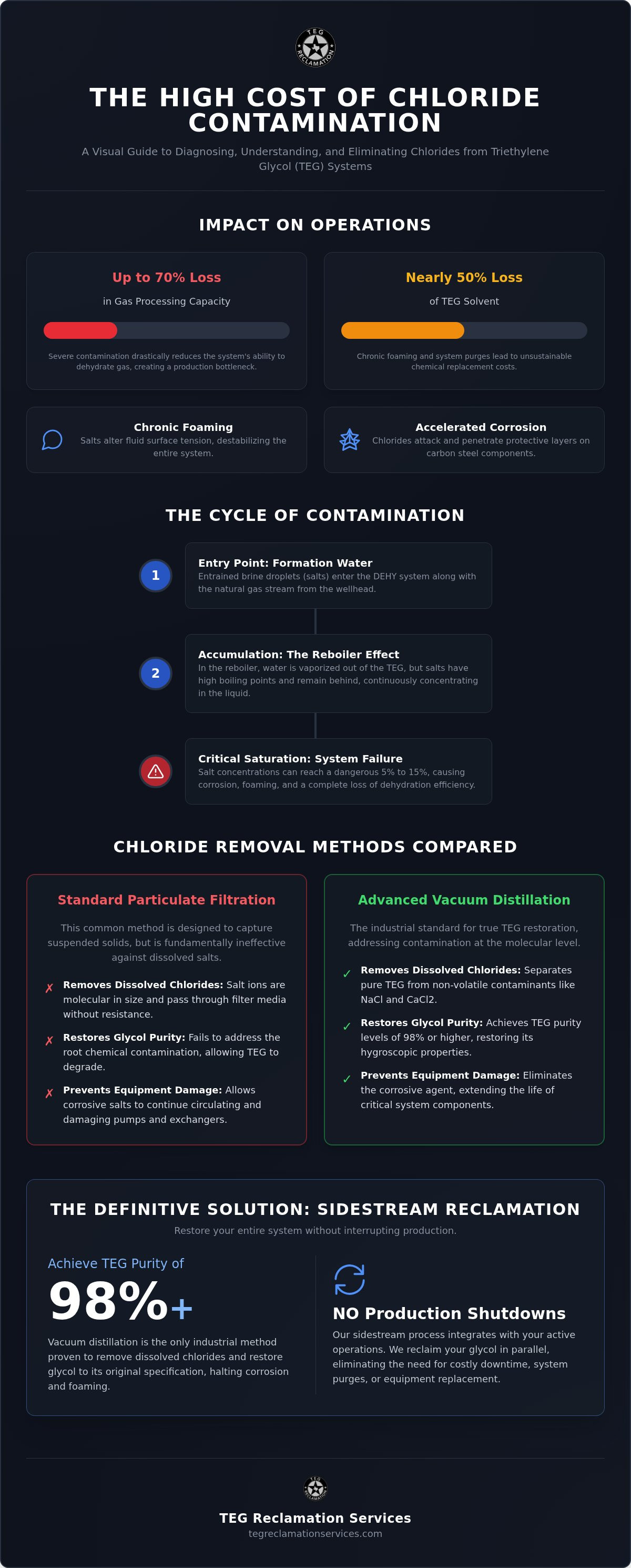
Did you know that severe chloride contamination can slash your gas processing capacity by up to 70% while causing nearly half of your solvent to be lost? When dissolved salt concentrations reach critical levels, the traditional response is often a costly system purge and replacement. Most operators agree that chronic foaming and rapidly corroding heat exchangers are unsustainable burdens on an O&M budget. You aren't just fighting chemistry; you're fighting the clock against equipment failure. This technical analysis explores the mechanisms of salt accumulation and the specialized industrial methods for removing chlorides from glycol to restore triethylene glycol (TEG) to 98% purity or higher. You'll learn how to stabilize your DEHY system and extend the life of your critical infrastructure. We'll examine the transition from reactive maintenance to a proactive reclamation strategy that functions alongside your active operations. By understanding the path from contamination to restoration, you can eliminate the need for production shutdowns while significantly reducing your annual chemical spend.
Table of Contents
Sources and Mechanisms of Chloride Contamination in TEG
Chlorides are inorganic salts that represent one of the most persistent threats to gas processing efficiency. In the Glycol dehydration process, these contaminants typically enter the system through formation water carryover or saline water intrusion from the reservoir. When natural gas travels from the wellhead to the contactor tower, it often carries entrained droplets of brine. Once these salts enter the triethylene glycol (TEG) stream, they don't simply disappear. Instead, they begin a cycle of accumulation that eventually compromises the entire mechanical integrity of the facility.
The primary driver of salt buildup is the "concentration effect" occurring within the reboiler. To regenerate rich glycol, the system applies heat to vaporize absorbed water. While water exits the still column as vapor, inorganic salts have extremely high boiling points and remain trapped in the liquid phase. Over months of continuous operation, these salts concentrate to dangerous levels. Industry data suggests that dissolved salt concentrations can reach 5% to 15% by weight if left unmanaged. At this stage, removing chlorides from glycol is the only way to prevent total system failure.
Standard maintenance often relies on particulate filtration, but this approach is fundamentally flawed for salt removal. Filtration units are designed to capture suspended solids and larger scale fragments. Dissolved chloride ions are molecular in size. They pass through even the finest filter media without resistance. Relying solely on mechanical filters allows the chemical profile of the glycol to degrade until the fluid is no longer fit for service.
The Chemistry of Salt Accumulation
Sodium Chloride (NaCl) and Calcium Chloride (CaCl2) are the most common species found in contaminated systems. These salts are highly soluble in the water-rich glycol found in the absorber, but their behavior changes during thermal cycling. As the glycol is heated and water is stripped away, the solubility limit of the salts can be exceeded. This leads to the formation of hard, crystalline scales on reboiler fire tubes. These salts also interfere with the fluid's hygroscopic properties. Because chlorides are naturally attracted to water, they compete with the TEG molecules, which significantly reduces the glycol's ability to meet pipeline water dew point specifications.
Impact on System Integrity
Chlorides act as aggressive catalysts for accelerated pitting corrosion in carbon steel components. They are particularly destructive because they penetrate the passive oxide layer that normally protects metal surfaces. This chemical degradation is also a leading cause for the implementation of glycol foaming solutions, as inorganic salts alter the surface tension of the fluid and stabilize foam bubbles. Chlorides destabilize the protective film on metal surfaces by increasing the electrical conductivity of the glycol and promoting localized electrochemical attacks.
Diagnosing Chloride Contamination in the Field
Field diagnosis begins with a critical assessment of the physical state of the TEG. While lean glycol should remain clear or straw-colored, chloride-rich fluid often transitions into "black glycol" due to the presence of suspended iron sulfides and precipitated salts. These visual indicators are the first warning signs that the chemical balance of the system is failing. Mechanical symptoms often manifest in the pumping system. Frequent pump seal failures and sticking valves suggest that salt crystals are forming in high-pressure areas. Removing chlorides from glycol becomes a technical priority when these mechanical issues start impacting daily uptime and increasing maintenance costs.
If you observe a steady decline in dew point depression despite increasing circulation rates, salt saturation is likely the culprit. This reduced efficiency occurs because the salts compete with the glycol for water molecules, which impairs the fluid's ability to dehydrate the gas stream effectively. Identifying these issues early prevents the irreversible damage that occurs when high salt concentrations are left unmanaged in a closed-loop system.
Physical Indicators of Salt Saturation
Salt crusting on reboiler fire tubes is a definitive sign of saturation. This layer acts as a thermal insulator, forcing the burner to operate at higher intensities and significantly increasing the risk of tube burnout. If you're changing filters more frequently than every seven days, it's likely that dissolved salts are precipitating out of the solution as the glycol cools. These physical cues suggest that the chloride levels have exceeded the fluid's carrying capacity at operating temperatures, which leads to localized scaling throughout the dehydration unit.
Laboratory Testing Protocols
Lab analysis is the only way to quantify chloride PPM accurately. Regular titration and ion chromatography allow you to distinguish between harmless suspended solids and the aggressive dissolved ions that compromise system life. Industry standards suggest that salt concentrations exceeding 5,000 ppm typically necessitate immediate intervention to prevent accelerated corrosion. These lab results provide the technical justification for glycol chemical cleaning or full reclamation. While some case studies highlight ion-exchange for salt removal, the primary goal is always to restore the TEG to a state where it can effectively protect the steel. Establishing a baseline for chloride levels helps prevent catastrophic failure. For operators dealing with chronic contamination, reaching out for a technical fluid assessment is a pragmatic first step toward system stabilization.
Comparing Industrial Methods for Chloride Removal
Operators often evaluate multiple strategies for removing chlorides from glycol, ranging from simple mechanical separation to complex chemical treatments. While particulate filtration is a staple in every dehydration unit, its utility is strictly limited to suspended solids and precipitated salt crystals. Once chlorides dissolve into the glycol stream, they become part of the fluid's molecular structure. This renders standard 5 micron or 10 micron filters ineffective. Relying on mechanical filtration alone allows dissolved ions to bypass the media, leading to the systemic degradation discussed in previous sections.
Ion exchange offers a more sophisticated chemical approach by swapping chloride ions for less harmful species. However, this method faces significant hurdles in high volume gas processing. High temperature environments can degrade the resin, and high PPM levels lead to rapid resin saturation. This necessitates frequent and expensive media replacement, which often makes it impractical for large scale operations. For a deeper look at the technical history of industrial purification, the U.S. Patent on Glycol Refining provides essential context on how refining processes have evolved to address these contaminants.
The "purge and refill" method remains the most expensive and least sustainable path. It ignores the fact that the majority of the glycol volume is still chemically viable. Total fluid replacement is not only a waste of capital but also a logistical challenge involving hazardous waste disposal and potential production downtime. Choosing a restoration method requires balancing immediate purity needs with long term operational costs.
Filtration vs. Ion Exchange
Mechanical filters reach their limit when salt concentrations exceed the fluid's solubility point, which causes "salt slugs" that can bypass the media entirely. Ion exchange systems require a significant operational footprint and constant monitoring of resin health. In high stakes environments, the logistical burden of managing specialized hardware and resin disposal often outweighs the incremental purity gains. These systems are frequently better suited for closed loop cooling rather than the aggressive environment of a gas dehydration contactor.
Chemical Mitigation Strategies
Some facilities attempt to manage salt through glycol system acid neutralization. While neutralizing organic acids is vital for pH control, it does not physically remove the chloride ions; it simply manages the resulting corrosive environment. Similarly, dehydration plant chemical flushing is an excellent tool for cleaning internal vessel surfaces, but it remains a temporary measure. It does not restore the contaminated fluid itself. Relying on chemical additives often masks the underlying salt problem until reboiler tubes fail or foaming becomes uncontrollable.
Vacuum Distillation: The Industrial Standard for Chloride Removal
While previous methods offer partial relief, vacuum distillation represents the definitive industrial standard for total fluid restoration. This process functions by utilizing the specific boiling point differentials between the triethylene glycol and the inorganic contaminants. By significantly reducing the atmospheric pressure within the reclamation unit, the boiling point of the TEG is lowered. This allows the system to isolate pure glycol without reaching the high temperatures that cause thermal degradation. It's a precise chemical separation that addresses the root cause of system instability rather than just managing the symptoms.
One of the primary advantages of this method is the ability to operate as a sidestream process. A portion of the circulating fluid is continuously diverted to the reclamation unit, purified, and then reintroduced to the main stream. This configuration ensures that removing chlorides from glycol doesn't require a plant turnaround or any interruption to 24/7 production schedules. The benchmark for success in these operations is restoring the fluid to a purity level of 98% or higher, which effectively resets the chemical life of the inventory.
Benefits of On-Site Distillation
Performing reclamation on-site eliminates the logistical burdens and environmental risks associated with hauling thousands of gallons of contaminated glycol to off-site disposal facilities. This immediate intervention restores dew point depression efficiency in real time, which allows the plant to meet stringent pipeline specifications without over-circulating the pumps. Vacuum distillation isolates the pure glycol molecules from dissolved chloride ions by utilizing boiling point differentials, a feat that is physically impossible for standard mechanical filtration. This level of purity is essential for maintaining the long-term health of the contactor tower and reboiler internals.
Maintaining Operational Uptime
Mobile reclamation units are designed to integrate seamlessly into existing dehydration systems, often connecting via standard flange points. This setup allows technicians to monitor purity levels and chloride concentrations in real time during the distillation cycle. The return on investment for this approach is significant. Reclaiming existing inventory is a fraction of the cost of purchasing new chemicals, especially when factoring in the avoided costs of hazardous waste handling. For operators managing high-stakes gas streams, choosing professional vacuum distillation glycol reclamation is a pragmatic strategy to extend equipment life and ensure continuous uptime. With over 45 years of experience in the field, our team focuses on delivering these results without compromising your operational flow.
Long-Term Chloride Management and System Optimization
Effective chloride management requires a transition from reactive emergency response to a structured preventative maintenance schedule. Once a system is restored to peak efficiency, the focus must shift toward maintaining that baseline through regular fluid analysis and scheduled reclamation cycles. Establishing a proactive cadence for removing chlorides from glycol ensures that concentrations never reach the critical thresholds that trigger systemic corrosion or foaming events. This long-term strategy is the most effective way to stabilize O&M costs while guaranteeing the reliability of the dehydration unit.
Protecting Critical Assets
Maintaining high fluid purity has a direct, measurable impact on the longevity of auxiliary hardware. Salt particulates, even when partially dissolved, act as high-velocity abrasives within the system. This leads to premature wear on internal components, particularly in circulation pumps. Reducing this abrasive load is essential for extending the time between Kimray Pump Repair and Service intervals. When the glycol remains at 98% purity or higher, the mechanical seals and piston arrangements are protected from the scoring and pitting typically caused by salt-heavy fluids.
System optimization also extends to the reboiler and emission control infrastructure. High chloride levels often lead to the formation of localized scales on fire tubes, which creates "hot spots" that accelerate metal fatigue and eventual tube failure. In facilities utilizing BTEX elimination systems, clean glycol is vital for efficient aromatic separation. Contaminated fluid can foul condenser surfaces and interfere with the vaporization of aromatics, which complicates emission compliance and reduces the overall efficiency of the environmental control stack.
A Holistic Approach to Dehydration
True system optimization requires looking upstream of the contactor tower. Improving the efficiency of inlet scrubbers and three-phase separators is the first line of defense against future salt intrusion. Field personnel should be trained to recognize early indicators of accumulation, such as subtle changes in glycol color or minor fluctuations in dew point depression, before they escalate into mechanical failures. This human element, combined with technical data, forms a comprehensive shield for the facility.
Leveraging expert technical services for annual system audits provides an objective look at the health of the dehydration process. These audits often reveal opportunities for DEHY equipment upgrades that can further minimize contamination risks. By combining proprietary vacuum distillation with rigorous upstream management, operators can achieve a closed-loop system that functions at design capacity for years. This holistic approach doesn't just solve a chemistry problem; it secures the operational future of the entire gas processing stream.
Securing Operational Integrity Through Fluid Restoration
Chloride contamination represents a persistent risk to gas processing infrastructure, leading to accelerated corrosion and reduced dehydration efficiency. As analyzed, standard filtration fails to address the dissolved salts that compromise your system's integrity. Implementing a proactive strategy for removing chlorides from glycol is essential for extending equipment life and maintaining 24/7 production. By focusing on total fluid restoration, you can eliminate the chronic foaming and mechanical failures that often plague contaminated units.
Our proprietary sidestream vacuum distillation process offers a technical solution that restores your TEG to over 98% purity on-site. This method allows you to reclaim your existing inventory without the need for costly production shutdowns or off-site disposal. With over 45 years of specialized industry experience, we provide the expertise required to stabilize your operations and reduce long-term chemical spend. It's a pragmatic approach to maintaining high-stakes equipment health and ensuring your facility remains compliant with industry standards.
Restore your glycol purity with TEG Reclamation Services and ensure your system operates at peak performance. We look forward to helping you optimize your dehydration process.
Frequently Asked Questions
Can you filter chlorides out of triethylene glycol with standard filters?
Standard particulate filters are ineffective for removing chlorides from glycol because these contaminants are dissolved ions. Mechanical filters are designed to capture suspended solids and larger scale fragments. Chloride ions are molecular in size and remain in the liquid phase. Relying on filtration alone allows salt concentrations to build up until the fluid's chemical integrity is compromised and systemic corrosion begins.
What is the maximum acceptable chloride level in a glycol dehydration unit?
Industry guidelines suggest that salt concentrations exceeding 5,000 ppm necessitate immediate intervention. High chloride levels act as catalysts for pitting corrosion in carbon steel components. Regular laboratory testing using ASTM E2469-16 is the standard method for quantifying these inorganic salts accurately. Establishing this baseline helps prevent the sudden equipment failures that occur when salt levels exceed operational safety margins.
Does boiling glycol in the reboiler remove salts and chlorides?
Boiling glycol in the reboiler actually concentrates salts and chlorides rather than removing them. During the regeneration process, water is vaporized and exited through the still column. Inorganic salts have extremely high boiling points and stay in the liquid glycol. This concentration effect causes salts to accumulate over time. Eventually, this leads to scale formation on fire tubes and significantly reduced heat transfer efficiency.
How does chloride contamination lead to glycol foaming?
Chloride contamination contributes to chronic foaming by altering the surface tension of the triethylene glycol. Inorganic salts stabilize foam bubbles, making them more difficult to break down in the contactor or flash tank. This chemical instability is often exacerbated by the presence of magnesium chloride. This specific salt has a significant impact on fluid stability and can severely reduce your gas processing capacity.
Is it better to replace salt-contaminated glycol or reclaim it?
Reclaiming salt-contaminated glycol is generally the more cost-effective and sustainable option compared to total replacement. Purging and refilling a system ignores the fact that the majority of the fluid volume remains chemically viable. Reclamation restores the inventory to over 98% purity. It avoids the high costs of new chemical purchases and the logistical burdens of hazardous waste disposal while maintaining system stability.
What are the first field symptoms of high chloride levels in TEG?
The first field symptoms of high chloride levels include the appearance of "black glycol" and frequent mechanical failures. Operators often report premature pump seal wear and sticking valves as salt crystals form in high-pressure areas. A steady decline in dew point depression efficiency also suggests that the glycol is becoming saturated with inorganic salts. These indicators signal that the fluid is no longer protecting your steel.
How does on-site vacuum distillation remove salt without stopping production?
On-site vacuum distillation removes salt through a sidestream process that integrates directly into your active dehydration system. A portion of the circulating TEG is diverted to the reclamation unit, purified, and then reintroduced to the main stream. This configuration allows for removing chlorides from glycol continuously. It doesn't require a plant turnaround or any interruption to your 24/7 production schedules, which maintains total operational uptime.
Will chlorides in glycol damage my Kimray pumps?
Chlorides in glycol will cause significant damage to Kimray pumps through both chemical corrosion and mechanical abrasion. Dissolved salts can precipitate out of solution in the tight clearances of the pump. This leads to scored pistons and failed seals. Maintaining high fluid purity is essential for extending the time between Kimray Pump Repair and Service intervals and ensuring the long-term reliability of your system.


Comments