
Restoring Triethylene Glycol Purity to 98% On-Site: A Case Study in Operational Efficiency
The assumption that contaminated triethylene glycol requires a total system flush and expensive chemical replacement is a costly misconception that many facility managers still follow. With triethylene glycol (TEG) prices averaging approximately $1,595 per metric ton in the U.S. market as of mid-2026, the financial burden of disposing of degraded fluid and purchasing fresh stock is higher than ever. You likely already know the frustration of watching salt accumulation and chloride buildup compromise your dew point depression; however, the prospect of a full production shutdown for maintenance often feels like an equally expensive alternative.
This case study demonstrates how triethylene glycol purity restoration is achieved on-site through specialized sidestream vacuum distillation. It's possible to restore your glycol to over 98% purity without interrupting gas flow or incurring the losses associated with facility downtime. This approach mitigates equipment damage and lowers long-term O&M costs by focusing on fluid health rather than replacement. We'll examine the specific results of this process and how it returns your DEHY system to its peak design efficiency while maintaining total operational continuity.
Table of Contents
The Critical Impact of Contamination on Triethylene Glycol Purity
Effective natural gas dehydration depends entirely on the chemical integrity of the desiccant. Triethylene glycol (TEG) is selected for its high affinity for water and thermal stability, but these properties diminish as contaminants accumulate. In a closed-loop system, the glycol is subjected to constant thermal cycling. If reboiler temperatures are poorly managed or if oxygen enters the system, the fluid undergoes oxidative and thermal degradation. This process creates organic acids and carbonaceous sludge, turning the fluid into what operators call "black glycol." This discoloration is a clear warning sign that the system's dehydration capacity is failing.
The accumulation of non-volatile contaminants like chlorides, salts, and heavy hydrocarbons presents a more technical challenge than simple discoloration. These substances don't vaporize at standard reboiler temperatures. Instead, they concentrate within the glycol stream, raising the boiling point and lowering the fluid's ability to absorb water vapor. This leads to a measurable loss in dew point depression. Without triethylene glycol purity restoration, the system eventually fails to meet pipeline gas specifications, forcing operators to choose between expensive chemical replacement or reduced throughput.
Identifying Common TEG Contaminants
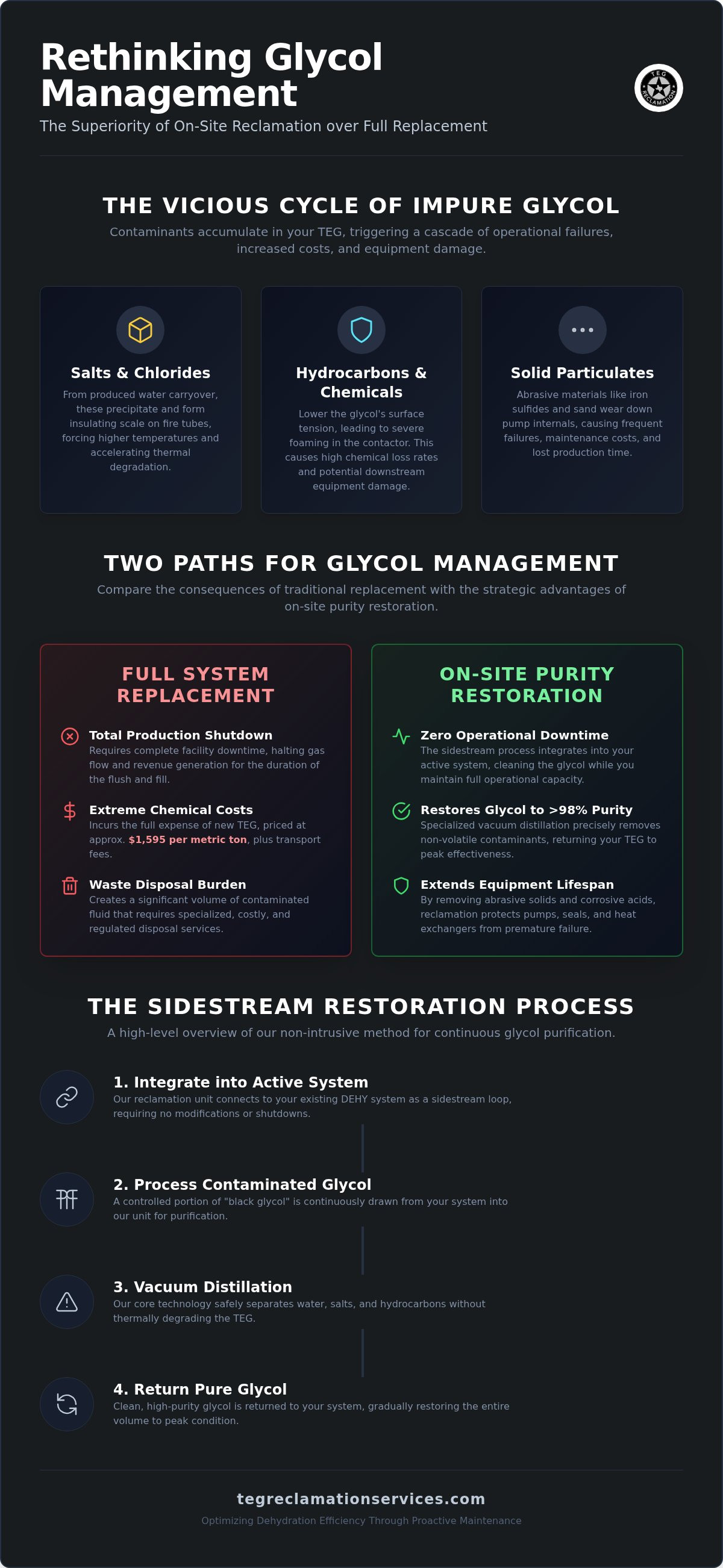
Contaminants enter the dehydration loop through various upstream failures. Solid particulates, often consisting of iron sulfides or sand, act as an abrasive slurry. These solids are particularly damaging to Kimray pump internals, leading to frequent seal failures and lost production time. Dissolved salts, typically from produced water carryover, create a separate set of problems. As the glycol is heated, these salts precipitate and form a hard scale on fire tubes and heat exchanger surfaces. This scale acts as an insulator, requiring higher burner temperatures to achieve the same glycol concentration, which further accelerates thermal degradation.
Heavy hydrocarbons and wellhead chemicals also contribute to operational instability. When these contaminants reach the contactor, they significantly lower the surface tension of the glycol. This leads to severe foaming issues. Foaming prevents efficient gas-liquid contact and causes glycol to be carried out with the sales gas, resulting in high chemical loss rates and potential downstream equipment damage.
The Performance Cost of Impure Glycol
Operating a DEHY unit with contaminated fluid is an exercise in diminishing returns. As the glycol's effectiveness drops, the standard response is to increase the circulation rate. While this might temporarily help meet dew point targets, it increases the mechanical load on the system and raises fuel gas consumption in the reboiler. The increased heat load puts additional stress on the fire tubes, creating a cycle of accelerating equipment wear. Purity restoration is the removal of non-volatile contaminants to reach 98% concentration. By focusing on triethylene glycol purity restoration, facilities can break this cycle and return to design-basis efficiency without the waste of a full system flush.
The Mechanics of On-Site Triethylene Glycol Purity Restoration
On-site restoration relies on a specialized sidestream configuration that eliminates the need for facility downtime. Instead of halting production, the reclamation unit integrates directly into the active glycol dehydration process. This allows for a continuous exchange of fluid where a portion of the contaminated glycol is extracted, processed, and reintroduced into the main loop. This method maintains system equilibrium, ensuring that moisture removal from the gas stream remains consistent and within specification throughout the entire cleaning cycle.
The use of vacuum distillation is the technical cornerstone of this process. Because triethylene glycol has a high atmospheric boiling point, attempting to distill it without a vacuum often leads to thermal cracking and further chemical degradation. By significantly lowering the internal pressure, we reduce the temperature required for distillation. This protects the molecular integrity of the TEG while allowing for the precise removal of water, dissolved salts, and high-boiling organics that standard reboilers cannot eliminate. This careful balance of temperature and pressure is what makes triethylene glycol purity restoration effective in a field environment.
The Sidestream Distillation Advantage
The primary benefit of sidestream processing is the total elimination of facility shutdowns. Traditional maintenance often requires the system to be drained, flushed, and refilled, resulting in days of lost revenue and high labor costs. By using a sidestream approach, the entire glycol volume is gradually purified while the plant maintains its sales gas commitments. This continuous circulation ensures that the concentration of salts and heavy hydrocarbons is steadily reduced. It's a pragmatic solution for operators who cannot afford to take their dehydration units offline for routine maintenance or fluid replacement.
Achieving the 98% Purity Threshold
Reaching the target of 98% purity requires sophisticated control over the distillation environment. The process must be managed to isolate the glycol from both low-boiling contaminants like water and high-boiling contaminants like salts and heavy oils. Managing volatile organic compounds (VOCs) and BTEX components is also a critical part of the operation. The restoration unit effectively separates these contaminants from the glycol stream, contributing to a cleaner overall operation and improved environmental compliance.
Achieving triethylene glycol purity restoration to over 98% ensures that the fluid regains its original physical properties, such as its specific gravity and surface tension. This restoration allows for better contactor performance and significantly reduced foaming tendencies. If you're looking to optimize your dehydration efficiency, understanding the role of sidestream vacuum distillation is the first step toward achieving long-term operational stability and equipment protection.
Economic Analysis: Glycol Reclamation vs. Full Replacement
Evaluating the financial viability of a dehydration system requires looking beyond the price per gallon of new chemicals. While purchasing fresh triethylene glycol might seem straightforward, it triggers a chain of secondary expenses that inflate the total cost of ownership. Triethylene glycol purity restoration offers a more efficient alternative by treating the existing inventory as a valuable asset rather than a waste product. By maintaining high purity on-site, facilities avoid the immediate capital outlay for new stock while preserving the chemical’s performance characteristics. This strategy shifts the focus from reactive replacement to proactive fluid management.
The hidden costs of a full chemical replacement are often overlooked in initial budgeting. These include hazardous waste disposal fees for the spent fluid, complex transport logistics for heavy bulk shipments, and the intensive labor required to manually clean the system internals. Perhaps the most critical factor is the financial impact of production downtime. A full system flush and refill typically require a complete facility shutdown, resulting in significant lost revenue from interrupted gas sales. In contrast, reclamation occurs during active operations, protecting the bottom line from the high cost of inactivity while the fluid is being cleaned.
Comparing Logistics and Lead Times
Transporting large volumes of new triethylene glycol involves complex logistics and significant lead times, especially given the global market dynamics. As of Q2 2026, the average price of TEG in the USA reached approximately $1,595 per metric ton, making it a substantial investment that requires careful management. Reducing chemical waste through reclamation also aligns with environmental standards by minimizing the volume of hazardous material transported and disposed of. While a full system clean-out can take days of preparation and execution, on-site restoration begins improving fluid quality immediately without the need for a logistical overhaul.
Impact on Equipment Maintenance
The long-term ROI of purity restoration is most evident in the longevity of critical DEHY components. Cleaner glycol directly reduces the frequency of Kimray pump repair, as the removal of abrasive solids and carbonaceous sludge prevents premature seal and diaphragm failure. Consistent triethylene glycol purity restoration also lowers the risk of catastrophic reboiler tube failure. By stripping out dissolved salts before they can precipitate and form insulating scale, the system operates at lower, safer fire tube temperatures. This proactive approach to fluid health is essential for reducing glycol replacement costs and extending the overall life cycle of the facility's infrastructure.
Field Implementation: A Case Study in Purity Restoration
Field implementation moves the theoretical discussion of triethylene glycol purity restoration into a practical, high-stakes environment. Success depends on methodical preparation and a clear understanding of the specific site chemistry. Unlike lab-scale experiments that often fail to account for the fluctuations of a live gas stream, field restoration must adapt to the existing infrastructure while maintaining strict safety and environmental standards. This process ensures that the fluid is returned to its design-basis specification without the waste of a full system clean-out.
Initial Assessment and Setup
The process begins with a technical assessment of the contaminated inventory. We extract samples to perform gas chromatography and field testing, which identifies the specific concentration of salts, hydrocarbons, and solids. This data establishes the restoration roadmap. Once the baseline is set, the vacuum distillation unit is integrated with the existing DEHY piping. This setup requires precise coordination with facility operators to ensure that the sidestream loop doesn't interfere with main production flows. Safety protocols are paramount, as the work takes place in live facilities where thermal management and pressure control are critical for operational integrity.
The Restoration Cycle
As the restoration cycle commences, the unit begins processing the "black glycol" inventory. This transformation requires several days of continuous circulation to cycle the entire system volume. Operators typically observe a visible change in fluid color and clarity as the process progresses. More importantly, the system's dew point depression begins to improve as the concentration of non-volatile contaminants drops. This real-time feedback confirms that the fluid is regaining its original hygroscopic properties. It's a methodical transition from a degraded state to peak performance.
Throughout the cycle, we manage the extraction of waste products, such as salt slurries and heavy oils, ensuring they are contained for proper disposal. This prevents environmental incidents while cleaning the system from the inside out. The final verification occurs once the fluid reaches the 98% purity benchmark. This is confirmed through secondary testing, providing the facility with technical proof of triethylene glycol purity restoration. If your facility is struggling with fluid degradation, reclaiming contaminated TEG through this field-proven method is the most efficient path to system recovery. For a technical consultation on your specific site requirements, contact our reclamation specialists today.
Optimizing Long-Term Efficiency with TEG Reclamation Services
Adopting a proactive maintenance strategy is the most effective way to protect gas processing infrastructure and ensure long-term profitability. Regular reclamation shouldn't be viewed as a one-time emergency fix. Instead, it's a foundational part of system optimization that prevents the cascading failures associated with fluid degradation. Our team, founded by Rocky McDonald, brings over 45 years of specialized experience in oil and gas process equipment to every project. We understand that fluid health and mechanical integrity are inseparable. By maintaining consistent triethylene glycol purity restoration, operators can avoid the expensive cycle of chemical replacement and equipment repair.
Comprehensive Dehydration Support
True system efficiency goes beyond just the chemical concentration. While triethylene glycol purity restoration is the primary objective, we often integrate this with chemical flushing and DEHY system commissioning. This holistic approach addresses the root causes of circulation issues and foaming that often plague upstream and midstream facilities. We also support facilities with DEHY equipment upgrades and BTEX mitigation to ensure environmental compliance. Troubleshooting complex glycol circulation issues requires a deep understanding of the TEG distillation process and how it interacts with the broader plant mechanics. This expertise allows us to stabilize systems that others might struggle to optimize.
Getting Started with Your Restoration Project
Facility managers should begin by evaluating their current glycol quality through periodic lab analysis. If you see rising salt levels, increased chloride concentration, or darkening fluid, it's time to consider a professional intervention. TEG Reclamation Services provides national on-site consultations to determine the most effective restoration roadmap for your specific facility. We provide a strict "no-shutdown" guarantee for our reclamation work, ensuring your operational continuity remains undisturbed while we restore your inventory to over 98% purity. This service is available to facilities across the United States, providing a seasoned veteran's approach to complex mechanical and chemical problems. Scheduling a technical assessment allows our specialists to identify potential failures before they lead to costly downtime or production losses.
Securing Long-Term Operational Stability
Maintaining the chemical integrity of your desiccant is a critical requirement for meeting pipeline gas specifications. As we've explored, contamination isn't merely a fluid issue; it's a mechanical threat that leads to accelerated wear on Kimray pumps and reboiler tubes. Implementing triethylene glycol purity restoration through sidestream vacuum distillation allows you to address these risks without the financial losses associated with facility shutdowns. This proprietary technology removes salts, hydrocarbons, and solids while your plant remains fully operational.
Choosing reclamation over full chemical replacement eliminates the logistical burden of hazardous waste disposal and fresh fluid procurement. Our 98%+ purity restoration guarantee provides the technical proof required to ensure your dehydration system returns to its peak design efficiency. This proactive approach to fluid management preserves your infrastructure and stabilizes your O&M budget. It's a pragmatic solution for facilities that prioritize uptime and equipment longevity.
Restore your TEG to 98% purity; contact TEG Reclamation Services for an on-site assessment.
We're ready to help you optimize your dehydration process and extend the life of your critical assets.
Frequently Asked Questions
How long does the triethylene glycol purity restoration process take?
The duration of a restoration project depends on the total volume of glycol and the severity of the contamination. Most on-site projects are completed within several days of continuous processing. Because the sidestream unit integrates with your active facility, the timeline doesn't interfere with your production schedule. This approach allows for a gradual and thorough cleaning of the entire inventory while maintaining gas flow throughout the operation.
Can on-site reclamation reach the same purity levels as virgin glycol?
Our proprietary vacuum distillation process restores contaminated fluid to over 98% purity. This level matches or exceeds the performance characteristics of fresh triethylene glycol. By removing dissolved salts, chlorides, and heavy hydrocarbons, the reclaimed fluid regains its original physical properties. This restoration ensures that the glycol performs effectively within the contactor, reaching the same dew point depression targets as virgin chemical stock without the expense of replacement.
Is it necessary to shut down my dehydration unit during the restoration?
No, a facility shutdown is not required. The sidestream vacuum distillation unit connects directly to your active DEHY system. This configuration allows a portion of the glycol to be extracted, purified, and reintroduced while the main loop continues to dehydrate gas. Maintaining operational continuity is a core benefit of this method. It eliminates the revenue loss typically associated with draining and flushing a system during traditional maintenance cycles.
What contaminants are removed during the vacuum distillation process?
The process effectively removes non-volatile contaminants that standard reboilers cannot address. This includes dissolved salts, chlorides, and carbonaceous sludge that cause equipment scaling and corrosion. It also separates heavy hydrocarbons and solid particulates that damage Kimray pump internals. By stripping these impurities, triethylene glycol purity restoration returns the fluid to a state where it can once again meet strict pipeline moisture specifications and protect system health.
How often should a midstream facility perform glycol reclamation?
Frequency varies based on the gas stream quality and operating temperatures. Many midstream operators integrate reclamation into their proactive maintenance strategy every one to two years. Monitoring for "black glycol" or rising chloride levels in your lab reports provides a clear signal for intervention. Regular processing prevents the accumulation of scale on reboiler fire tubes and extends the service life of your critical dehydration equipment across the facility.
What are the environmental benefits of reclaiming glycol vs. replacing it?
Reclaiming existing glycol significantly reduces the environmental footprint of your facility. It eliminates the need to transport and dispose of thousands of gallons of hazardous waste fluid. By restoring the current inventory to peak performance, you also reduce the carbon emissions associated with the production and shipping of new chemicals. This sustainable approach helps facilities comply with stricter environmental standards while minimizing the risks of chemical spills during transport.
Will purity restoration solve glycol foaming issues in my DEHY unit?
Yes, restoring purity is a primary solution for chronic foaming. Foaming is often caused by the presence of heavy hydrocarbons and dissolved salts that lower the glycol's surface tension. Once these contaminants are removed, the fluid's physical properties are stabilized. This restoration reduces the need for anti-foam chemicals and prevents glycol carryover, which protects downstream equipment and reduces overall chemical consumption across the facility's dehydration loop.
How do you verify the purity levels once the restoration is complete?
We verify the results through a combination of field testing and gas chromatography. This analysis measures the concentration of triethylene glycol and identifies any remaining trace impurities. We provide technical documentation confirming that the fluid has reached the 98% purity benchmark. This verification process ensures that the triethylene glycol purity restoration was successful and that the system is ready to operate at its original design efficiency.


Comments