
The Science of Sidestream Vacuum Distillation in Glycol Reclamation
Stopping gas production to replace contaminated triethylene glycol is often viewed as an unavoidable cost of doing business, but it's actually a preventable operational failure. Maintaining high dehydration efficiency requires a constant battle against salts, hydrocarbons, and water that degrade your fluid over time. You've likely felt the pressure of rising replacement costs and the logistical headache of scheduled maintenance shutdowns just to keep your system within spec. Implementing sidestream vacuum distillation allows for the continuous purification of your glycol without ever taking your facility offline.
We understand that operational uptime is your highest priority. This article explores the science behind restoring glycol to 98% purity or greater, focusing on the strategic benefits of lowering boiling points to prevent thermal degradation. You'll learn how this specialized process protects your equipment and eliminates the need for costly fluid disposal. We'll outline the technical advantages of proactive reclamation and how it serves as a guardian for your facility's long-term mechanical health.
Table of Contents
What is Sidestream Vacuum Distillation in Gas Processing?
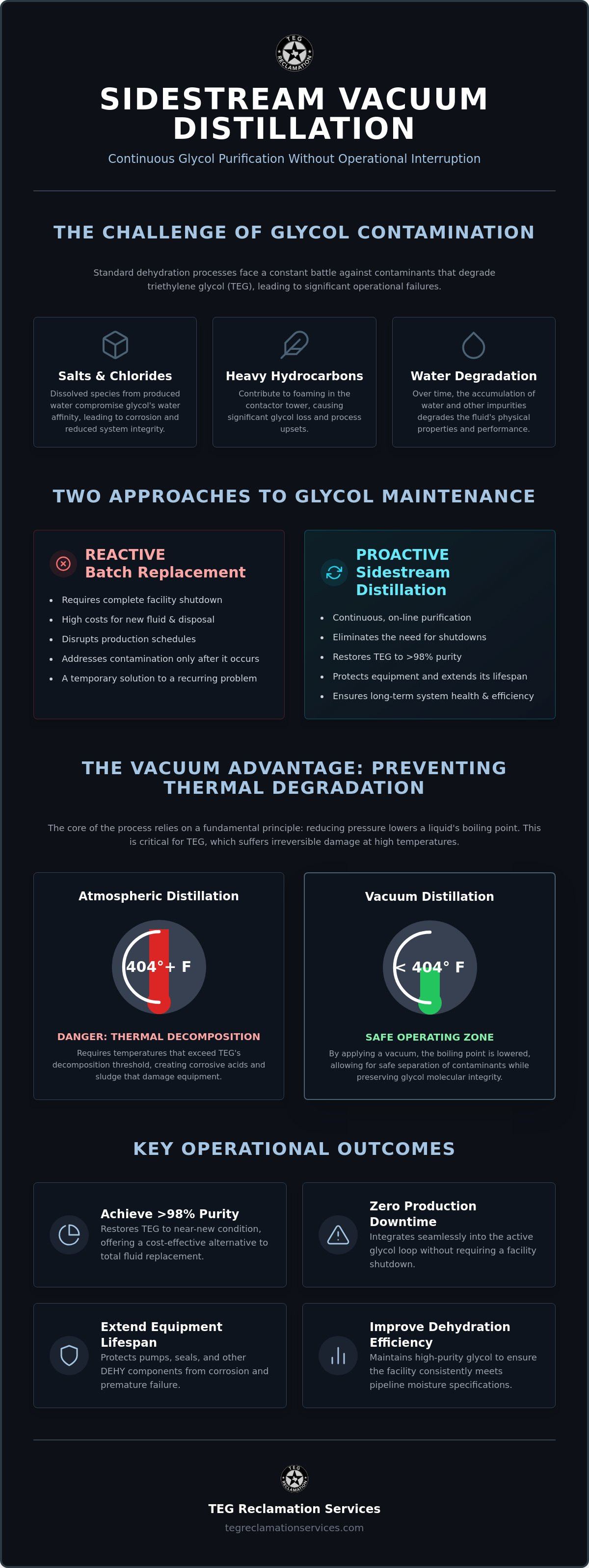
Sidestream vacuum distillation is a specialized mechanical process designed to maintain the chemical integrity of triethylene glycol (TEG) while a dehydration unit remains in active service. Unlike traditional batch reclamation, which often requires a complete system shutdown and fluid replacement, this method diverts a precise percentage of the glycol loop into a secondary purification circuit. By isolating a portion of the flow, operators can address the accumulation of dissolved solids and chemical byproducts that standard mechanical filtration cannot reach. It acts as a continuous kidney for the system, purging contaminants before they reach critical levels that cause corrosion or foaming.
Distinguishing this method from full-stream or batch distillation is essential for operational planning. Full-stream processing is often impractical due to the massive heat duty required to distill the entire volume of a gas plant's glycol loop at once. Batch distillation, on the other hand, is a reactive approach that only addresses contamination after the fluid has already degraded. Sidestream vacuum distillation offers a proactive middle ground. It allows for the systematic restoration of fluid purity without disrupting the primary dehydration process, ensuring that the gas leaving the facility always meets pipeline moisture specifications.
The Core Principles of Vacuum Separation
Vacuum distillation operates on the fundamental principle that reducing system pressure lowers the boiling point of a liquid. For triethylene glycol, this is a critical safety requirement because the fluid begins to undergo irreversible thermal decomposition at approximately 404°F. Standard atmospheric distillation would require temperatures that exceed this threshold to separate heavy contaminants effectively, leading to blackened, acidic glycol that damages pumps and seals. By applying a controlled vacuum, we facilitate the separation of water, salts, and hydrocarbons at significantly lower thermal profiles. High vacuum levels protect the glycol molecular chains from breaking down during the heating process, preserving the fluid's ability to absorb water vapor.
This relationship between vapor pressure and contaminant removal is what allows for the extraction of chlorides and other dissolved solids. These impurities don't just float in the glycol; they're chemically bonded or dissolved in a way that makes mechanical separation impossible. Lowering the pressure in the distillation vessel creates a environment where the glycol can transition to a vapor state at a safe temperature, leaving the heavier, non-volatile contaminants behind for removal.
Sidestream Architecture: Integration without Interruption
The architecture of a sidestream setup is engineered for seamless integration with existing DEHY units. It functions by pulling a side-loop from the active system, processing the fluid through the vacuum circuit, and returning purified glycol back into the main surge tank or reboiler. This continuous cycle prevents the sudden shock to system chemistry that occurs during total fluid swaps. Maintaining system equilibrium is the primary goal, as it allows the facility to continue processing gas at full capacity while the reclamation unit is at work.
Flow rate control is mandatory in sidestream operations to prevent temperature fluctuations in the main reboiler. If the sidestream flow is too aggressive, it can pull too much heat from the primary system; if it's too slow, the rate of contaminant removal won't keep pace with the rate of contamination. Precise calibration ensures that the reclamation process systematically removes chlorides and heavy hydrocarbons while the dehydration unit remains fully operational. This integration transforms glycol maintenance from a disruptive event into a steady, background process of mechanical restoration.
Why Glycol Contamination Requires Advanced Distillation
Standard mechanical filters capture solid particulates like sand, iron sulfide, and pipe scale. They're completely ineffective against dissolved species such as salts and chlorides. These contaminants enter the glycol loop through produced water carryover and accumulate over time. As their concentration increases, the physical properties of the triethylene glycol change. This chemical shift reduces the fluid's affinity for water, which directly compromises your dew point depression and overall dehydration efficiency. Heavy hydrocarbons also contribute to this decline, often causing foaming in the contactor tower and significant glycol loss. While vacuum distillation is a recognized part of the refining process for separating complex mixtures, using sidestream vacuum distillation for glycol specifically targets these dissolved impurities that would otherwise remain trapped in the loop. Filtration isn't enough.
The Problem with Dissolved Solids and Salts
Dissolved salts, particularly chlorides, represent a severe threat to the mechanical integrity of a DEHY unit. These minerals act as catalysts that accelerate the chemical breakdown of the glycol molecules. Once salts reach a certain threshold, they promote aggressive corrosion in the reboiler and heat exchangers, often leading to premature equipment failure. Simple chemical neutralization or pH adjustment might mask the acidity temporarily, but it doesn't remove the underlying mineral load. True restoration requires a physical separation process that extracts these solids from the fluid. If you're seeing signs of increased corrosion, it's time to find out more about specialized fluid purification and analysis services from BioKem Oil Services that protect your critical mechanical assets.
Vacuum vs. Atmospheric Distillation: A Performance Comparison
Choosing between atmospheric and vacuum methods is a decision between operational risk and technical precision. Atmospheric distillation relies on high heat to drive off water and contaminants, but this approach often pushes triethylene glycol dangerously close to its thermal decomposition point of 404°F. When glycol reaches these temperatures in the presence of impurities, it undergoes "coking," a process where the chemical structure breaks down into carbonaceous solids and acidic byproducts. Utilizing sidestream vacuum distillation eliminates this risk by operating at reduced pressure, which significantly lowers the required boiling temperature. This thermal protection ensures the glycol remains chemically stable throughout the purification cycle.
Energy efficiency is another primary differentiator. Because vacuum systems require less heat to achieve separation, the overall heat duty on the facility's utility system is reduced. This is particularly advantageous for plants operating at or near their maximum thermal capacity. Purification by vacuum distillation has been technically documented as an effective means of recovering glycols while maintaining high purity standards. In field operations, this method consistently restores triethylene glycol to 98% purity or higher, a result that atmospheric systems struggle to match without compromising the fluid's longevity.
Thermal Protection and Chemical Longevity
Atmospheric reboilers are prone to localized overheating, especially when salt and solid accumulation creates an insulating layer on heating elements. This leads to rapid degradation and the "black glycol" phenomenon. Vacuum based systems prevent this by maintaining a gentle thermal profile. By preserving the original molecular integrity of the TEG, operators avoid the frequent, expensive fluid replacements common in units relying on standard atmospheric boiling. The long term cost savings are substantial, as the chemical inventory is restored rather than destroyed by excessive heat.
Mobile On-Site Reclamation vs. Off-Site Disposal
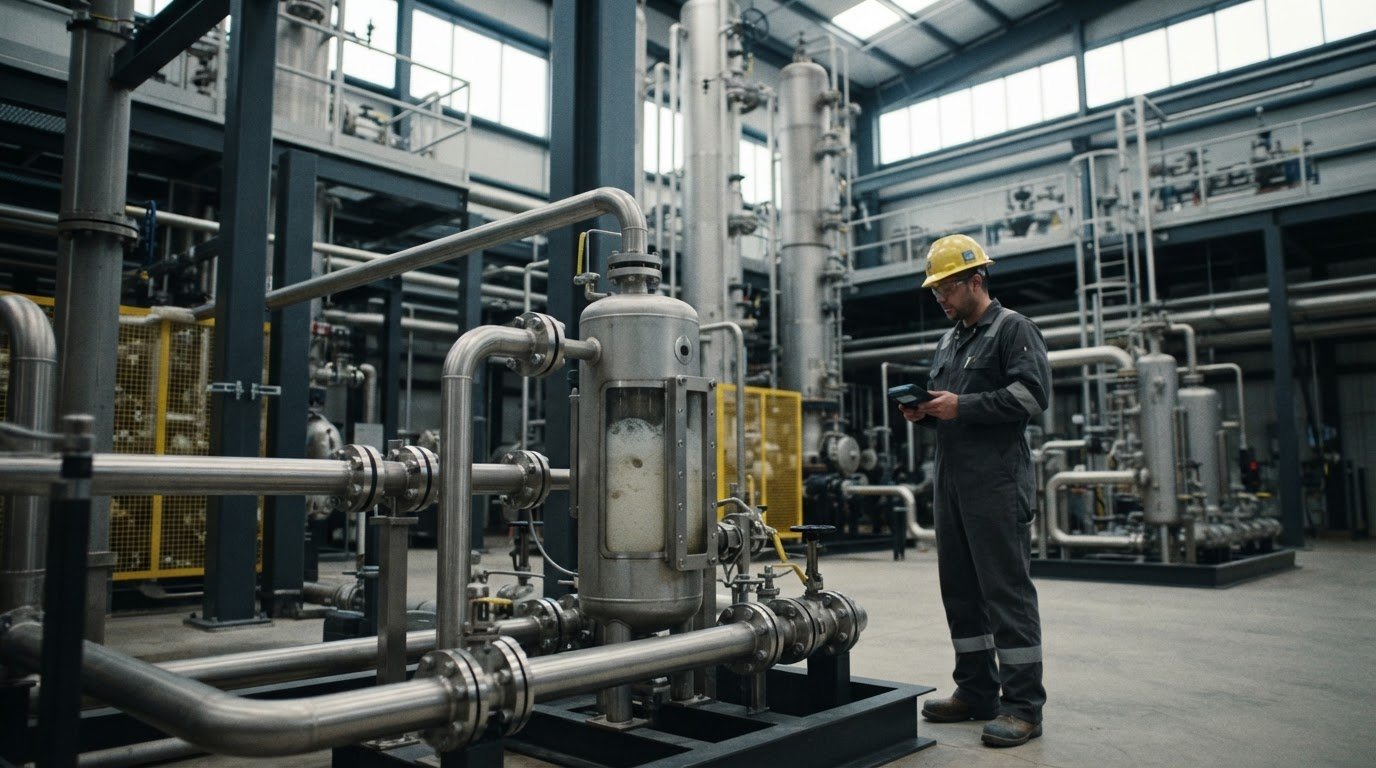
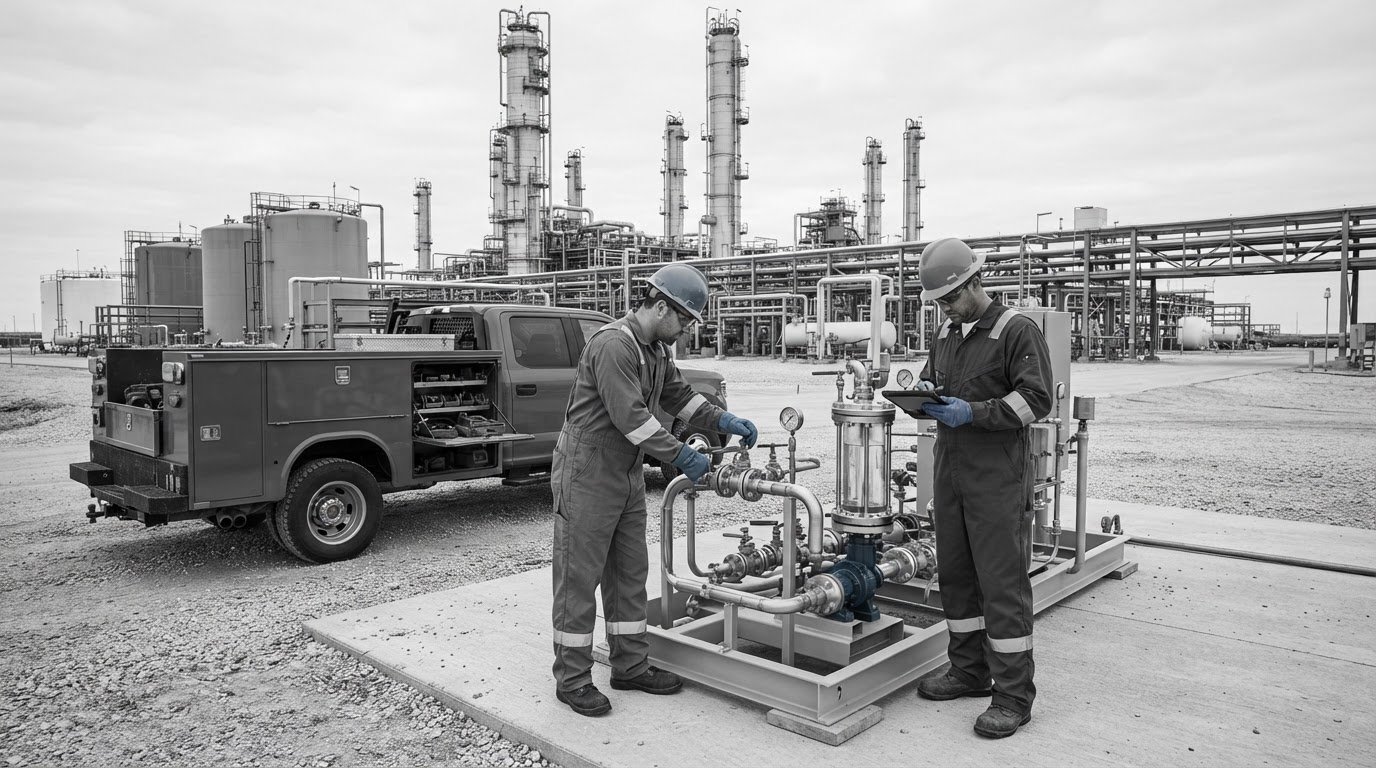
Traditional glycol management often involves hauling contaminated fluid to off-site disposal facilities, which creates significant logistical burdens and environmental liability. Mobile sidestream vacuum distillation units solve this by bringing the purification process directly to the wellhead or gas plant. This on-site approach allows for the continuous recycling of the existing chemical inventory, reducing the facility's environmental footprint. We ensure continuity of service through meticulous on-site monitoring, allowing the reclamation process to run in the background while the plant maintains its production schedule. This model eliminates the need for hazardous waste transport and keeps the valuable glycol assets under the operator's direct control.
Operational Benefits: The Case for No-Shutdown Reclamation
Gas processors operate in a high-stakes environment where even a few hours of unscheduled downtime result in substantial revenue losses. Traditional glycol maintenance often forces a difficult choice between continuing operations with degraded fluid or halting production for a total system cleanout. Sidestream vacuum distillation resolves this conflict by providing a continuous purification loop that integrates directly with the active dehydration unit. This allows the facility to maintain its full production schedule while systematically removing the contaminants that threaten long-term equipment health. Uptime is preserved, and the logistical nightmare of a full-plant shutdown is avoided.
Real-time purification is the primary advantage of this approach. As the sidestream unit processes the glycol, the overall quality of the chemical inventory improves while the system remains under load. This immediate restoration of purity ensures that the dehydration process stays within required parameters, even as upstream conditions or gas volumes fluctuate. Environmental compliance is also maintained throughout the cycle. Since the process occurs within a closed, precision-engineered loop, it eliminates the need for hazardous waste handling or the transport of large volumes of contaminated fluid during the maintenance window. The application of sidestream vacuum distillation allows for precise control over fluid chemistry without the risks associated with reactive batch processing.
Eliminating Production Bottlenecks
Clean glycol immediately improves dew point depression. When the fluid is free of dissolved salts and heavy hydrocarbons, its molecular affinity for water vapor is maximized. This increased efficiency allows operators to reduce the heat duty on the main reboiler, as the purified glycol no longer requires excessive temperatures to achieve the necessary moisture removal. Integrating this on-site purification with BTEX system maintenance ensures total facility compliance and operational optimization. By keeping the glycol loop clean, you prevent the fouling that typically leads to emission spikes and costly regulatory hurdles.
Predictive Maintenance and System Optimization
The reclamation process provides more than just clean fluid; it offers critical diagnostic data about the health of the entire DEHY system. Analyzing the types and rates of contaminant removal helps identify upstream filtration failures or issues with inlet separation that might otherwise go unnoticed. Our technical field services use this information to troubleshoot the root causes of contamination, preventing future degradation before it starts. We customize the distillation rate to match the specific contamination ingress of your facility, ensuring that the purification process is as efficient as the production loop it supports. This methodical approach transforms maintenance from a reactive chore into a strategic advantage.
If your facility is struggling with declining dehydration performance or rising fluid costs, our team can restore your system without interrupting your production flow. Explore our professional Vacuum Distillation Glycol Reclamation services to ensure your plant maintains peak operational efficiency.
TEG Reclamation Services: Expert Sidestream Solutions
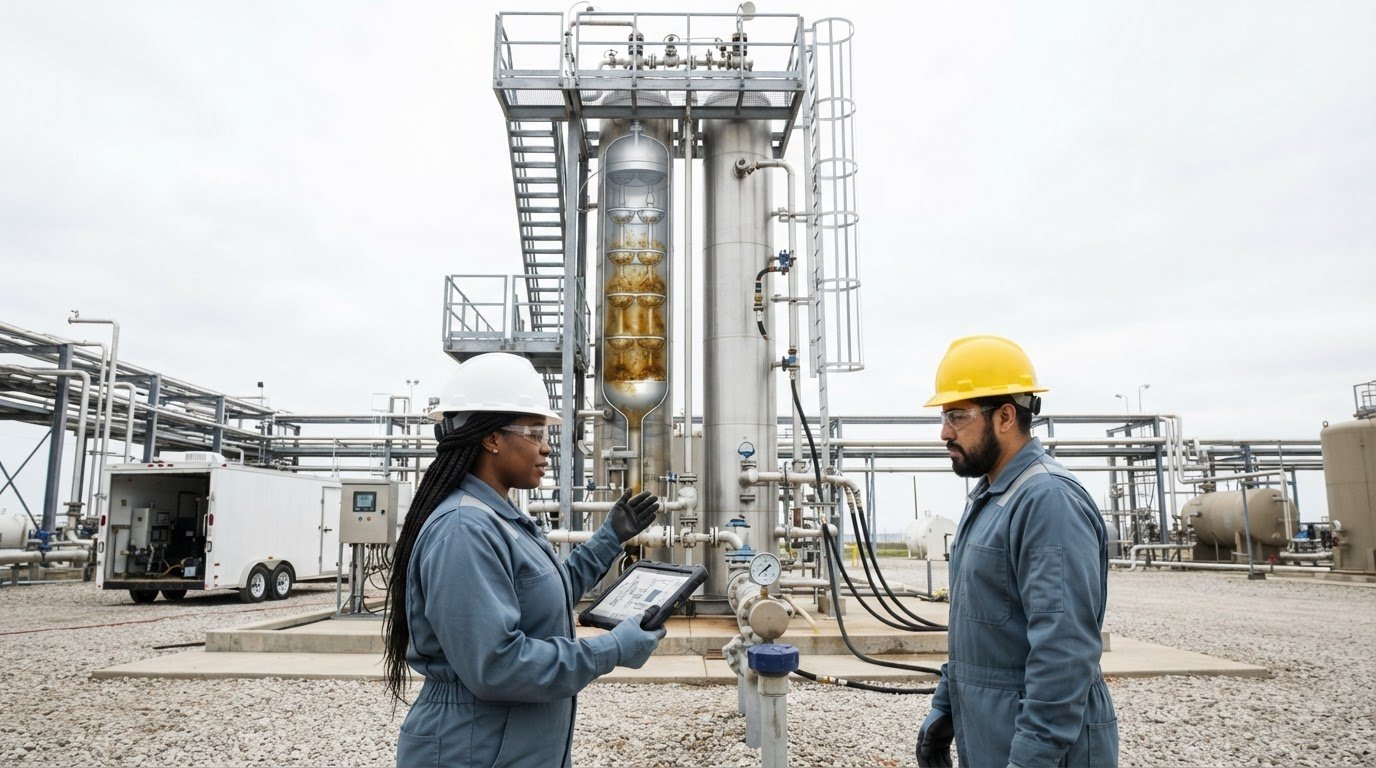
TEG Reclamation Services provides a high-tier solution for gas processors who prioritize operational uptime and equipment longevity. Our proprietary sidestream vacuum distillation process is the result of over 45 years of technical field experience in the oil and gas industry. We don't just clean fluid; we restore triethylene glycol to a purity level exceeding 98% on-site. This level of restoration is achieved using precision-engineered mobile units that are deployed directly to your facility. Our lead expertise, directed by industry veteran Rocky McDonald, ensures that every reclamation project is managed with the technical integrity required for high-pressure industrial environments. We understand the high stakes of gas processing and the necessity of maintaining fluid chemistry within strict engineering tolerances.
Engineered for Results, Not Just Process
Our focus remains on the specific outcome of equipment protection and restored dehydration efficiency. While the internal mechanics of our distillation technology are kept strictly confidential to preserve our competitive advantage, the results are transparently documented through rigorous fluid analysis. We specialize in handling complex contamination profiles, including the "black glycol" phenomenon and high-salt scenarios that often cause other systems to fail. By managing these extreme cases, we restore the dehydration efficiency of your DEHY unit and prevent the premature failure of critical components like pumps and reboilers. Discretion is a core component of our brand voice; we protect your operational data as carefully as we protect our proprietary workflows. We provide the technical proof of restoration without compromising the security of our internal processes.
Partnering for Operational Continuity
Operational continuity is the standard for our service delivery. We are committed to a zero-shutdown model, ensuring that our presence on-site never interferes with your production targets. By utilizing sidestream vacuum distillation, we provide a protective barrier against the accumulation of harmful chlorides and hydrocarbons while your plant remains at full capacity. Our technical support extends beyond simple fluid restoration to include comprehensive DEHY system commissioning, Kimray pump repair, and burner management troubleshooting. We act as a proactive partner in your facility's health, identifying mechanical issues that contribute to fluid degradation. This holistic approach ensures that your system doesn't just run, but operates at peak optimization. Just as we prioritize the health of your industrial systems, you can check out Pureffect to see how molecular hydrogen technology supports personal wellness and recovery. Whether you're commissioning a new unit or troubleshooting an existing loop, our team provides the seasoned perspective needed to maintain system health. We handle the technical complexities so your team can focus on production.
Contact TEG Reclamation Services for a technical consultation to discuss your specific glycol reclamation needs and maintain your facility's operational integrity.
Securing Long-Term Performance for Your Dehydration System
Maintaining triethylene glycol purity shouldn't require a choice between production uptime and chemical integrity. By utilizing sidestream vacuum distillation, you eliminate the accumulation of dissolved salts and heavy hydrocarbons that cause corrosion and foaming without ever stopping your gas flow. This technical approach preserves the molecular structure of your glycol by operating well below its thermal decomposition threshold. It ensures your dehydration unit remains efficient even under fluctuating inlet conditions.
Our team leverages more than 45 years of specialized field experience to deliver on-site restoration that exceeds 98% purity. This proprietary no-shutdown process transforms how gas processors manage their chemical assets, shifting from reactive fluid replacements to proactive mechanical health. We're ready to help you secure your equipment's future and maximize your dehydration efficiency. Optimize your dehydration unit with TEG Reclamation Services and ensure your facility operates at peak capacity. Your equipment deserves the protection that only seasoned industrial expertise can provide.
Frequently Asked Questions
What is the primary difference between sidestream and batch distillation?
Sidestream distillation operates as a continuous side-loop on an active dehydration unit, whereas batch distillation requires the system to be offline or the fluid to be processed in isolated tanks. This integration allows for the systematic removal of contaminants while the primary production loop maintains its moisture specifications. Sidestream vacuum distillation ensures that the dehydration process remains stable throughout the entire restoration cycle without interrupting gas flow.
How does vacuum distillation prevent triethylene glycol from degrading?
Vacuum distillation prevents thermal degradation by reducing the internal pressure of the distillation vessel, which significantly lowers the boiling point of the glycol. Triethylene glycol begins to break down chemically at 404°F; vacuum levels allow us to achieve separation at much safer thermal profiles. This protection preserves the molecular integrity of the chemical, preventing the formation of acidic byproducts and the "black glycol" phenomenon.
Can sidestream distillation be performed while the gas plant is running?
Yes, the process is specifically designed to be performed while the gas plant remains fully operational. The reclamation unit pulls a small percentage of the glycol loop for purification and returns it to the system in real time. This "no-shutdown" capability eliminates the massive costs associated with production downtime and the logistical headaches of scheduled maintenance windows.
What level of glycol purity can be achieved through vacuum reclamation?
Our reclamation process restores triethylene glycol to over 98% purity, which often meets or exceeds the specifications of new fluid. By removing water, dissolved solids, and heavy hydrocarbons, the fluid's ability to absorb water vapor is completely restored. This high level of purity is confirmed through field analysis to ensure the dehydration unit returns to peak operational efficiency.
Does vacuum distillation remove chlorides and other dissolved salts?
Yes, vacuum distillation is the only effective method for removing dissolved salts and chlorides from the glycol loop. While mechanical filters capture solid debris, they can't address minerals that have dissolved into the fluid. Distillation physically separates the glycol from these non-volatile contaminants, leaving the salts behind for safe removal and disposal during the purification cycle.
How long does a typical on-site glycol reclamation process take?
The duration of the process depends on the total volume of the glycol inventory and the severity of the contamination ingress. We monitor the fluid purity in real time and continue the reclamation until the system reaches the targeted 98% threshold. Most projects are completed within a few days, though the unit can remain on-site longer if the contamination rate is exceptionally high.
Is sidestream distillation compatible with all types of dehydration units?
Sidestream integration is compatible with virtually all standard triethylene glycol dehydration units found in natural gas processing. The hardware connects to existing points in the glycol loop, such as the surge tank or reboiler, without requiring permanent modifications to your equipment. Our technical team evaluates the specific plumbing and flow requirements of your facility before the commissioning of the reclamation unit.
What are the environmental benefits of on-site glycol purification?
On-site purification significantly reduces the environmental footprint of a facility by recycling the existing chemical inventory rather than disposing of it. This eliminates the need for hazardous waste hauling and the liability associated with transporting contaminated fluids on public roads. By restoring fluid purity, we also reduce the risk of emissions spikes related to foaming and inefficient burner management.
Comments