
The TEG Distillation Process: A Technical Reference for Gas Dehydration Efficiency
Updated: Aug 12
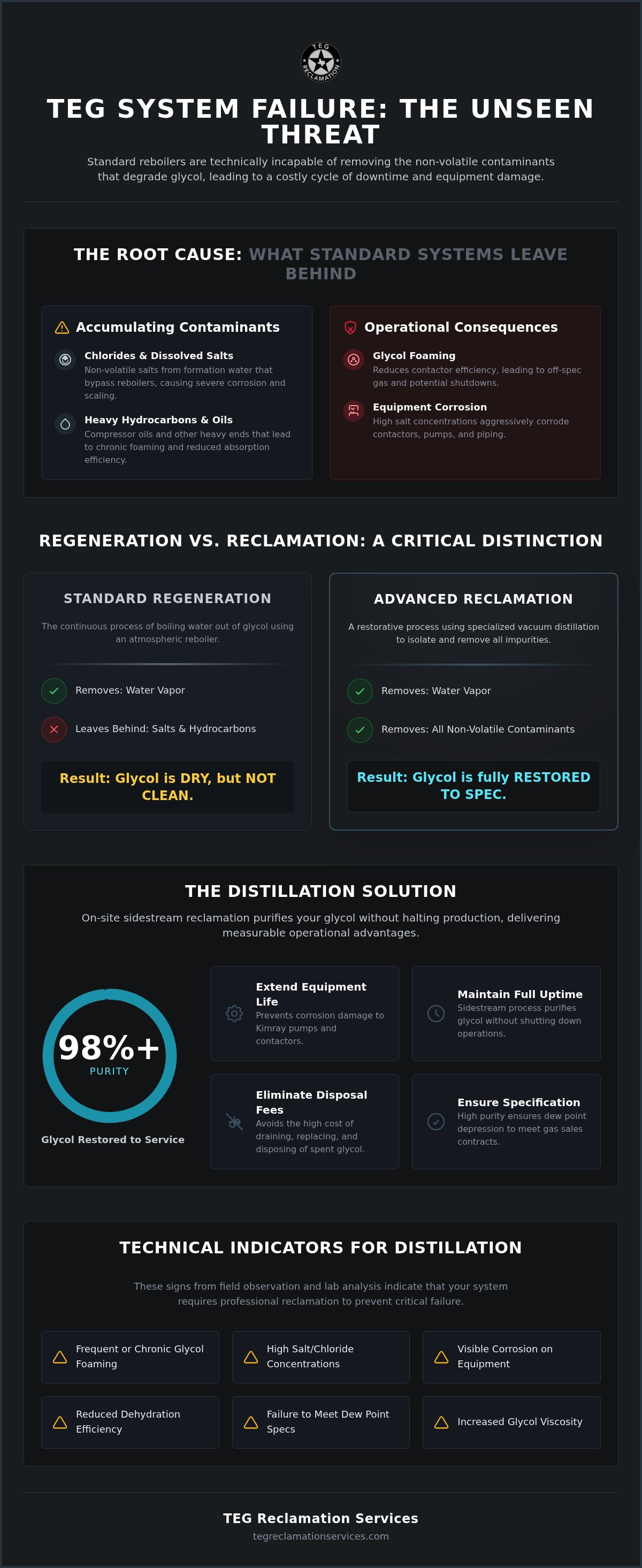
Your standard reboiler is physically incapable of removing the non-volatile contaminants that a specialized TEG distillation process is designed to target. You likely see the evidence of this technical limitation every day through frequent glycol foaming, high salt concentrations, and the steady corrosion of your contactors. It's a costly cycle of production downtime and expensive chemical replacements that many operators mistakenly accept as an unavoidable burden of gas dehydration.
This technical guide explains how vacuum distillation restores your triethylene glycol to over 98% purity on-site, providing a pragmatic alternative to the unsustainable "drain and replace" model. By removing the dissolved solids and chlorides that bypass standard filtration, you can effectively extend the operational life of your Kimray pumps and maintain strict environmental compliance. We will examine the operational impact of sidestream purification and provide a roadmap for achieving total restoration of function without halting your production flow.
Table of Contents
Understanding the Role of TEG Distillation in Natural Gas Processing
The TEG distillation process is the precise separation of triethylene glycol from non-volatile contaminants that have accumulated within the dehydration loop. While standard field equipment is designed to manage water content, it lacks the technical capability to address the buildup of dissolved solids, chlorides, and heavy hydrocarbons. Maintaining high glycol quality is not merely a maintenance preference; it's an operational requirement for meeting stringent natural gas sales specifications and preventing downstream equipment failure. Within the broader glycol dehydration process, distillation serves as the critical purification step that ensures the chemical medium remains fit for service.
Standard atmospheric reboilers operate on the principle of boiling point differential to strip water from glycol. However, this process is fundamentally limited. It effectively removes water vapor but leaves behind heat-stable salts and heavy oils that have a higher boiling point than the glycol itself. Standard reboilers fail to address several critical issues:
Accumulation of chlorides that drive equipment corrosion.
Buildup of heat-stable salts that increase glycol viscosity.
Infiltration of compressor oils and heavy hydrocarbons that cause foaming.
Over time, these contaminants concentrate. This leads to increased viscosity, chronic foaming, and reduced absorption efficiency. Without a dedicated distillation step, the glycol eventually reaches a level of contamination where it can no longer function, necessitating a full system drain and expensive chemical replacement.
Regeneration vs. Reclamation: A Technical Distinction
Regeneration is a continuous process that focuses exclusively on the water-glycol boiling point spread to return lean glycol to the contactor. Reclamation, however, is a restorative process that targets the removal of the actual chemical impurities that regeneration cannot touch. While a reboiler might keep your glycol dry, it won't keep it clean. This is where sidestream vacuum distillation becomes essential. It provides a way to purify the glycol stream while the unit remains in operation, ensuring long-term system stability and preventing the accumulation of corrosive salts that damage internal components.
The Impact of Glycol Purity on Dew Point Depression
There's a direct, measurable correlation between TEG concentration and its water vapor absorption capacity. When glycol purity drops, the system's ability to achieve the required dew point depression is compromised. Even a 1% increase in contamination can significantly degrade dehydration efficiency, forcing the system to work harder to achieve the same results. In technical terms, dew point depression is the difference between the dew point of the inlet gas and the dew point of the outlet gas, and its magnitude is directly dictated by the purity of the lean glycol entering the contactor. High purity ensures that the gas meets the water content limits required by pipeline operators and prevents the formation of hydrates.
Identifying Contaminants That Compromise TEG Purity
Contamination in a dehydration loop is a progressive mechanical reality. As the natural gas stream passes through the contactor, it introduces more than just water vapor; it carries formation water, salts, and chemical aerosols. While the EPA overview of glycol dehydrators highlights the environmental role of these systems, operators must also manage the internal chemical integrity of the glycol itself. When these impurities accumulate, they physically alter the glycol's properties, leading to a loss of dehydration efficiency and eventual equipment failure. The TEG distillation process is the only technical solution capable of isolating these contaminants and restoring the chemical medium to its original specifications.
The Threat of Chlorides and Dissolved Salts
Sodium chloride and other dissolved salts enter the system through formation water carryover. These salts are non-volatile, meaning they cannot be removed by the reboiler's heat. Instead, they concentrate within the glycol stream, eventually reaching a point of saturation where they precipitate onto internal surfaces. This precipitation creates a scale layer on fire tubes and heating elements, causing localized hot spots that can lead to catastrophic tube failure. Furthermore, these salts act as aggressive catalysts for corrosion within the contactor and reboiler shells. Utilizing a professional service for reclaiming contaminated TEG is the only effective way to purge these dissolved solids from the loop without replacing the entire chemical volume.
Heavy hydrocarbons and compressor lubricants represent another tier of contamination. These substances infiltrate the TEG stream through upstream mechanical carryover or filtration bypass. Once inside the loop, they significantly reduce the surface tension of the glycol. This change in fluid physics is the primary driver of chronic foaming. Foaming leads to glycol loss through the gas outlet and prevents the intimate gas-to-liquid contact necessary for water absorption. If you are experiencing high chemical loss rates, it is often a symptom of hydrocarbon saturation that requires technical intervention from TEG Reclamation Services.
Thermal Degradation and Organic Acid Formation
Triethylene glycol has a specific thermal stability threshold. When temperatures in the reboiler exceed 400 degrees Fahrenheit, or when localized hot spots occur due to salt scaling, the glycol molecule begins to fracture. This molecular breakdown produces organic acids, which rapidly lower the pH of the glycol stream. Acidic glycol is highly corrosive to carbon steel and is particularly destructive to the elastomers and seals found in Kimray pumps. As the pH drops, the rate of component failure accelerates, creating a compounding maintenance cycle. Monitoring pH levels and identifying the early signs of 'Black Glycol'—a condition caused by carbon buildup and particulate suspension—is critical for protecting your infrastructure from irreversible metallurgical damage.
The Mechanism of Vacuum Distillation vs. Atmospheric Regeneration
Atmospheric regeneration is the standard method for daily water removal in gas processing, but it operates at the physical edge of triethylene glycol's thermal stability. To achieve higher purity levels and address non-volatile contaminants, the TEG distillation process utilizes a vacuum environment to bypass the limitations of atmospheric pressure. This method allows for the precise separation of glycol from contaminants that possess higher boiling points than the glycol itself, such as heavy oils and dissolved salts. By manipulating the pressure within the system, it's possible to recover high-purity chemical volume without risking the molecular destruction of the fluid.
In a standard atmospheric reboiler, operators must maintain temperatures near 400°F to strip water effectively. This is dangerously close to the 404°F threshold where TEG begins to fracture. Vacuum distillation fundamentally changes the physics of this separation. By reducing the internal pressure of the process vessel, the boiling point of the glycol is lowered significantly. This allows the system to vaporize and recover pure glycol at temperatures that are safe for the molecule, leaving the heavier, more complex contaminants behind for removal.
Lowering Boiling Points Through Vacuum Pressure
Technical separation depends on maintaining a specific vapor-liquid equilibrium. In a vacuum, the vapor pressure required for boiling is achieved with much lower heat input than what is required at sea-level pressure. This precise temperature control prevents the "cracking" or thermal degradation of the chemical inventory. The relationship between vacuum depth and boiling point is inversely proportional, where increasing the vacuum depth significantly reduces the temperature required for phase change. This allows the process to isolate and remove high-boiling point contaminants that would otherwise remain trapped in the glycol stream during standard atmospheric heating cycles.
Preserving Molecular Integrity at Reduced Temperatures
Operating well below the 404°F degradation limit is the primary advantage of this approach. When glycol is subjected to excessive heat, it breaks down into organic acids and smaller molecular fragments, which reduces its effectiveness and damages downstream equipment. Vacuum distillation preserves the molecular integrity of the TEG, which directly extends the usable life of your chemical inventory. Additionally, the process offers superior efficiency in vapor recovery and emission control. By maintaining a controlled environment, the system captures pure glycol while isolating waste products, ensuring that the restored fluid meets or exceeds the 98% purity standard required for optimal dehydration performance.
Operational Advantages of On-Site Sidestream Reclamation
On-site reclamation represents a strategic shift from reactive maintenance to proactive system optimization. By utilizing a sidestream approach, the TEG distillation process occurs in parallel with active gas dehydration. This eliminates the operational trade-off between chemical purity and production volume. Instead of removing the entire chemical inventory for off-site processing, a dedicated portion of the stream is continuously purified and returned to the loop. This method maintains the chemical integrity of the system without requiring the facility to stop gas flow or enter a bypass state.
Eliminating Production Shutdowns During Purification
Traditional "drain and replace" methods require total facility bypass or complete shutdowns, often resulting in days or weeks of lost revenue. Sidestream processing integrates directly into the existing piping of the DEHY unit through a temporary or permanent tie-in. This configuration allows for the continuous extraction, purification, and return of the glycol volume without affecting the gas sales stream. The economic impact of maintaining 100% uptime during reclamation is substantial, as it ensures that the cost of the service is offset by the preservation of production schedules. In many field scenarios, on-site service has allowed operators to restore glycol purity during peak demand periods when a shutdown would have been financially catastrophic.
Reducing Chemical Replacement and Disposal Costs
Purchasing new triethylene glycol and managing the disposal of contaminated fluids is becoming financially unsustainable for many midstream operations. Virgin TEG prices fluctuate with feedstock costs, and hazardous waste transport fees add significant overhead to standard maintenance. Reclamation offers a circular chemical management strategy that restores existing inventory to over 98% purity on-site. This reduces the volume of glycol waste generated and removes the logistical burden of hauling contaminated fluids to off-site facilities.
High-purity glycol is also more efficient at absorbing water vapor and less prone to the foaming that disrupts emission control systems. Clean glycol reduces the frequency of BTEX system maintenance by ensuring that the reboiler and vapor recovery units operate within their designed thermal parameters. By removing the salts and solids that cause thermal degradation, operators can extend the life of their chemical inventory and their mechanical infrastructure simultaneously. To evaluate the potential for uptime preservation at your facility, contact TEG Reclamation Services for a technical consultation.
Strategic Maintenance: When to Implement TEG Distillation
Determining the optimal timing for the TEG distillation process is a matter of technical data rather than guesswork. While visual cues like "Black Glycol" provide a surface-level warning, a strategic maintenance program relies on precise laboratory metrics to identify the point of diminishing returns. Waiting until a system fails or a Kimray pump seizes is a reactive approach that increases long-term operational costs. Instead, proactive purification should be triggered when specific chemical thresholds are breached, ensuring the dehydration loop remains efficient and protected from internal metallurgical damage.
Monitoring Glycol Quality Indicators
Lab analysis serves as the primary diagnostic tool for assessing the health of your triethylene glycol. Operators should monitor chloride concentrations and suspended solids closely. When chloride levels exceed 500 ppm or total dissolved solids begin to impact fluid viscosity, the risk of salt precipitation on fire tubes increases significantly. Additionally, a steady decline in pH, dropping toward or below 6.0, indicates the formation of organic acids that will rapidly degrade seals and elastomers. Other field indicators include an unexplained increase in filter change frequency and erratic pump behavior, both of which suggest that the fluid is carrying a heavy load of non-volatile contaminants that standard filtration cannot remove.
Integrating Distillation with System-Wide Optimization
Purifying your glycol inventory is a foundational step in a broader DEHY optimization strategy. Clean glycol, restored to over 98% purity, ensures that the reboiler operates at its designed thermal efficiency, which directly supports BTEX emission compliance and burner management. When a system is being prepared for DEHY commissioning or after significant DEHY equipment upgrades, starting with a purified chemical baseline prevents the immediate contamination of new components. This proactive approach extends the mean time between failures for critical machinery and reduces the total cost of ownership for the facility.
The long-term ROI of implementing a TEG distillation process is realized through the elimination of chemical replacement costs and the preservation of mechanical uptime. Rather than treating glycol as a consumable waste product, operators can maintain it as a high-performance industrial asset. To establish a baseline for your facility and identify potential efficiency gains, the next logical step is to schedule a technical field audit. Our team, led by experts with over 45 years of experience, provides the technical oversight required to optimize your dehydration loop. Contact TEG Reclamation Services to discuss your specific site requirements and review your latest lab results.
Optimizing Infrastructure Longevity Through Glycol Purification
Standard maintenance routines often overlook the progressive accumulation of dissolved solids that eventually cripple dehydration efficiency. By implementing a TEG distillation process, operators can transition from reactive chemical replacement to a sustainable reclamation model that restores fluid integrity to over 98% purity. This technical approach removes the chlorides and salts that drive equipment corrosion, ensuring that your contactors and pumps operate within their designed parameters. For facilities managing similar mineral buildup in their process water, it is helpful to explore Sale of catalytic water conditioning and softening systems to safeguard auxiliary equipment. Utilizing sidestream technology allows these results to be achieved without a single hour of production downtime.
With proprietary sidestream vacuum distillation technology and expert technical field support, we specialize in DEHY optimization for oil and gas operators across the United States. Our team provides the specialized oversight needed to troubleshoot complex mechanical problems and restore total function to your system. Maintaining a purified chemical baseline is the most effective way to prevent production downtime and ensure long-term mechanical reliability. Protecting your equipment starts with a clear understanding of your glycol's chemical health.
Restore your glycol purity with TEG Reclamation Services and secure your operational continuity today.
Frequently Asked Questions
What is the primary difference between glycol regeneration and distillation?
Glycol regeneration is designed specifically for water removal through simple boiling point separation, whereas distillation targets the removal of non-volatile contaminants like salts, solids, and heavy oils. While a standard reboiler strips water to return lean glycol to the contactor, it cannot purge the dissolved solids that accumulate over time. Distillation provides a deeper level of purification by isolating the glycol molecule itself from the complex chemical impurities that atmospheric heating leaves behind.
How does contaminated TEG affect the performance of Kimray pumps?
Contaminated triethylene glycol acts as an abrasive medium that accelerates the mechanical wear of Kimray pump internals. Suspended solids and salt crystals score the polished surfaces of the pump's moving parts, leading to internal bypassing and reduced stroke efficiency. Additionally, if the glycol has undergone thermal degradation and become acidic, it will rapidly harden or dissolve the elastomers and seals, causing chronic leaks and eventual mechanical failure.
Can TEG distillation be performed while the gas plant is still running?
Yes, the TEG distillation process can be executed while the dehydration unit remains fully operational through a sidestream configuration. This method extracts a portion of the circulating glycol for purification and returns it to the loop in a continuous cycle. It eliminates the need for expensive production shutdowns or facility bypasses, allowing operators to restore their chemical inventory to peak purity without interrupting gas sales or pipeline delivery schedules.
What are the signs that my triethylene glycol has undergone thermal degradation?
The primary indicators of thermal degradation include a significant drop in pH and the appearance of "Black Glycol" caused by carbon buildup. You'll likely observe increased glycol viscosity and chronic foaming in the contactor, which directly impacts your dew point depression. When the glycol molecule fractures due to excessive heat or localized hot spots, it produces organic acids that lower the pH below the neutral range, signaling that the fluid is becoming corrosive to your infrastructure.
How often should a dehydration unit undergo a full glycol reclamation process?
The frequency of reclamation is dictated by the results of regular laboratory analysis rather than a fixed time interval. Factors such as gas volume, inlet temperatures, and the amount of formation water carryover determine how quickly contaminants accumulate. Operators should consider the TEG distillation process when lab reports show chloride levels exceeding 500 ppm or when the pH shifts toward the acidic range, as these metrics indicate that the glycol is no longer fit for service.
Does distillation remove chlorides and salts from the glycol stream?
Distillation is the only technical method capable of purging chlorides and dissolved salts from the glycol loop. Because these contaminants are non-volatile and have boiling points much higher than triethylene glycol, they cannot be removed by standard atmospheric reboilers or mechanical filtration. Through vacuum distillation, the pure glycol is vaporized and recovered, leaving the salts and solids behind in the distillation bottoms for safe removal and disposal.
What purity level can be expected after a vacuum distillation process?
Operators can expect their triethylene glycol to be restored to over 98% purity following the vacuum distillation process. This level of restoration returns the chemical inventory to a state that is essentially equivalent to virgin glycol. Achieving this purity baseline ensures that the fluid's water absorption capacity is fully restored, which allows the dehydration unit to meet or exceed pipeline water content specifications consistently while protecting downstream equipment from salt-induced corrosion.
How does purified glycol help in meeting environmental emission standards?
Purified glycol ensures that the dehydration system operates within its designed thermal and physical parameters, which is critical for BTEX emission compliance. Contaminated glycol is prone to foaming and carryover, which can overwhelm vapor recovery units and lead to excessive venting of hazardous air pollutants. By maintaining high purity, the reboiler requires less heat to achieve the desired lean concentration, reducing the thermal stress that contributes to volatile organic compound emissions.
Comments